
Table of Contents
ToggleA shaded outdoor space transforms a sweltering patio into a genuine living area. Patio furniture with an integrated umbrella solves the twin challenges of seating and sun protection in one purchase, eliminating the guesswork of matching freestanding shades to existing furniture. Whether planning morning coffee in the shade or afternoon cookouts, umbrella-equipped sets provide the coverage needed to extend outdoor time well past the comfortable hours. This guide walks through the practical considerations, from sizing and materials to maintenance, so homeowners can make an informed choice that holds up season after season.
Key Takeaways
- Patio furniture with integrated umbrellas combines seating and sun protection in one coordinated purchase, eliminating the hassle of matching mismatched shades and ensuring a stable, wobble-free fit.
- Choose the right canopy size by matching the umbrella diameter to your furniture dimensions and adding 2 feet for optimal overhang—a 9-foot umbrella suits most standard dining tables.
- Solution-dyed acrylic fabric at 9 ounces or heavier provides UPF 50+ protection and resists fading, while aluminum and fiberglass frames withstand elements better than painted steel or wood.
- Offset umbrellas work best for conversation sets and sectionals, but require heavier anchoring bases (50–150 pounds) to prevent toppling in wind.
- Monthly canopy cleaning with mild soap, seasonal hardware inspection, and proper winter storage—including bringing umbrellas indoors—extend the life of your patio furniture with umbrella systems.
- Close and secure umbrella systems when wind exceeds 15 mph, and inspect tilt mechanisms and rotation collars made from metal rather than plastic for durability and smooth operation.
Why Choose Patio Furniture with an Integrated Umbrella?
Pre-coordinated furniture sets with umbrellas streamline both aesthetics and function. The table base is engineered with a center pole hole sized to the umbrella diameter, ensuring a stable fit without wobble or tilting. This factory coordination means no hunting for compatible pole diameters or struggling with aftermarket adapters that rarely fit flush.
Integrated systems also simplify anchoring. Most dining sets include a weighted base ring or built-in clamps that secure the umbrella pole at the table center, reducing the need for separate heavy bases that eat up floor space. For offset umbrellas paired with conversation sets, the cantilever frame typically mounts to a dedicated base plate sized to the furniture footprint.
From a layout perspective, umbrella-inclusive sets help define the seating zone. The canopy radius naturally marks boundaries for foot traffic and adjacent plantings, making space planning more intuitive. And because the umbrella ships with the set, homeowners avoid the common pitfall of buying furniture first, then discovering that local retailers stock only mismatched umbrella sizes or colors.
Types of Patio Furniture Sets with Umbrellas
Dining Sets with Center Umbrellas
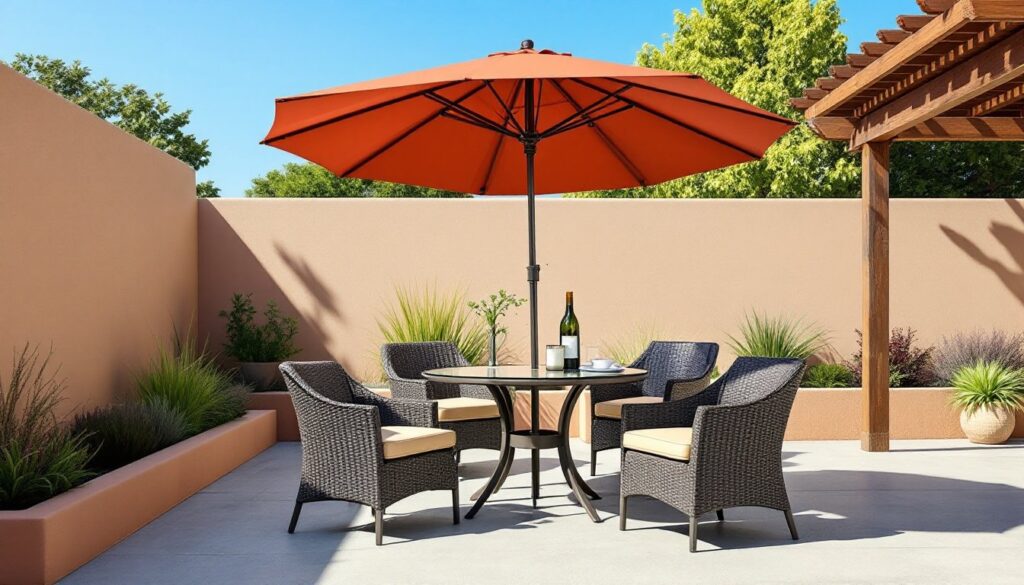
Center-pole umbrellas anchor directly through a table grommet, a reinforced opening in the middle of the tabletop. This configuration suits rectangular, square, or round dining tables seating four to eight people. Common canopy diameters range from 7.5 to 11 feet, with 9-foot models providing adequate shade for a standard 42-inch round or 60-inch rectangular table.
The pole typically measures 1.5 to 1.9 inches in diameter. Verify that the grommet ID matches the pole OD: a loose fit allows wind to rock the umbrella and enlarge the hole over time. Look for tables with a two-piece grommet collar, a removable ring that cinches around the pole and prevents lateral movement.
Most center-pole umbrellas use a crank-lift mechanism for easy opening. Budget models rely on a push-up hub, which works but requires more arm strength and can jam if the canopy fabric binds. Tilt features add $20 to $50 to the cost but are worth it: a simple collar tilt or auto-tilt button lets users angle the canopy to follow the sun’s arc without relocating the entire table.
Conversation Sets with Offset Umbrellas
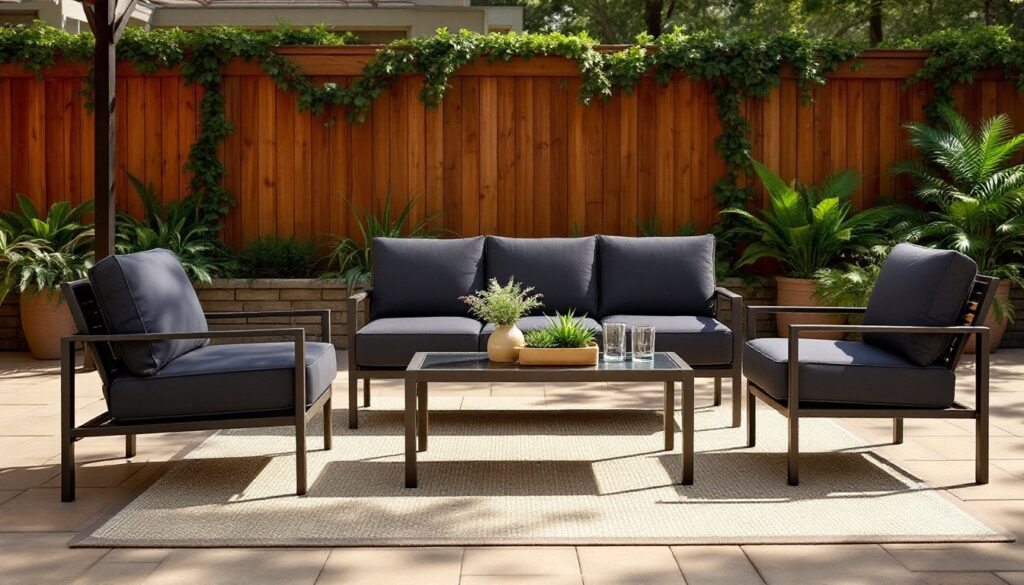
Offset (cantilever) umbrellas mount to a side base rather than piercing the furniture. This design suits sectional sofas, lounge chairs, and coffee-table groupings where a center pole would obstruct legroom or sightlines. The umbrella arm extends horizontally from a vertical mast, positioning the canopy over the seating area while keeping the base outside the furniture footprint.
Canopy sizes for offset models typically start at 9 feet and climb to 13 feet for larger sectionals. The cantilever arm adds mechanical complexity, so quality matters: a powder-coated aluminum frame with stainless-steel pivot pins will outlast painted steel, which rusts at joints. Examine the rotation collar, the fitting that allows 360-degree swivel. Plastic collars crack under UV exposure: metal collars with nylon bushings provide smoother, longer-lasting rotation.
Offset umbrellas demand heavier anchoring than center poles. A 50-to-100-pound resin or concrete base is minimum for models up to 10 feet: larger canopies need up to 150 pounds or ground-anchored sleeves. Some manufacturers include a cross-base frame that accepts freestanding weight plates, letting homeowners adjust ballast as needed. Without adequate weight, a gust will topple the umbrella and potentially damage the furniture.
How to Select the Right Umbrella Size and Style
Match the canopy diameter to the furniture dimensions, then add 2 feet. For a 48-inch round table, a 9-foot umbrella provides roughly 6 inches of overhang per side, enough to shade seated diners’ shoulders and the table edge. Rectangular tables need extra consideration: a 72×42-inch table pairs well with a 9×7-foot rectangular canopy or an 11-foot round if only round options are available.
Canopy shape affects coverage patterns. Octagonal canopies distribute shade evenly and shed wind better than square models, which catch gusts at the corners. Rectangular canopies align with elongated tables but require reinforced ribs to prevent sagging at the long axis.
Fabric weight and weave determine both durability and light blockage. Solution-dyed acrylic at 9-ounce weight or heavier resists fading and offers UPF 50+ protection, blocking 98 percent of UV radiation. Polyester costs less and dries faster but fades within two seasons under full sun. Olefin splits the difference, fade-resistant and water-repellent, though slightly less breathable than acrylic. Homeowners in high-humidity regions often prefer olefin to minimize mildew growth on canopy fabric.
Frame material impacts wind tolerance and longevity. Aluminum ribs flex slightly under load, returning to shape after gusts: they won’t rust. Fiberglass ribs offer the best flex-to-weight ratio and are the top choice for coastal installations where wind and salt air are constant. Wood frames, typically eucalyptus or bamboo, deliver classic aesthetics but require annual oiling and will split if left open during storms.
Materials That Withstand the Elements
Outdoor furniture longevity hinges on material choice. Powder-coated aluminum frames resist corrosion, weigh less than steel, and won’t warp. Welds should be TIG-welded rather than MIG for cleaner, stronger joints. Inspect the coating thickness, minimum 2 to 3 mils, and look for an electrostatically applied finish baked at high temperature: paint-on coatings chip easily.
All-weather wicker (resin wicker) over aluminum frames offers the look of natural rattan with vastly better UV and moisture resistance. Quality resin wicker uses high-density polyethylene (HDPE) strands extruded with UV inhibitors mixed into the polymer, not sprayed on afterward. Cheaper PVC wicker cracks within a season. Check strand thickness, 3 mm or greater, and weave tightness: loose weaves unravel faster.
Teak and eucalyptus are the traditional wood choices. Teak contains natural oils (tectoquinone) that repel insects and inhibit rot, but quality teak (Grade A, heartwood only) carries a premium price. Eucalyptus costs less, grows faster, and accepts stain well, but requires annual sealing with a penetrating oil or semi-transparent stain to prevent checking and silvering. Both woods will gray naturally if left untreated, which some homeowners prefer as a patina.
Cushion fabrics should carry a solution-dyed acrylic label (Sunbrella is the most recognized brand, though others perform similarly). Solution dyeing impregnates color throughout the fiber rather than applying it to the surface, so fading is minimal. Cushions need quick-dry foam cores, open-cell reticulated foam that drains water and dries within hours. Standard polyurethane foam wicks moisture, stays soggy, and fosters mold.
For tabletops, tempered glass is common and easy to clean but can shatter if a heavy object strikes an edge. Powder-coated aluminum slat tops drain water quickly and won’t break. Porcelain tile or natural stone tops add weight and elegance: ensure the table frame is rated for the load (stone tops can exceed 100 pounds for a 60-inch table). Many design enthusiasts turn to curated outdoor furniture ideas for inspiration on material pairings and layout schemes.
Maintenance Tips for Long-Lasting Patio Furniture and Umbrellas
Close and secure the umbrella whenever wind speeds exceed 15 mph or when leaving the patio unattended. Even heavy-duty cantilever models can topple or sustain rib damage in sudden gusts. If the umbrella lacks a Velcro canopy strap, add one to bundle the closed fabric and prevent it from billowing open.
Clean canopy fabric monthly during active use. Mix 1/4 cup mild dish soap (no detergents with bleach or solvents) per gallon of lukewarm water. Brush the solution onto the canopy with a soft-bristle brush, working in sections. Rinse thoroughly with a garden hose: soap residue attracts dirt. Let the canopy air-dry fully open before closing to prevent mildew. For stubborn stains, bird droppings, tree sap, apply undiluted soap, let sit for 10 minutes, then scrub and rinse.
Inspect umbrella hardware before each season. Tighten all stainless-steel fasteners (screws, bolts, pins) with the appropriate hex key or wrench. Apply a few drops of silicone spray lubricant to crank gears, tilt collars, and rotation pivots. Avoid petroleum-based oils, which attract dust and gum up mechanisms in hot weather.
Wicker furniture should be vacuumed with a brush attachment to remove dust from the weave, then wiped with a damp microfiber cloth. Aluminum frames need only a rinse and wipe-down with soapy water. For wood furniture, clean with a teak cleaner (oxalic-acid-based for teak and eucalyptus) once per season to remove surface grime and restore color, then apply a coat of teak oil or sealer to protect the grain.
Cushions benefit from weekly shaking and monthly washing. Most solution-dyed acrylic covers are machine-washable on a gentle cycle with mild detergent: air-dry only, heat will shrink the fabric. Store cushions indoors or in a ventilated deck box during winter: even weather-resistant foam degrades faster when exposed to freeze-thaw cycles.
If storing the furniture over winter, disassemble stackable pieces and cover with breathable patio furniture covers, not plastic tarps, which trap condensation and promote rust and mold. Store umbrellas indoors in a dry space: freezing temperatures can crack resin finials and stiffen fabric. For year-round installations in mild climates, additional care tips can be found at The Spruce, which covers seasonal outdoor maintenance routines in depth.
Safety note: Always wear work gloves when handling metal frames in direct sun, powder-coated aluminum can reach 140°F on a summer afternoon. Use safety glasses when applying spray lubricants to prevent mist from contacting eyes.