


Table of Contents
ToggleBuying solid wood bedroom furniture made in the USA isn’t just a patriotic choice, it’s a smart investment in quality, durability, and sustainability. American manufacturers still use time-tested joinery techniques, domestic hardwoods, and finishes that meet or exceed federal VOC standards. Unlike particle board or veneer pieces that sag and chip within a few years, solid wood furniture can last generations with basic maintenance. This guide walks through the woods, construction details, and care practices that separate heirloom-quality pieces from big-box disposables.
Why Choose American-Made Solid Wood Bedroom Furniture?
American manufacturers operate under stricter environmental and labor regulations than many overseas factories. That means lower formaldehyde emissions, no child labor, and traceable supply chains. Most domestic workshops also mill lumber to order rather than stockpiling pre-cut panels, which reduces waste and allows custom sizing.
Solid wood construction uses mortise-and-tenon joints, dovetails, and dowel pins instead of cam locks and staples. These mechanical fasteners hold tight through decades of humidity swings and weight stress. A dovetail drawer box won’t pull apart when you yank it open with wet hands, particle board will.
Domestic hardwoods like oak, maple, and cherry are harvested from managed forests certified by the Forest Stewardship Council or Sustainable Forestry Initiative. This traceability matters. Import logs sometimes come from illegal clear-cuts, and the documentation trail is murky at best.
Lead times for USA-made pieces run four to twelve weeks, versus container-ship delays that stretch for months. If a part arrives damaged, the workshop can mill a replacement quickly. Try getting customer service from a warehouse in Shenzhen.
Finally, buying domestic keeps skilled woodworkers employed. Furniture-making apprenticeships are rare now, and every order supports the craftspeople who still know how to hand-plane a drawer front or match grain across a bed frame.
Top Types of Solid Wood Used in USA Bedroom Furniture
Oak, Maple, and Cherry
Red oak and white oak dominate American furniture production. Red oak has an open, porous grain and a pinkish cast: white oak is denser, more rot-resistant, and takes stain evenly. Both work well for mission-style and Arts & Crafts beds. White oak is the premium choice for quarter-sawn panels, those dramatic ray-fleck patterns that run perpendicular to the grain.
Hard maple (also called sugar maple) is dense, fine-grained, and pale cream to light tan. It takes a smooth finish and resists denting, which makes it ideal for dressers that’ll see daily abuse. Soft maple is cheaper and slightly easier to work, but the density difference shows up in drawer bottoms and case backs.
Cherry darkens to a rich reddish-brown over time, no stain needed. It’s a medium-density hardwood with a smooth grain that hand-tools beautifully. Cherry furniture often costs more because the logs are smaller and the lumber yield is lower. Expect color variation between boards: that’s normal and adds character. Many designers highlight cherry’s natural warmth in luxury interior design schemes that emphasize organic materials.
Walnut, Ash, and Pine
Black walnut is the luxury option: dark chocolate brown with occasional purple streaks, tight grain, and excellent stability. It’s heavy, strong, and resists warping. Walnut also machines cleanly for inlays and decorative edges. The downside? Price. Walnut can cost double what oak does, and supply tightens when export demand spikes.
Ash resembles oak but has straighter grain and a lighter color. It’s tough, flexible, and historically used for tool handles and baseball bats. In furniture, ash works well for bent or steam-formed parts like curved headboard slats. The emerald ash borer beetle has decimated ash forests in the Midwest, so availability fluctuates.
Eastern white pine is a softwood, but don’t dismiss it. Colonial furniture makers used pine for everything from bed frames to blanket chests. It dents easily, so save it for low-impact pieces like nightstands. Pine takes milk paint and distressed finishes well, which fits the farmhouse aesthetic that country-style home ideas often feature. Knotty pine adds rustic character: clear pine looks cleaner but costs more.
How to Identify Authentic USA-Made Solid Wood Furniture
Check the label first. Legitimate manufacturers print “Made in USA” on hang tags, stamps, or metal plates attached to the back or underside. Under Federal Trade Commission rules, that claim requires “all or virtually all” components and assembly to happen domestically. If the label says “Assembled in USA” or “Designed in USA,” the parts likely came from overseas.
Look for brand names tied to a specific city or state: Vermont, North Carolina, Pennsylvania, and Indiana have deep furniture-making roots. Research the company’s website, real workshops show photos of their shop floor, not just 3D renderings.
Inspect the joinery. Pull out a drawer and flip it over. Dovetail joints at the corners, those interlocking “fingers”, indicate solid construction. Staples, hot glue, or cam-lock bolts mean engineered wood or budget-grade assembly. Check drawer bottoms: solid wood or plywood (not particle board) signals quality.
Knock on the side panel. Solid wood sounds deep and resonant: veneer over MDF sounds hollow and dead. Look at the edges: if you see a thin layer laminated over a core, it’s veneer. Solid wood shows continuous grain running through the thickness.
Ask about the finish. USA manufacturers often use conversion varnish or catalyzed lacquer, both durable, low-VOC options. Cheap imports may skip topcoats entirely or use finishes that off-gas for weeks.
Request documentation. Some workshops provide FSC or SFI certification for their lumber. Others offer a letter confirming domestic sourcing. If the retailer can’t or won’t provide proof, walk away.
Best Styles and Design Trends for 2026
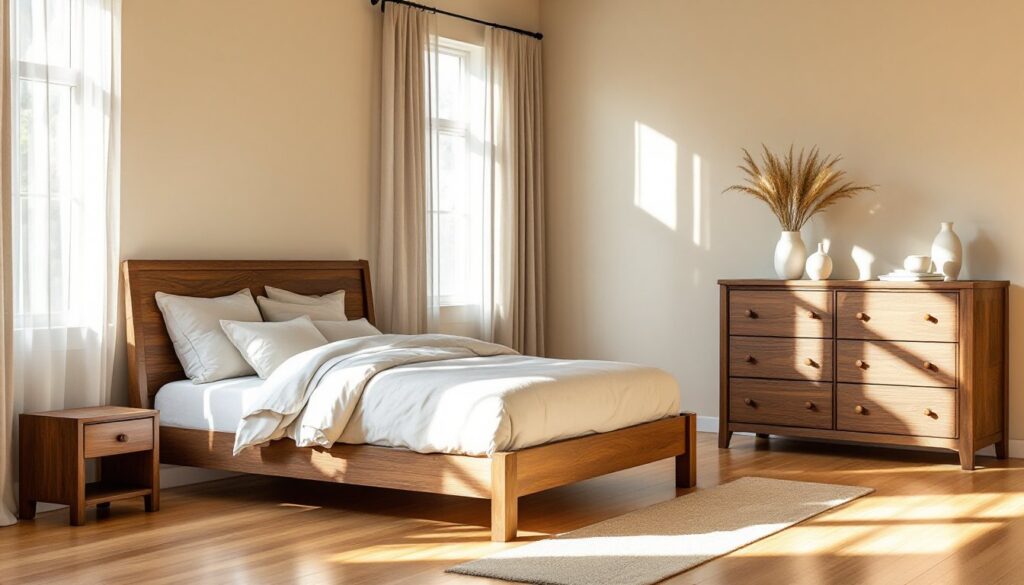
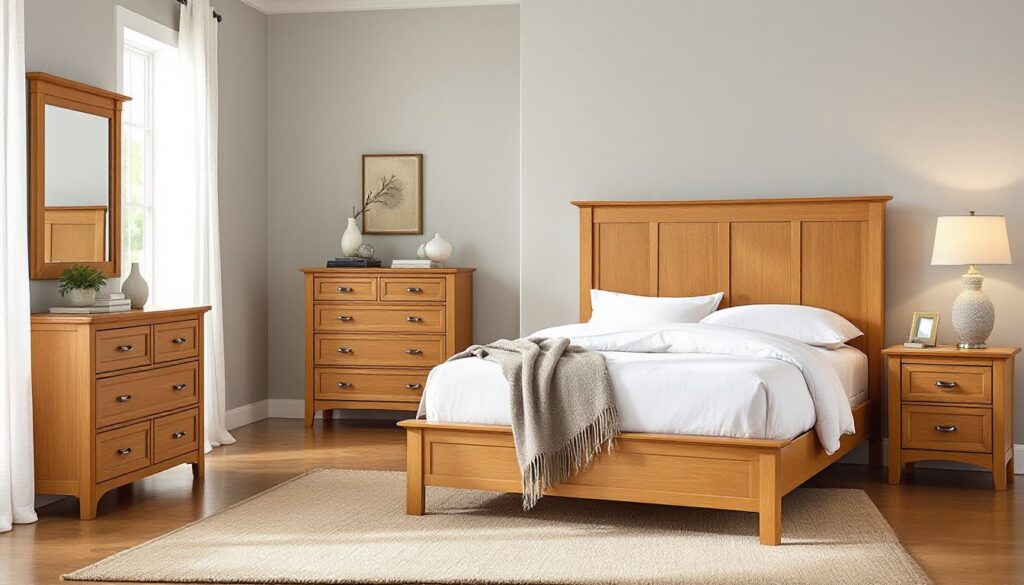
Shaker and modern minimalist styles continue to dominate. Clean lines, recessed panels, and tapered legs fit bedrooms from 800-square-foot condos to suburban colonials. Shaker dressers often feature inset drawer fronts and wooden knobs, simple details that age gracefully.
Live-edge headboards and platform beds lean into the organic, imperfect aesthetic. A slab of walnut or maple with the bark edge intact becomes the focal point. Pair it with steel or blackened-steel legs for contrast. This look works best in rooms with neutral walls and minimal clutter.
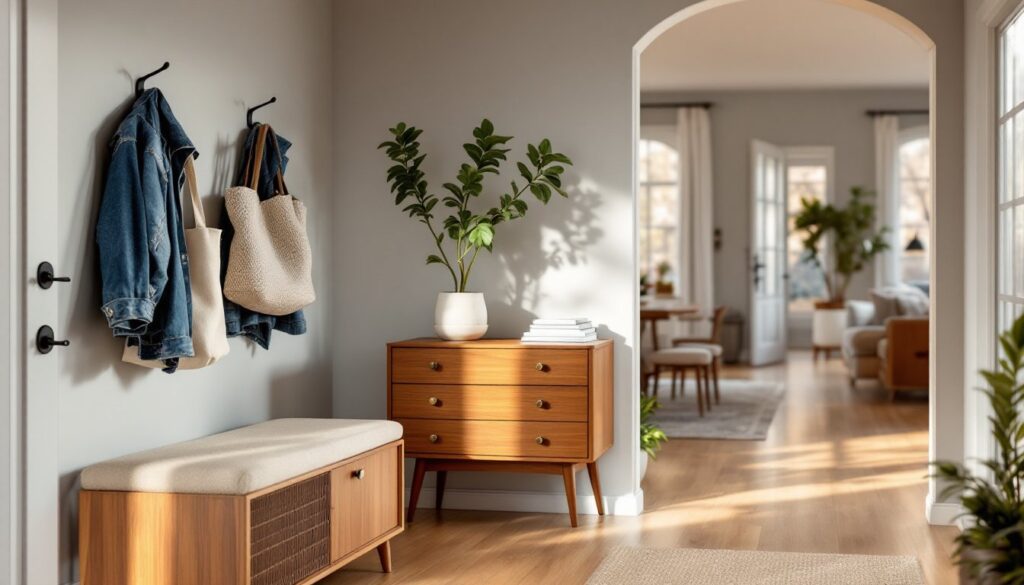
Mid-century modern remains popular: splayed legs, rounded edges, and warm-toned woods like teak (though domestic walnut or cherry substitute well). Floating nightstands and low-profile bed frames keep sight lines open, a plus in smaller spaces.
Farmhouse and rustic styles use reclaimed lumber, distressed finishes, and chunky proportions. Expect mortise-and-tenon joinery left visible, hand-planed surfaces, and matte or waxed finishes instead of high-gloss lacquer. This trend aligns with the broader interest in handcrafted, low-tech goods.
Customization is a trend in itself. Many USA workshops offer modular dressers where you choose drawer counts, wood species, and hardware. Platform beds come in standard or custom heights to accommodate underbed storage. Stain and finish options let you match existing trim or go contrast.
Color trends lean toward natural or lightly stained wood rather than heavy espresso or ebony finishes. Designers increasingly favor showcasing the wood’s natural figure, especially in contemporary furniture that emphasizes material honesty.
Caring for Your Solid Wood Bedroom Furniture
Dust weekly with a microfiber cloth. Grit acts like sandpaper when you wipe, so shake the cloth outside first. Skip feather dusters, they just redistribute dust.
Clean spills immediately. Blot, don’t wipe, with a damp cloth, then dry. Water left standing can cloud the finish or raise the grain. For sticky residue, use a drop of dish soap diluted in water, then wipe with plain water and dry.
Avoid silicone-based polishes. They leave a waxy buildup that’s hard to remove and can interfere with future refinishing. Use a cleaner formulated for furniture, or just stick with a damp cloth. Once or twice a year, apply a thin coat of paste wax or furniture oil depending on the finish type. Check with the manufacturer first.
Control humidity. Wood expands in summer humidity and contracts in winter dryness. Ideally, keep indoor humidity between 35% and 55%. Use a whole-house humidifier in winter or a dehumidifier in summer if swings are extreme. Gaps at panel joints are normal seasonal movement, not defects.
Protect surfaces. Use felt pads under lamps and decorative objects. Coasters prevent rings from drinks. If you set a hot mug directly on walnut, expect a white mark.
Refinish when needed. Solid wood can be sanded and refinished multiple times. If the finish is scratched or worn through, lightly sand with 220-grit sandpaper, wipe with a tack cloth, and apply a matching topcoat. Deep gouges may need wood filler first. This is a weekend project with basic tools, orbital sander, foam brushes, and mineral spirits for cleanup.
Avoid direct sunlight. UV rays fade and bleach wood over time. Rotate decorative items occasionally so the piece ages evenly. Sheer curtains or UV-blocking window film help.
Proper care extends the life of solid wood furniture from decades to generations. Unlike particle board that delaminates or MDF that swells when wet, solid wood forgives minor abuse and rewards basic maintenance.