



Table of Contents
ToggleMahogany bedroom furniture has been a hallmark of quality and craftsmanship for centuries, and for good reason. Its rich, reddish-brown tones and exceptional durability make it a standout choice for homeowners looking to invest in pieces that age gracefully. Unlike softer woods that dent and scratch easily, genuine mahogany resists wear and holds fine detail work, think dovetail joints and hand-carved accents, without splitting. Whether someone’s drawn to the deep luster of traditional four-poster beds or the clean lines of modern platform frames, mahogany offers versatility that works across design styles. This guide walks through everything needed to choose, style, and maintain mahogany bedroom pieces that’ll last decades, not just a few years.
Key Takeaways
- Mahogany bedroom furniture offers exceptional durability with a Janka hardness rating of 800–900, resisting dents and wear while maintaining fine craftsmanship details like dovetails and hand-carved accents.
- The wood’s color deepens over time, developing a rich burgundy-chocolate patina that enhances beauty; mahogany costs 30–50% more upfront but outlasts multiple cheaper replacements, making it a defensible long-term investment.
- Choose bed frames based on your space: platform frames suit modern rooms with lower ceilings, sleigh beds showcase mahogany’s grain in larger bedrooms, and four-poster beds require careful ceiling-height measurement to avoid a cramped feel.
- Invest in storage pieces with dovetail drawer joints, ball-bearing slides rated for 75–100 pounds, and solid wood bottoms to ensure smooth operation and decades of durability.
- Style mahogany furniture in traditional rooms with deep jewel tones and brass fixtures, or in modern spaces with light neutral walls and glass or metal accents to balance visual weight.
- Maintain mahogany bedroom furniture by dusting weekly, controlling humidity at 40–50%, keeping pieces away from direct sunlight, and polishing lacquered finishes 2–3 times annually to preserve its beauty and structural integrity.
Why Choose Mahogany for Your Bedroom Furniture
Mahogany stands apart from oak, pine, or maple for several practical reasons. First, it’s a hardwood with a Janka hardness rating of around 800-900, depending on the species (Honduran mahogany is slightly harder than African varieties). That rating means it resists dents from dropped phones, books, or that lamp someone inevitably knocks over at 2 a.m.
The wood’s straight, consistent grain also makes it ideal for furniture joinery. Cabinet makers prefer it because it doesn’t warp or twist as humidity fluctuates, critical in bedrooms where temperature swings happen seasonally. That stability means drawers glide smoothly year-round, and doors on armoires don’t bind in summer or gap in winter.
Mahogany’s color deepens over time, developing a patina that enhances its natural beauty. A newly finished piece might appear lighter reddish-brown, but after years of exposure to light, it darkens into those signature burgundy-chocolate tones. That aging process is a feature, not a flaw.
One honest consideration: genuine mahogany costs more upfront. Expect to pay 30-50% more than similar pieces in cherry or walnut. But, the longevity offsets that initial expense, a well-built mahogany dresser can outlast three particleboard replacements. For anyone planning to stay in their home long-term or pass furniture down, it’s a defensible investment.
Sustainability matters here. True Honduran mahogany (Swietenia macrophylla) is CITES-listed due to overharvesting. Look for pieces certified by the Forest Stewardship Council (FSC) or consider African mahogany (Khaya species), which is more widely available and responsibly sourced. Many reputable furniture makers now disclose their wood sourcing, don’t hesitate to ask before purchasing.
Types of Mahogany Bedroom Furniture to Consider
Bed Frames and Headboards
The bed frame anchors the entire room, so it’s worth getting this piece right. Mahogany bed frames come in three main construction types: platform, sleigh, and four-poster.
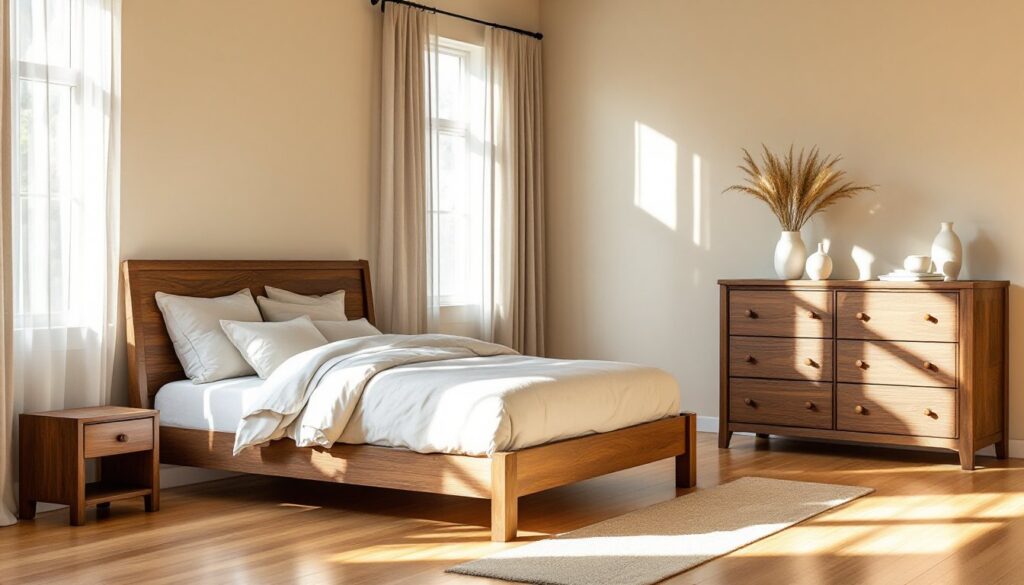
Platform frames sit low to the ground with a solid or slatted base that supports the mattress directly, no box spring needed. They work well in modern spaces with lower ceilings (under 8 feet) where tall headboards feel cramped. Look for frames with slats spaced no more than 3 inches apart to prevent mattress sagging and maintain warranty compliance.
Sleigh beds feature curved headboards and footboards that roll outward. They’re substantial, expect the headboard to stand 50-60 inches tall, so they suit larger bedrooms (12×14 feet or bigger). The curves show off mahogany’s grain beautifully, especially when finished with hand-rubbed oils rather than heavy lacquer.
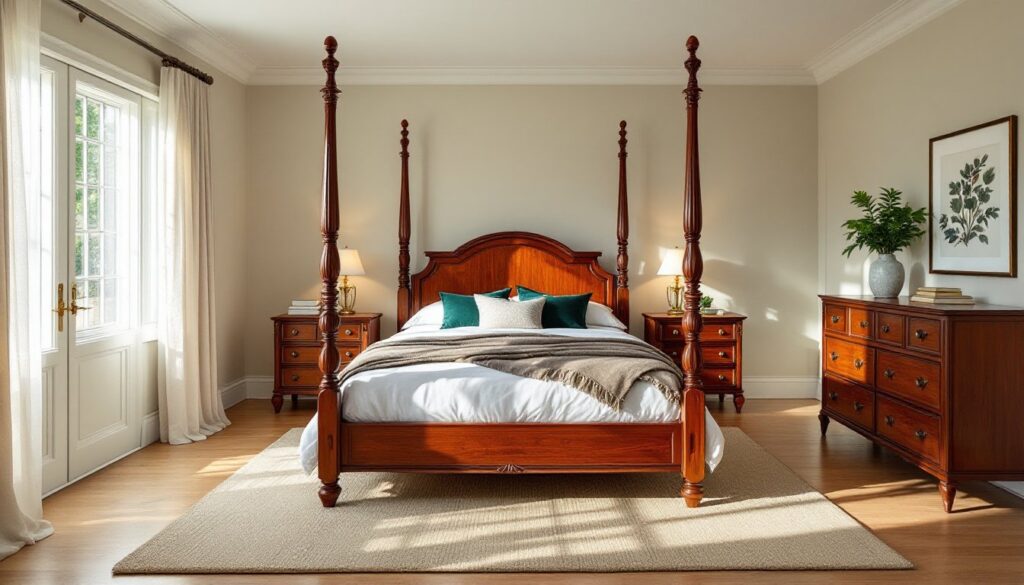
Four-poster beds make a statement but require planning. Standard posts rise 6-7 feet, and if someone’s adding a canopy frame, clearance becomes critical. Measure ceiling height and subtract mattress thickness plus 18-24 inches for visual breathing room. In historic homes with 9-foot ceilings, these beds shine. In modern builds with 8-foot ceilings, they can feel oppressive.
For all frame types, check joinery methods. Mortise-and-tenon joints secured with hardwood dowels or screws outperform glue-only connections. Corner blocks, those triangular braces inside the frame, add racking resistance, which keeps the bed from wobbling over time.
Dressers, Nightstands, and Storage Solutions
Storage pieces in mahogany need to balance aesthetics with function. Dressers come in two standard depths: 18 inches (shallow) and 21-22 inches (deep). The shallow version works well along narrow walls or at the foot of a bed, while deeper models hold bulkier items like sweaters and jeans.
Drawer construction matters more than most buyers realize. Dovetail joints, those interlocking “teeth” at drawer corners, are the gold standard. They’re visible evidence of quality craftsmanship and hold up to decades of opening and closing. Drawers should also have solid wood bottoms (often thinner mahogany or cedar) rather than plywood or MDF, which can sag under weight.
Check the drawer slides. Ball-bearing slides rated for 75-100 pounds provide smooth operation and full extension, so someone can access items at the back without wrestling the drawer. Cheaper side-mounted slides tend to bind and wear out within 5-10 years. For bedroom design inspiration that incorporates functional storage, many designers recommend nightstands with at least one drawer and an open shelf, practicality beats looks-only pieces.
Nightstands should sit 2-4 inches above mattress height for comfortable reach. Standard heights range from 24-28 inches, but measure the bed first. A nightstand that’s too low creates an awkward stretch in the middle of the night: too high, and it feels out of proportion.
Armoires and wardrobes offer closet-alternative storage. Interior layouts vary, some have hanging rods and shelves, others include drawers or pull-out trays. If purchasing an antique or vintage piece, check that the hanging rod is reinforced. Older armoires sometimes used thin dowels that sag under the weight of modern clothing.
How to Style Mahogany Furniture in Modern and Traditional Bedrooms
Mahogany adapts to multiple design styles, but it requires intentional choices to avoid looking dated or heavy.
In traditional bedrooms, lean into the wood’s richness. Pair mahogany with deep jewel tones, emerald green, sapphire blue, or burgundy, in bedding and window treatments. These colors complement the reddish undertones without competing. Brass or oil-rubbed bronze hardware on lamps and curtain rods echoes the warm metal tones often used in mahogany furniture accents.
Layering textiles adds depth. A mahogany sleigh bed pairs well with a wool or linen duvet in cream or taupe, topped with velvet throw pillows. Avoid matching the bedding to the furniture’s exact color, it flattens the visual interest. Instead, pull accent colors from the wood’s undertones.
Many design publications, including those featured on high-end home design platforms, showcase mahogany furniture against neutral walls, Benjamin Moore’s “Swiss Coffee” or Sherwin-Williams’ “Accessible Beige” are common choices. The contrast lets the wood grain take center stage without overwhelming the space.
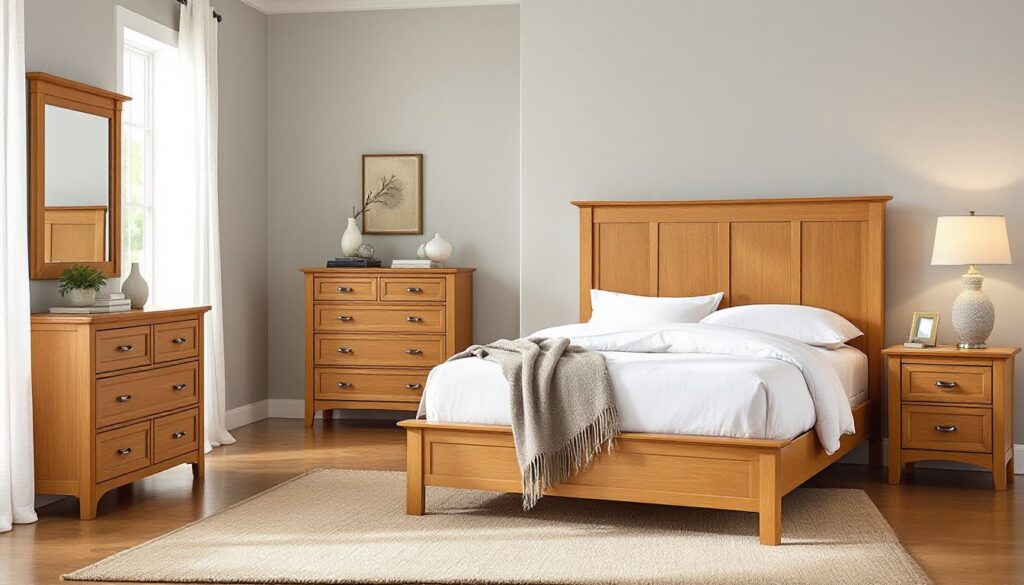
In modern or transitional bedrooms, the goal is to lighten the visual weight. Start with white or light gray walls (Sherwin-Williams “Repose Gray” or Benjamin Moore “Chantilly Lace”). The contrast makes mahogany feel intentional rather than dated.
Keep bedding simple: crisp white linens or a light gray quilt. Introduce texture through materials like linen, cotton waffle weave, or a chunky knit throw at the foot of the bed. The simplicity prevents the room from feeling too ornate.
Mix materials to break up the wood’s dominance. A glass-top nightstand or metal-framed mirror provides visual contrast without clashing. Mid-century modern pieces, think tapered legs and clean lines, pair surprisingly well with mahogany’s warmth.
Lighting plays a huge role. In traditional settings, use table lamps with fabric shades and brass bases. In modern rooms, switch to matte black or brushed nickel fixtures with minimal ornamentation. A simple pendant light or wall-mounted sconces free up nightstand space and add vertical interest.
For anyone leaning toward country or farmhouse aesthetics, mahogany works when balanced with lighter wood tones. A mahogany bed frame can anchor a room with whitewashed shiplap walls or a reclaimed barn wood accent wall. Add woven baskets, cotton quilts, and wrought iron accents to tie the look together.
Art and decor should be intentional, not fussy. In modern spaces, one large-scale piece above the bed (abstract or photography) works better than a gallery wall. In traditional rooms, opt for framed botanical prints or classic landscapes with simple frames that don’t compete with the furniture’s detail.
Caring for and Maintaining Your Mahogany Bedroom Furniture
Mahogany requires regular but straightforward maintenance to keep its finish and structure intact.
Dusting should happen weekly with a microfiber cloth, it traps particles without scratching. Avoid feather dusters: they just redistribute dust. For carved details or grooves, use a soft-bristled brush (a clean paintbrush works) to dislodge buildup before wiping.
Cleaning spills immediately prevents water rings and stains. Blot (don’t wipe) liquid with a soft cloth, then dry the area thoroughly. For sticky residue, dampen a cloth with distilled water and a drop of mild dish soap, wipe gently, then dry.
Polishing frequency depends on the finish. Lacquered or polyurethane-finished pieces need polishing only 2-3 times per year. Use a furniture polish designed for hardwood, products with carnauba wax provide a protective layer without buildup. Apply a thin coat with a soft cloth, let it haze (usually 5-10 minutes), then buff with a clean cloth in the direction of the grain.
Oil-finished mahogany requires more frequent care, every 3-4 months. Use tung oil or danish oil applied sparingly with a lint-free cloth. Work in sections, wiping off excess after 10-15 minutes. Too much oil leaves a sticky surface that attracts dust.
Humidity control is non-negotiable. Mahogany performs best at 40-50% relative humidity. Below 30%, the wood can shrink and crack: above 60%, it may swell or develop mold. A simple hygrometer (available for $10-15) monitors levels. If humidity swings wildly, consider a humidifier in winter and a dehumidifier in summer.
Keep furniture away from direct sunlight and heat sources. Place beds and dressers at least 2 feet from radiators, heating vents, or windows that get intense afternoon sun. UV exposure fades finishes unevenly, and heat dries out the wood, causing cracks.
Scratch repair depends on severity. Light surface scratches often respond to a furniture touch-up marker in a matching tone (test in an inconspicuous spot first). Deeper gouges may need a fill stick or professional refinishing. For minor dings, rubbing a walnut meat over the scratch can darken it enough to blend, odd but effective.
Sticky drawers are usually a humidity issue. If a drawer binds, don’t force it. Remove it completely (most lift out when pulled straight up), then lightly sand the sides with 220-grit sandpaper where friction occurs. Rub a bar of paraffin wax or an old candle along the drawer slides and runners, it acts as a dry lubricant. Avoid sprays like WD-40, which attract dust and gunk up over time.
For moving furniture, always lift, never drag. Mahogany is hard, but the joints and legs can stress under lateral force. Use furniture sliders (felt pads for hardwood, plastic for carpet) to protect both the piece and the floor. When disassembling bed frames for a move, label hardware and photograph the process: reassembly is far easier with a reference.
If refinishing becomes necessary down the line, mahogany strips and sands well. Use 120-grit sandpaper for initial stripping (after chemical remover, if needed), then progress to 180-grit and finish with 220-grit before applying new stain or finish. Always sand with the grain to avoid cross-scratches that show through the finish.
Conclusion
Mahogany bedroom furniture rewards those who choose it carefully and care for it properly. Its durability, grain, and aging characteristics outpace cheaper alternatives, making it a practical long-term investment. Whether someone’s drawn to traditional carved designs or streamlined modern silhouettes, mahogany adapts, provided the styling and maintenance match the material’s quality. With proper humidity control, regular cleaning, and thoughtful placement, these pieces will look better in 20 years than most furniture looks in two.