
Table of Contents
TogglePatio furniture without cushions is like a workshop without proper lighting, technically functional, but uncomfortable enough that nobody wants to spend time there. Whether someone’s replacing sun-faded cushions or outfitting a new set of outdoor furniture, the right cushions transform a backyard into a genuine extension of living space. But outdoor conditions are tough on textiles: UV rays, moisture, mildew, and temperature swings demand materials and construction that can take a beating. This guide walks through everything needed to select cushions that balance comfort, durability, and style, and keep them looking good through multiple seasons.
Key Takeaways
- Quality patio furniture cushions with solution-dyed acrylic fabric and high-density foam maintain color and comfort for years, while cheap cushions fade and flatten within a single season.
- Match cushion type to your furniture: seat cushions for occasional seating, back cushions for deep-seat lounges, and box cushions for sectionals and club chairs where extended relaxation is the goal.
- Solution-dyed acrylic fabrics (Sunbrella, Outdura) are the industry standard for outdoor durability, offering 1,000+ hours of UV resistance and water-shedding properties that outlast cheaper polyester blends.
- Accurate measurements and proper attachment methods—including ties, straps, or Velcro fasteners—prevent sliding and ensure your outdoor patio furniture cushions stay securely in place.
- Routine cleaning (weekly brushing and monthly hosing) plus deep cleaning 2–3 times per season, paired with off-season indoor storage, can extend cushion lifespan by years.
- Refresh your outdoor space instantly by swapping throw pillows seasonally, experimenting with colors and patterns, or rotating cushion covers without replacing entire cushion sets.
Why Quality Patio Furniture Cushions Matter for Your Outdoor Space
Cheap cushions for patio furniture fade to a chalky pastel within one summer, flatten out by mid-season, and grow mildew in the first humid stretch. Quality cushions, on the other hand, hold their color for years, maintain loft through hundreds of sit-down cycles, and shed water instead of absorbing it.
The difference comes down to three factors: fabric grade, fill density, and construction method. Solution-dyed acrylic fabrics (like Sunbrella) have UV inhibitors built into the fiber itself, not just surface-coated. High-density foam, typically 3–5 lb. density polyurethane or open-cell foam with drainage channels, resists compression and dries faster than bargain-grade foam. Double-stitched seams with UV-resistant polyester thread hold up where single-stitch, cotton-thread seams fail.
Beyond longevity, comfort matters. A 2-inch flat cushion on metal or resin furniture creates pressure points. A properly designed box cushion with 4–5 inches of quality fill distributes weight evenly and supports the lower back. For anyone spending more than a few minutes outdoors, reading, dining, entertaining, the investment in good outdoor patio furniture cushions pays off in usability, not just aesthetics.
Types of Patio Furniture Cushions and Their Best Uses
Not all cushions serve the same purpose. Matching cushion type to furniture style and usage prevents fit problems and premature wear.
Seat Cushions vs. Back Cushions vs. Box Cushions
Seat cushions are flat or slightly contoured pads that sit on chairs, benches, or chaise lounges. They typically measure 2–3 inches thick and often include ties or elastic straps to secure them in place. These work well for occasional seating, bistro sets, side chairs, or benches where users sit upright for shorter periods.
Back cushions (also called throw cushions or lumbar pillows) lean against chair backs or fill the gap between seat and backrest. Depth varies from 3–6 inches depending on the chair’s recline angle. They’re essential for deep-seat lounge chairs where the seatback sits at a shallow angle. Without proper back support, users slide forward or strain their lower back.
Box cushions (sometimes called knife-edge cushions when squared-off, or welt cushions when finished with piping) are thicker, boxed-construction seat and back units with vertical side panels (the “boxing”). They range from 4–6 inches thick and often include zippered covers for easy removal. Box cushions suit deep-seat sofas, sectionals, and club chairs where people settle in for extended periods. The interior construction often combines a high-density foam core wrapped in polyester batting and enclosed in water-resistant ticking before the outer fabric cover goes on.
Choosing the right patio furniture seat cushions depends on furniture geometry and intended use. Deep-seat sectionals need box cushions: bistro chairs need slim seat pads. Using the wrong type leads to sliding, poor posture, or cushions that don’t stay put.
Choosing the Right Fabric and Fill for Durability and Comfort
Fabric and fill determine whether cushions last three seasons or ten. Outdoor fabrics face UV degradation, water absorption, mildew growth, and abrasion from use and weather.
Solution-dyed acrylic (Sunbrella, Outdura, Recacril) is the industry standard. Color is locked into the fiber during extrusion, so it resists fading even under constant sun. These fabrics typically carry 1,000+ hours of UV resistance (ASTM D4355 testing) and have a tight weave that sheds water. They’re breathable, so trapped moisture can evaporate rather than fostering mold. Expect to pay more upfront, but these fabrics often outlast the furniture itself.
Polyester blends cost less but fade faster, usually acceptable for covered patios or climates with mild sun exposure. Avoid cotton or cotton blends unless they’re treated with water-repellent and antimicrobial coatings: untreated natural fibers wick moisture and mildew rapidly.
Fill choices break down into foam, polyester fiberfill, and hybrid constructions. High-density polyurethane foam (3–5 lb. per cubic foot) offers the best support and longevity. Open-cell reticulated foam includes drainage channels that let water pass through and air-dry quickly, critical for climates with frequent rain. Closed-cell foam resists water absorption but can trap moisture if the cover isn’t perfectly sealed. Some manufacturers use quick-dry foam wrapped in a polyester layer, which balances support with faster drying.
Polyester fiberfill (polyester batting or blown fiber) is softer and more pillow-like but compresses faster and doesn’t provide firm seating support. It works for back cushions or decorative throw pillows, not primary seat cushions. Homeowners focused on outdoor living often pair furniture foam padding with weather-resistant covers for a custom solution that balances indoor-level comfort with outdoor durability.
Safety note: If cutting or modifying foam, wear a dust mask or respirator. Foam dust irritates lungs, especially polyurethane particles.
How to Measure and Find the Perfect Fit for Your Furniture
Ill-fitting cushions slide off, bunch up, or leave gaps that collect debris. Measure carefully before ordering.
For seat cushions:
- Measure the width of the seating surface at the widest point (front to back).
- Measure the depth (side to side).
- Note any contours, curves, or rounded corners. Some seats taper or have cut-outs for armrests.
- Measure thickness, most seats need 2–4 inches for bistro/dining chairs, 4–5 inches for lounge furniture.
For back cushions:
- Measure the height from the seat surface to the top of the backrest (or desired support height).
- Measure width across the backrest.
- Measure depth (how far the cushion projects forward from the chair back). Deep-seat chairs often need 4–6 inches.
If the furniture has curved or angled backs, take measurements at multiple points and note the angles. Some suppliers offer custom-cut cushions for unusual shapes, though costs run higher.
Ties and attachment points: Check how many tie loops or straps the furniture has, and where they’re located. Cushions should include corresponding ties or elastic bands. For furniture without built-in tie points, consider cushions with non-slip backing or add hook-and-loop fasteners (sew-on Velcro) to both cushion and furniture frame.
Ordering tip: Many manufacturers list dimensions as width × depth × height (e.g., 20″ × 20″ × 4″). Confirm which dimension is which before ordering. A 20″ × 24″ cushion is different from a 24″ × 20″ cushion.
Caring for and Maintaining Your Patio Cushions
Proper maintenance extends cushion life by years. Neglect leads to fading, mildew, and structural breakdown.
Routine cleaning:
• Brush off debris weekly with a soft-bristle brush. Dirt particles abrade fabric fibers over time.
• Hose down monthly with plain water. Let air-dry fully in sunlight (UV helps inhibit mildew).
• Spot-clean spills immediately with mild dish soap and water. Blot, don’t rub, to avoid spreading stains.
Deep cleaning (2–3 times per season):
- Remove covers if zippered. Check care labels, most solution-dyed acrylics are machine-washable in cold water on gentle cycle. Air-dry or tumble on low: high heat can shrink covers or damage waterproof liners.
- For non-removable covers, mix 1/4 cup mild detergent + 1 cup white vinegar in a gallon of warm water. Scrub with a soft brush, rinse thoroughly, and air-dry.
- For mildew stains, use a solution of 1 cup bleach per gallon of water (safe for most solution-dyed acrylics: test in an inconspicuous spot first). Scrub, rinse completely, and dry in full sun.
Storage:
• Store cushions indoors during off-season or extended rain. Even weather-resistant cushions last longer out of the elements.
• If storing outdoors, use ventilated storage bins or deck boxes. Sealed plastic bins trap moisture and promote mildew. Some homeowners store cushions in a shed or garage on wire shelving to allow airflow.
• Don’t stack cushions tightly, allow air circulation between them.
Extending lifespan:
• Rotate cushions every few weeks so wear and sun exposure distribute evenly.
• Flip reversible cushions to even out compression.
• Keep cushions off the ground when not in use. Concrete and soil wick moisture into foam.
Safety: When using bleach or strong cleaners, wear rubber gloves and work in a well-ventilated area or outdoors. Many outdoor living guides recommend testing any cleaner on a hidden seam before applying it to visible surfaces.
Styling Tips to Refresh Your Outdoor Living Area
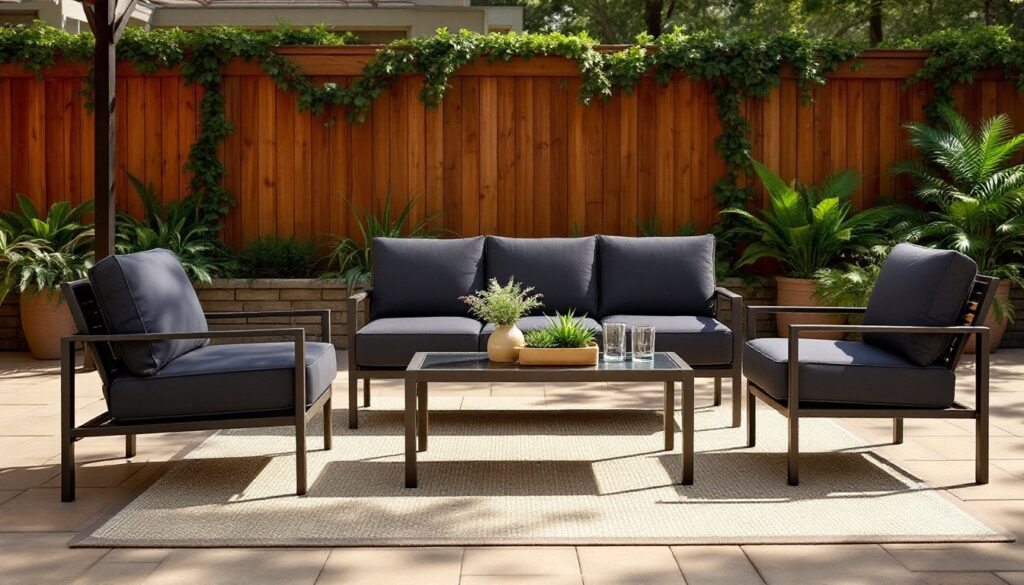
Cushions are the easiest way to update outdoor aesthetics without replacing furniture. A few strategic choices make a big visual impact.
Color and pattern:
• Solid neutrals (gray, taupe, navy, charcoal) anchor a space and pair well with changing accent pillows.
• Bold patterns or colors (stripes, geometrics, tropical prints) add personality but date faster. Consider solid seat cushions with patterned throw pillows for flexibility.
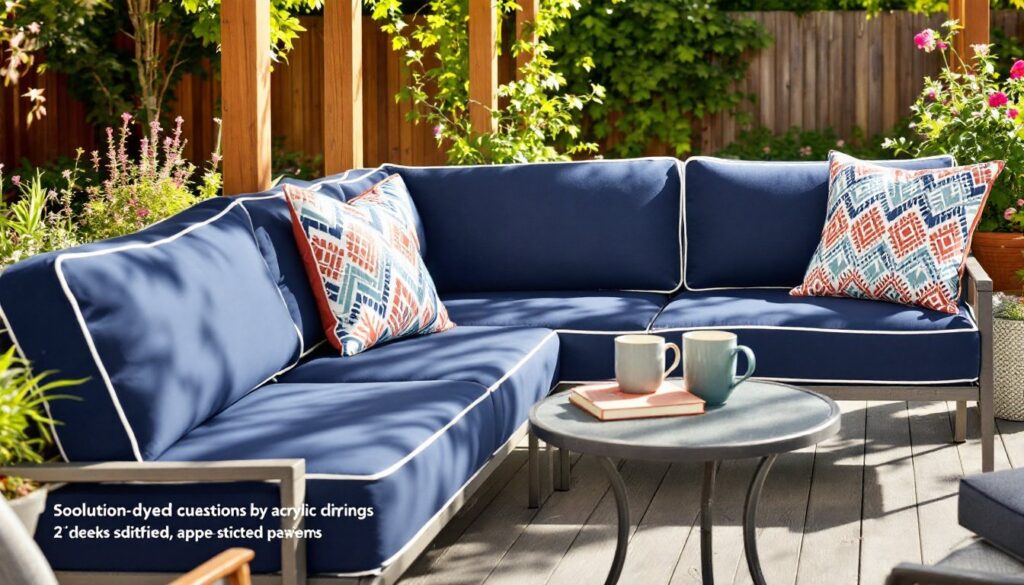
• Contrast piping or welting (the cord sewn into seams) adds a tailored look and visually frames cushions.
Layering:
• Pair solid seat and back cushions with 2–3 smaller throw pillows in complementary colors or patterns. An 18″ × 18″ or 20″ × 20″ pillow fits most lounge chairs.
• Mix textures: smooth acrylic cushions with textured indoor/outdoor pillows (cable-knit look, woven, embroidered).
Seasonal swaps:
• Switch out throw pillows seasonally without replacing the entire cushion set. Coastal stripes in summer, warm plaids in fall.
• Keep a second set of zippered covers in a different color palette. Swapping covers takes minutes and costs less than new cushions.
Matching vs. mixing:
• Matching cushions across all furniture creates a cohesive, formal look.
• Mixing colors within a coordinated palette (e.g., navy, white, and coral) adds visual interest, especially in larger seating areas. Designers often recommend keeping seat cushions uniform and varying back cushions or throw pillows.
Many regional home design resources, such as Southern Living, feature porch and patio setups that demonstrate how layering and color choices transform outdoor spaces into extensions of interior style. For additional inspiration on outdoor cushion styling and product selections, browse curated collections like those on Gardenista, which showcase a range of aesthetic approaches from minimalist to eclectic.
Final thought: Cushions aren’t permanent. Don’t be afraid to experiment. If a color doesn’t work, swap it next season. Outdoor spaces should be as comfortable and personal as any indoor room, and cushions are the easiest variable to adjust.