

Table of Contents
ToggleSarasota’s year-round sunshine and coastal breezes make outdoor living spaces as important as any interior room. But that same paradise climate, salt air, humidity spikes, and afternoon downpours, will eat through poorly chosen patio furniture in a single season. Homeowners who treat their patio setup like an afterthought end up replacing sun-faded cushions and rusted frames every few years. Smart material choices, local shopping know-how, and a simple maintenance routine make the difference between furniture that lasts a decade and pieces that need replacing before the warranty expires.
Key Takeaways
- Sarasota’s salt air, humidity spikes, and UV exposure demand marine-grade aluminum or quality resin wicker furniture; standard materials fail within one season.
- Material selection is critical for patio furniture in Sarasota—choose solution-dyed acrylic cushions, teak or eucalyptus wood, and avoid wrought iron unless hot-dip galvanized.
- Weekly cleaning with a soft brush and mild soap plus monthly hardware inspections can extend your patio furniture lifespan to a decade or more.
- Invest in shade structures like retractable canopies or aluminum pergolas with 50+ UV ratings to protect both furniture and comfort during peak sun hours.
- Store lightweight furniture or secure it with tie-downs during hurricane season (June–November) to prevent wind damage and project hazards.
- Local Sarasota showrooms and specialty retailers offer better guidance on coastal-rated pieces than big-box stores, with commercial-grade options backed by 5–10 year warranties.
Why Sarasota’s Climate Demands Smart Patio Furniture Choices
Sarasota sits in USDA hardiness zone 9b to 10a, with average annual rainfall around 54 inches, most of it arriving between June and September. That means furniture spends months soaking in humidity levels above 70%, then baking under UV indexes that regularly hit 10+. Salt air from the Gulf compounds the problem, accelerating corrosion on metal frames and degrading synthetic fibers.
Temperature swings matter less here than moisture cycling. A dining set that gets drenched in a 3 PM thunderstorm, then bakes dry by 5 PM, goes through expansion and contraction that loosens joints and cracks finishes. Coastal homeowners also deal with mildew on fabric and cushions if airflow is poor. Furniture marketed as “weather-resistant” in the Midwest often fails in Florida’s more aggressive environment.
Building codes don’t regulate patio furniture, but wind ratings matter during hurricane season. Lightweight resin pieces become projectiles in tropical storm winds. Heavier sets or those with anchor points offer more security, and most insurance adjusters recommend storing or securing loose items when a named storm enters the Gulf.
Best Materials for Patio Furniture in Sarasota’s Coastal Environment
Material selection is the single biggest factor in longevity. Sarasota’s salt air and UV exposure eliminate entire categories of furniture that work fine inland.
Weather-Resistant Options That Last
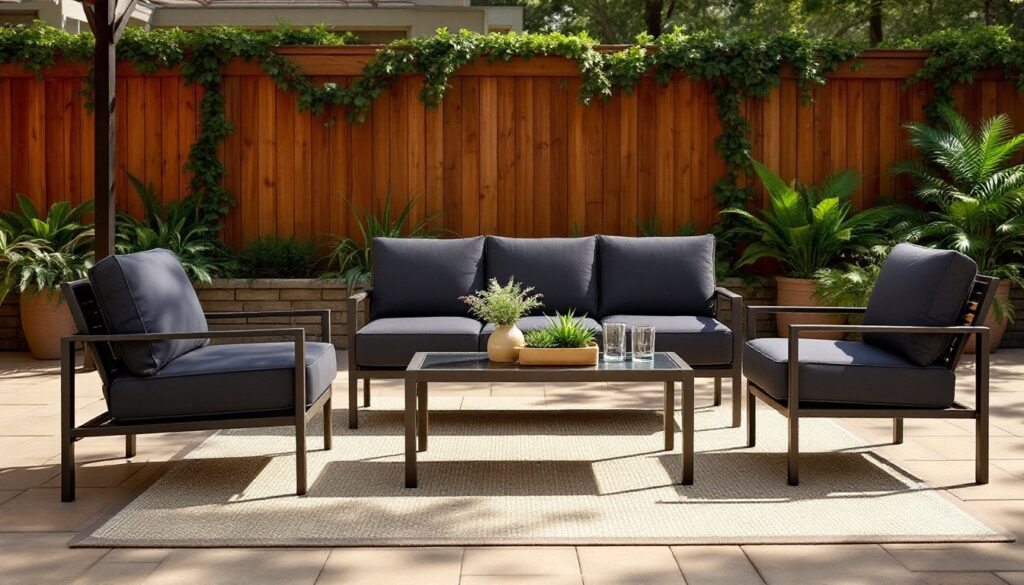
Marine-grade aluminum tops the list for frames. It’s powder-coated or anodized to resist salt corrosion, weighs less than steel, and never rusts. Look for welded joints rather than bolted, bolts loosen over repeated wet-dry cycles. Brands often specify “marine-grade” or “coastal-rated” aluminum: standard aluminum grades pit and corrode faster.
Teak and eucalyptus are the go-to hardwoods. Both contain natural oils that repel moisture and resist rot. Teak weathers to a silver-gray patina unless treated with teak oil annually. Eucalyptus costs less but requires more frequent sealing, plan on refinishing every 18-24 months. Avoid pine, cedar, or pressure-treated lumber for frames: they’ll warp and splinter in Sarasota’s humidity.
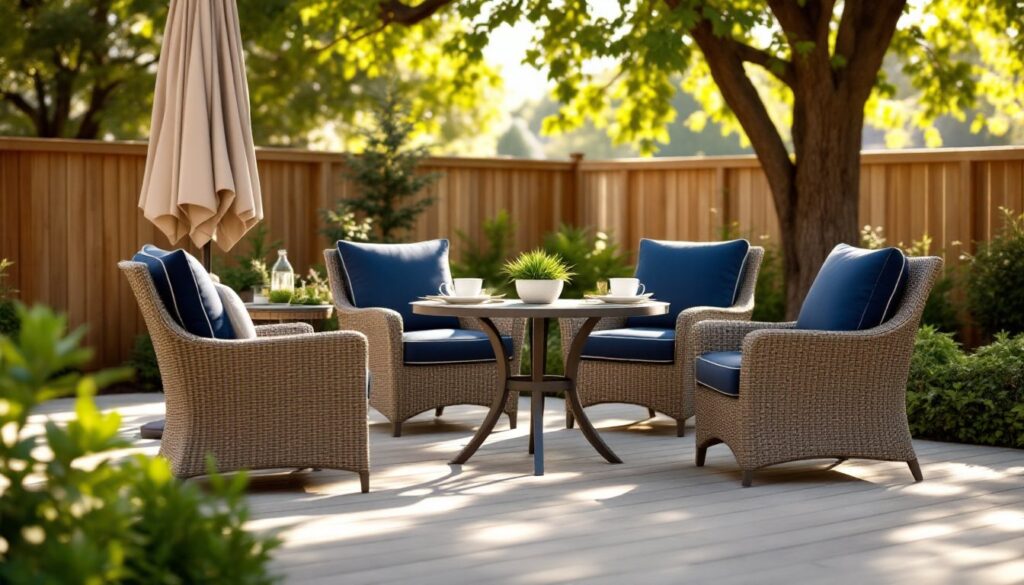
High-density polyethylene (HDPE) resin wicker mimics natural wicker but won’t crack or fade. It’s UV-stabilized and drains quickly after rain. Quality resin wicker uses thicker strands (at least 2mm) and aluminum frames underneath. Cheap resin versions use hollow strands that split and thin frames that bend. Check weight capacity ratings, better-built pieces support 250+ pounds per seat.
Solution-dyed acrylic fabrics (like Sunbrella) resist fading and mildew far better than polyester blends. The color is embedded in the fiber itself, not printed on the surface, so it won’t wash out. Cushions should have drainage grommets and quick-dry foam cores, standard polyurethane foam holds water and breeds mold. Remove cushions during extended rainy periods or store them in a deck box with ventilation.
Avoid wrought iron and steel unless it’s hot-dip galvanized and powder-coated with a marine finish. Even then, expect touch-ups. Scratches expose bare metal to salt air, and rust spreads fast. Cast aluminum looks similar to iron but performs far better. Also skip natural wicker, rattan, or unsealed wood, they’ll degrade within two seasons.
Top Patio Furniture Stores and Showrooms in Sarasota
Shopping locally lets buyers see material quality and test comfort before committing. Sarasota has several retailers specializing in coastal-rated outdoor furniture.
Patio Renaissance and Tropitone dealer showrooms carry commercial-grade lines built for resorts and coastal properties. Expect higher price points, $3,000 to $8,000 for a full seating set, but warranties often run 5-10 years on frames. Staff can verify salt-air ratings and recommend pieces based on sun exposure and covered vs. uncovered placement.
Big-box stores (Home Depot, Lowe’s) stock budget-friendly options in the $500-$1,500 range. Quality varies widely: check frame material and cushion construction closely. Floor models often show sun damage or loose joints, useful for spotting weak points in a design. Off-season sales (September-November) offer the deepest discounts, but selection shrinks.
Local furniture stores along U.S. 41 and in downtown Sarasota often carry regional brands and can special-order custom cushion fabrics. Delivery and assembly services save time, especially for larger sectionals or dining sets. Ask about replacement cushion availability, many manufacturers discontinue fabric lines after a few years.
Online retailers offer broader selection and competitive pricing, but shipping costs for bulky furniture add up. When considering outdoor design ideas, verify that materials meet Florida’s coastal exposure standards before ordering. Return logistics for damaged or incorrect items can be a hassle with oversized freight.
Styling Your Sarasota Patio: Design Ideas for Coastal Living
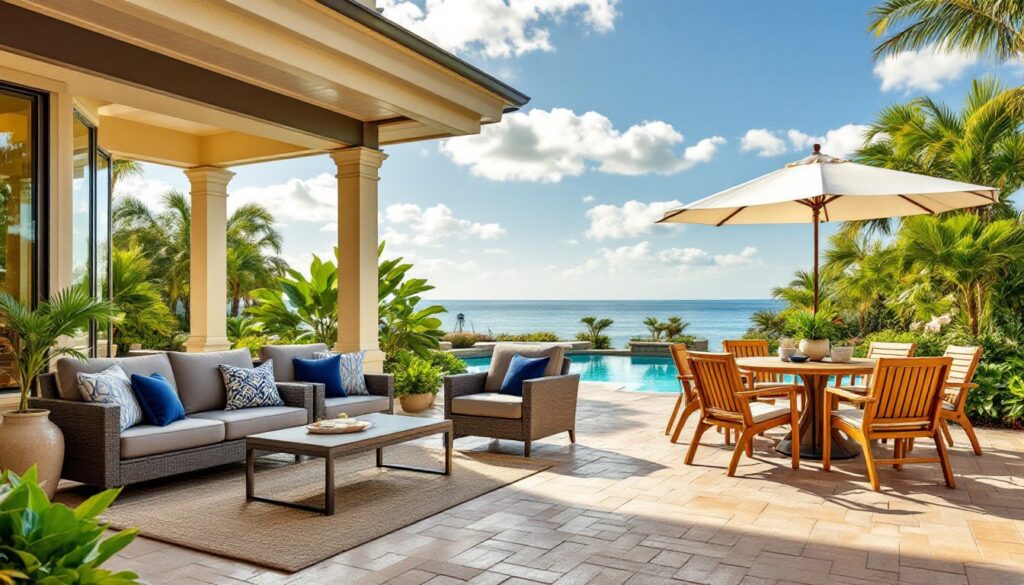
Sarasota’s outdoor spaces function as extensions of interior living areas, not just seasonal add-ons. Layout and design should support year-round use.
Shade structures are non-negotiable. Pergolas with retractable canopies, cantilever umbrellas (9-11 ft diameter), or fixed roof overhangs keep furniture and people comfortable during midday heat. Aluminum pergolas with powder-coated finishes hold up better than wood, which requires staining every 2-3 years. Fabrics should be solution-dyed acrylic with UV ratings of 50+.
Layout depends on patio size and use. For entertaining, arrange seating in a U-shape or L-shape around a coffee table or fire pit. Conversation areas work best when seats are 6-8 feet apart, close enough to talk without shouting, far enough for foot traffic. Dining sets need 3 feet of clearance around the table for chairs to pull out comfortably. Measure twice: oversized furniture makes small patios feel cramped.
Color palettes in coastal settings lean toward neutrals, grays, tans, whites, navy, that don’t compete with water views and tropical landscaping. Bright accent pillows in coral, turquoise, or lime add pops of color without overwhelming the space. Darker cushion colors (charcoal, navy) show less fading and hide stains better than whites and creams. Many porch and patio designs incorporate ceiling fans or misters to improve airflow and cool temperatures by 10-15°F.
Outdoor rugs define zones and soften hard surfaces, but they need proper drainage. Polypropylene rugs dry quickly and resist mold: natural fiber rugs (jute, sisal) trap moisture and rot. Use rug pads designed for outdoor use, they prevent slipping and allow airflow underneath. Roll up and store rugs during hurricane season.
Maintenance Tips to Protect Your Investment Year-Round
Routine care extends furniture life and keeps it looking sharp. Most damage is preventable with simple habits.
Weekly: Hose down frames and wipe cushions to remove salt spray, pollen, and dirt. Use a soft-bristle brush on textured surfaces. For stubborn grime, mix 1/4 cup mild dish soap per gallon of water, skip harsh detergents or bleach, which degrade finishes and fabrics.
Monthly: Inspect joints, welds, and hardware for looseness or corrosion. Tighten bolts and screws as needed. Apply a thin coat of car wax to aluminum and resin frames to protect finishes and make cleaning easier. Check cushion zippers and seams for mold or mildew: spot-clean with a 10:1 water-to-bleach solution if needed, then rinse thoroughly.
Seasonally: Deep-clean cushion covers (remove and machine wash on gentle cycle, air dry). Reapply teak oil or wood sealant to hardwood furniture. Lubricate moving parts on umbrellas, gliders, and recliners with silicone spray. Store lightweight pieces or secure them with tie-downs before hurricane season (June 1–November 30). Even heavy furniture should be moved away from railings or pool edges where storm surge or wind can shift it.
Off-season storage isn’t necessary in Sarasota’s mild winters, but many homeowners cover furniture during extended absences. Use breathable covers, vinyl traps moisture and encourages mildew. Covers should have tie-downs or grommets to prevent wind damage. Elevate furniture on blocks if the patio floods during heavy rain: standing water accelerates rust and rot.
Replacement parts: Order extra cushion covers when buying new furniture, manufacturers discontinue fabrics regularly, and replacements become hard to source. Keep touch-up paint for metal frames (many brands sell color-matched pens). For inspiration on maintaining outdoor living areas and seasonal refresh ideas, note that minor repairs cost far less than full replacements.
Conclusion
Sarasota’s outdoor living potential is unmatched, but only if patio furniture can handle the environment. Coastal-rated materials, smart shopping, and consistent maintenance separate setups that last a decade from those that fail in three years. Focus on marine-grade aluminum or quality resin, invest in proper shade and drainage, and treat maintenance as part of the routine, not an emergency repair. Done right, a well-built patio becomes the most-used room in the house.