



Table of Contents
ToggleSwivel chairs aren’t just for the office anymore. When integrated into patio furniture, they solve a problem most homeowners don’t realize they have: rigid seating that forces guests to crane their necks during conversations or constantly reposition chairs to follow the sun or shade. A quality swivel chair transforms a static outdoor space into a flexible, social hub. Whether outfitting a compact balcony or a sprawling deck, understanding the construction, configuration options, and maintenance requirements ensures the investment pays off in comfort and durability for years.
Key Takeaways
- Patio furniture with swivel chairs eliminates the need to reposition seating by offering 360-degree mobility, allowing guests to engage in conversations and follow sun or shade without disrupting the group.
- Quality swivel chair construction is indicated by smooth-spinning mechanisms with reinforced welds at the swivel housing, ball bearing systems, and aluminum tubing with 1.2 to 1.5 mm wall thickness that resists denting.
- Plan a minimum 36 inches of clearance behind each occupied swivel chair and account for the additional 2 to 4 inches the swivel base adds compared to stationary models when measuring your patio space.
- Regular maintenance—including monthly cleaning, bi-seasonal lubrication with white lithium grease, and quarterly bolt inspections—keeps swivel mechanisms functioning smoothly and extends furniture lifespan to a decade or longer.
- Sling fabric seating works best in humid climates due to quick drying and mildew resistance, while cushioned seating (Sunbrella or Outdura) requires winter storage in freeze-thaw regions to prevent foam damage from moisture expansion.
Why Swivel Chairs Transform Your Patio Experience
The core advantage of swivel seating is 360-degree mobility without the chair scraping across decking or pavers. This matters during long dinners when someone at the table wants to watch kids in the yard or track sunset views without disrupting the group. In conversation sets, swivel rockers let users shift between facing the fire pit and engaging with multiple seating zones.
From an ergonomic standpoint, swivel mechanisms reduce strain. Instead of twisting the torso or moving the entire chair, a slight hip rotation repositions the sitter. This is especially valuable for older adults or anyone with limited mobility.
Swivel chairs also maximize small spaces. On a narrow balcony or corner patio, fixed chairs often face a single direction. Swivel models let one or two seats serve multiple functions, dining, lounging, or conversation, without rearranging furniture. That flexibility is what keeps outdoor spaces functional as needs change throughout the day or season.
Finally, the swivel mechanism itself signals quality. Cheaper patio chairs rely on basic stamped-metal frames and static joints. A smooth-spinning swivel base typically indicates a heavier-duty bearing system, reinforced frame welds, and better overall construction. It’s a feature that correlates with longevity.
Types of Patio Furniture Sets Featuring Swivel Chairs
Dining Sets With Swivel Seating
Outdoor dining sets commonly include four to six swivel chairs paired with a rectangular or round table. Standard table heights range from 28 to 30 inches, matching indoor dining furniture. Swivel chairs in these sets typically feature a spring-action rocker combined with the swivel base, letting diners lean back comfortably between courses.
Look for sets with armrests that clear the table apron. Chairs with overly wide arms (more than 24 inches outside width) won’t tuck under standard 42- or 48-inch round tables. Counter-height sets (36-inch tables with chairs seat heights around 24 inches) are popular for small patios because they create visual interest without requiring extra square footage.
Most dining swivel chairs use a bolt-through mounting system where the swivel plate attaches directly to the chair frame and base. Inspect weld points at the swivel housing, this is a common failure point on budget models. Quality sets reinforce this joint with gussets or thicker-gauge tubing.
Conversation Sets and Lounge Configurations
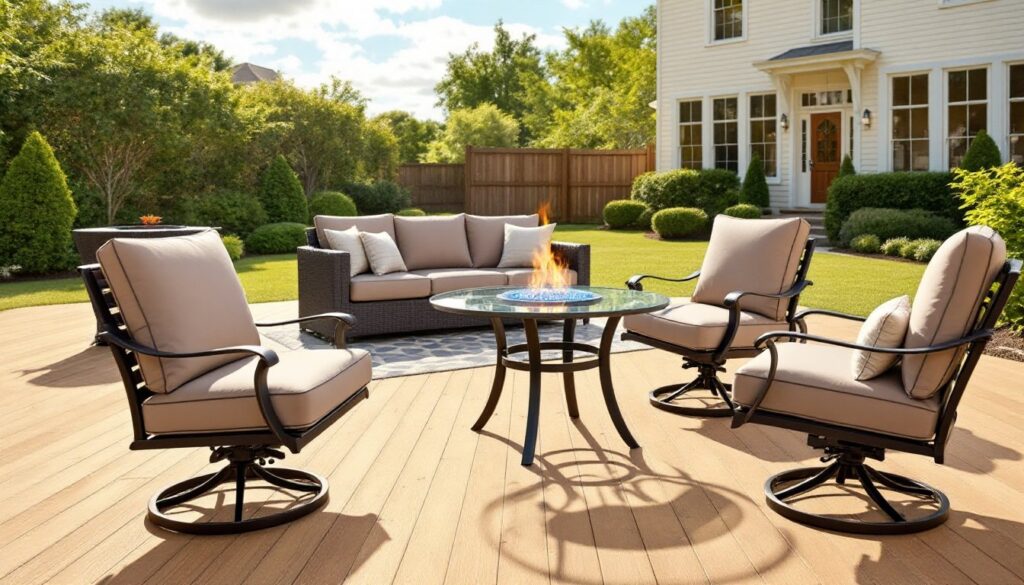
Conversation sets typically group two to four deep-seating swivel chairs around a coffee table or fire pit. Seat depths run 20 to 24 inches (versus 16 to 18 inches for dining chairs), and back heights are lower, often 32 to 36 inches total, to encourage a reclined posture.
Swivel gliders are a subset where the chair rocks on a curved base while also rotating. The motion is smooth but requires a flat, level surface: decking with gaps wider than ½ inch can catch the glider mechanism. These work well on concrete patios or composite decking with tight seams.
Sectional sets sometimes include one or two swivel club chairs as anchor pieces. Pairing stationary loveseats with swivel end chairs gives flexibility without the cost of outfitting every seat with a mechanism. This hybrid approach also balances aesthetics, too many swivel chairs in one grouping can look visually cluttered because the bases add bulk.
Materials That Matter: Choosing Durable Swivel Chair Construction
Aluminum frames dominate the swivel chair market because the material resists rust, weighs less than steel, and allows complex casting for decorative details. Look for powder-coated finishes rather than paint: powder coating bonds at a molecular level and resists chipping. Wall thickness matters, premium aluminum tubing measures 1.2 to 1.5 mm, while budget frames may use 0.8 mm stock that dents easily.
Steel frames appear in heavy-duty models, often with a baked enamel or e-coating. Steel swivels handle higher weight capacities (400+ pounds versus 250 to 300 for aluminum) but require vigilant maintenance. Any scratch through the finish invites rust. Steel is the better choice for commercial settings or households with multiple large adults, but it’s overkill for typical residential use.
Wicker and resin wicker (polyethylene or PVC over a metal frame) add visual warmth. The swivel mechanism sits inside the frame, hidden by woven panels. Quality resin wicker is UV-stabilized and rated for 2,000+ hours of sun exposure without fading. Cheaper versions use recycled plastic that becomes brittle within two seasons. Inspect the weave density, gaps wider than ¼ inch indicate low-quality material that will sag.
Sling fabric seating uses a suspended mesh over the frame. Slings dry quickly, resist mildew, and conform to body shapes. The fabric attaches via spline channels or clips. Over time, slings stretch: replacements run $30 to $60 per chair and require a spline roller tool (similar to installing window screens). Outdoor furniture slings are a practical choice for humid climates where cushioned seating invites mold.
Cushioned seating typically uses Sunbrella or Outdura fabric over high-density foam cores wrapped in moisture barriers. Foam density should be at least 1.8 lbs per cubic foot (often labeled as HR35 or similar). Lower-density foam compresses permanently within one season. Cushion ties or elastic straps prevent sliding during swiveling, cheap Velcro tabs fail quickly. Expect to bring cushions inside during winter in freeze-thaw climates: moisture trapped in foam expands when frozen and tears the cell structure.
How to Select the Right Swivel Patio Set for Your Space
Start with measurements. A functional patio dining area needs 36 inches of clearance behind each chair when occupied. For a four-seat rectangular table (roughly 40 x 60 inches), plan for a 9 x 11-foot footprint minimum. Swivel chairs add 2 to 4 inches to the base diameter compared to stationary models, so account for that in tight spaces.
Test the swivel action before buying. A quality mechanism spins with one-finger pressure and stops without coasting more than a quarter turn. Cheap bushings create drag or wobble. Sit down hard and twist, listen for creaks or metal-on-metal grinding. Ball bearing swivels (found in mid-to-high-end sets) feel noticeably smoother than nylon bushing designs.
Weight capacity is often underreported. Manufacturers list static weight limits (sitting still), but swiveling creates lateral force. If the stated capacity is 250 pounds, assume a realistic safe limit around 200 pounds in active use. For households with larger adults, look for reinforced frames and capacities above 300 pounds.
Match the set to your patio surface. Outdoor spaces with composite decking may show scratches from metal swivel bases: adhesive felt pads or rubber caps solve this. On pavers or flagstone, ensure the swivel base diameter is large enough that it won’t tip into gaps between stones. A 4- to 5-inch base plate is minimum for uneven surfaces.
Consider storage. Swivel chairs with removable cushions and stackable frames make winter storage simpler. Fully welded, cushioned swivel rockers require either a large shed or weather-resistant covers. Budget $50 to $100 for quality furniture covers (look for breathable, UV-resistant fabric with elastic hems and tie-downs). Cheap vinyl covers trap moisture and accelerate mildew.
Finally, think about aesthetics in context. Cast aluminum with ornate scrollwork suits traditional homes: clean-lined steel or wicker fits modern designs. Swivel chairs are focal pieces, so their style will anchor the entire patio’s look. Outdoor furniture choices often reflect regional preferences, deep South patios favor classic wicker and wrought iron, while coastal areas lean toward teak or aluminum for salt resistance.
Maintenance Tips to Keep Your Swivel Chairs Spinning Smoothly
Monthly cleaning prevents grit buildup that grinds down bearings. Use a garden hose to flush debris from under the swivel base. For wicker, a soft brush dislodges dirt from weave gaps. Sling fabric needs only soapy water and a sponge: avoid pressure washers, which can fray mesh.
Lubricate the swivel mechanism twice per season. Remove the chair from the base if possible (most bolt assemblies use four hex-head bolts). Apply white lithium grease or silicone spray to the bearing race or bushing contact points. Avoid WD-40, it’s a solvent, not a long-term lubricant, and attracts dust. Wipe away excess to prevent drips on cushions or decking.
Inspect mounting bolts quarterly. Swivel bases experience constant lateral stress, which loosens fasteners. Use a socket wrench to check torque: bolts should be snug but not overtightened (which can crack the swivel housing). If a bolt spins freely without tightening, the mounting hole may be stripped, this requires a helicoil insert or replacement base.
Cushion care extends their lifespan. Brush off debris before it embeds in fabric. Sunbrella cleans with a solution of ¼ cup mild dish soap and 1 gallon warm water: scrub with a soft brush and rinse thoroughly. Treat mildew with a 10% bleach solution (1 part bleach to 9 parts water), let it sit for 15 minutes, then rinse. Air-dry completely before replacing cushions, damp cushions in storage grow mold within days.
In regions with freezing winters, drain any water trapped in hollow frame tubes. Aluminum and steel frames can split if ice expands inside. Tip chairs upside down after rain, or drill small weep holes (⅛-inch diameter) at low points in the frame to let water escape. This is standard practice for commercial outdoor furniture but often overlooked by homeowners.
Finally, touch up powder-coat chips immediately. Use a color-matched appliance paint or nail polish as a temporary fix. Exposed aluminum or steel oxidizes rapidly once the coating is breached. For steel, a rust converter product stops corrosion before repainting.
Swivel chairs are one of the few patio upgrades that genuinely change how people use outdoor space. With proper selection and care, a quality set delivers a decade or more of flexible, comfortable seating. The upfront investment is higher than stationary furniture, but the daily convenience and durability justify the cost for anyone serious about making their patio a true living area.