

Table of Contents
ToggleFinding the right outdoor patio furniture shouldn’t feel like a scavenger hunt. Whether someone’s replacing a weathered seating set or starting from scratch on a new deck, the store they choose makes a big difference. Local shops offer hands-on inspection and personalized service, while big-box retailers promise convenience and volume pricing. The key is knowing what to prioritize, material quality, warranty coverage, delivery options, before driving across town or clicking “buy now.” This guide walks through the practical steps for locating nearby furniture stores, comparing options, and making a purchase that’ll hold up through seasons of sun, rain, and backyard barbecues.
Key Takeaways
- Choose a patio furniture store near you based on staff expertise, inventory depth (frame materials like aluminum, steel, and all-weather wicker), warranty coverage (3–5 years minimum on frames), and delivery/assembly services rather than location convenience alone.
- Material quality and construction matter most: welded aluminum joints outlast bolted connections, powder-coated finishes resist rust better than spray paint, and UV-rated fabrics (1,500+ hours) prevent fading in outdoor furniture.
- Search for local outdoor patio furniture stores using Google Maps filtered by 4.0+ star ratings, check manufacturer websites for authorized dealers, and inspect frames carefully for rust and loose joints before purchasing.
- Local specialty retailers offer personalized service and custom options (bespoke cushions, color matching) with delivery included, while big-box stores compete on price and convenience but require DIY assembly and have limited staff expertise.
- Maximize savings by shopping during off-season clearance sales (late August–September and January–February with 30–60% discounts), negotiating on floor models, and asking about price-matching, package deals, and free delivery promotions.
- Always clarify frame materials (gauge and type), cushion fill/cover ratings, warranty terms in writing, return policies (minimum 30 days), and assembly requirements before making your purchase.
What to Look for in a Local Patio Furniture Store
A solid patio furniture store does more than display chairs on a showroom floor. Start with inventory depth, look for stores that stock multiple frame materials (aluminum, steel, teak, all-weather wicker) and cushion fabrics with UV and mildew resistance ratings. The best stores carry replacement cushions and hardware so customers aren’t stuck replacing an entire set when one piece fails.
Staff expertise matters. Sales associates should know the difference between powder-coated steel and galvanized frames, explain why marine-grade polymer wicker resists cracking better than vinyl, and discuss fade resistance measured in hours of UV exposure. If they can’t answer material questions or recommend specific products for a customer’s climate zone, keep looking.
Check for assembly and delivery services. Flat-pack furniture saves on shipping costs but requires tool work and patience. Stores offering white-glove delivery and on-site assembly eliminate the hassle, especially for heavier sectional sets or dining tables that weigh over 100 pounds.
Warranty terms separate quality retailers from discount outlets. Reputable stores back their products with multi-year frame warranties (three to five years minimum) and at least one year on fabrics. Read the fine print: some warranties exclude sun fade or require annual sealing for wood furniture.
Types of Outdoor Patio Furniture Worth Shopping For
Dining sets anchor outdoor entertaining spaces. Look for tables with slatted tops (aluminum or synthetic wood) that shed water and resist warping. Avoid glass tops in high-wind areas unless the base weighs at least 80 pounds or uses ground anchors. Standard patio dining tables measure 60 to 72 inches long and seat six to eight, confirm dimensions fit the space with at least 36 inches of clearance on all sides for chair movement.
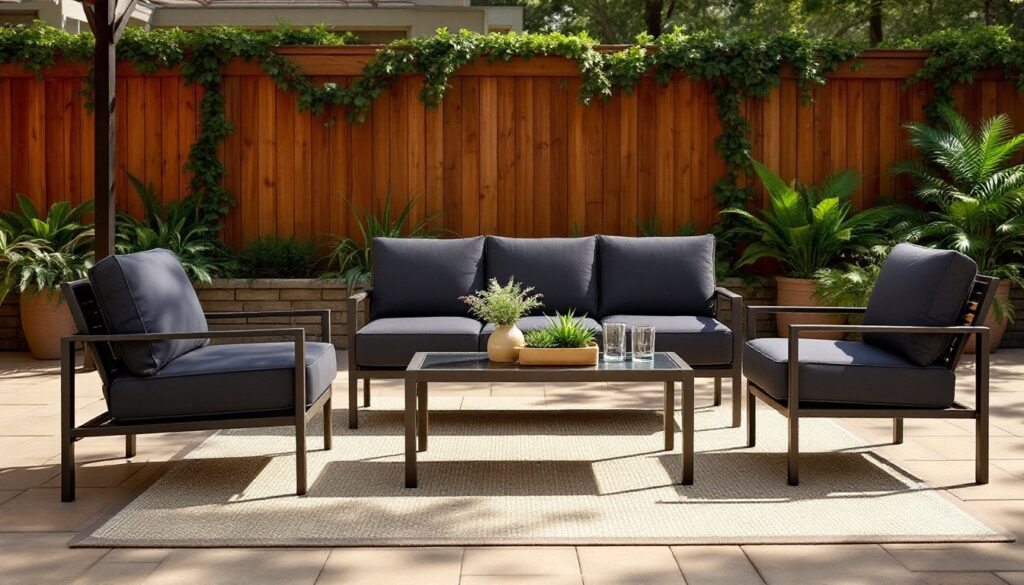
Sectional seating offers flexible layouts for lounging areas. Modular pieces with individual cushions allow rearrangement and easier storage during winter months. Check frame construction: welded aluminum joints outlast bolted connections, and powder-coated finishes (minimum 2-mil thickness) resist rust better than spray paint.
Lounge chairs and chaises need adjustable backs (three to five positions) and non-slip feet to prevent sliding on composite or tile decking. Stackable designs save storage space, look for chairs that nest without scratching frames.
Fire pit tables and conversation sets combine seating with built-in propane or natural gas burners. Verify BTU output (30,000 to 50,000 BTU for adequate warmth) and check local fire codes, some municipalities restrict open flames on wooden decks or within 10 feet of structures. Many highly rated outdoor furniture pieces now integrate weather-resistant storage for propane tanks or fireplace accessories.
Umbrellas and shade structures protect furniture and occupants. Cantilever umbrellas with crank-lift mechanisms and tilting canopies offer better sun control than center-pole models. Canvas weight (minimum 200 GSM polyester) and fade ratings (1,500+ hours of UV exposure) determine longevity.
How to Search for Outdoor Furniture Stores in Your Area
Start with Google Maps using terms like “patio furniture store,” “outdoor furniture,” or “garden furniture.” Filter results by customer ratings (4.0 stars or higher) and read recent reviews, not just star counts. Look for mentions of product quality, return policies, and post-sale support.
Local home and garden centers often carry seasonal outdoor furniture alongside plants and landscaping supplies. These stores typically stock regionally appropriate materials: rust-resistant frames in coastal areas, UV-stabilized fabrics in high-altitude sun zones, and quick-drying cushions in humid climates. Many have end-of-season clearance sales (late August through September) with discounts up to 50% off.
Specialty outdoor living retailers focus exclusively on patio and deck furnishings. They usually offer higher-end materials, teak, eucalyptus, commercial-grade aluminum, and custom cushion fabrication. Expect to pay 20% to 40% more than big-box prices, but warranty coverage and material thickness often justify the premium.
Furniture consignment and estate sale shops sometimes carry high-quality used pieces at significant discounts. Inspect frames carefully for rust penetration (not just surface oxidation), loose joints, and cracked welds. Cushions can be replaced affordably, but frame damage rarely repairs well outdoors.
Check manufacturer websites for authorized dealer locators. Brands like Tropitone, Brown Jordan, and Kingsley Bate maintain dealer networks and honor warranties only through approved retailers. Buying from unauthorized sellers can void coverage.
Questions to Ask Before Making Your Purchase
“What’s the actual frame material and gauge?” Nominal descriptions like “metal” or “resin” don’t cut it. Demand specifics: 16-gauge steel versus 20-gauge (thicker is stronger), extruded aluminum versus stamped, or high-density polyethylene (HDPE) versus cheaper polystyrene.
“How is the frame joined?” Welded joints on aluminum and steel frames outlast bolted connections. For wood furniture, ask about joinery, mortise-and-tenon or dowel joints with marine epoxy hold up better than screws alone.
“What’s the cushion fill and cover rating?” Quick-dry foam (reticulated polyurethane) sheds water faster than standard upholstery foam. Covers should carry UV resistance ratings (at least 1,000 hours, preferably 2,000+) and be removable with zipper closures for cleaning. Acrylic-based fabrics (Sunbrella, Outdura) resist fading and mildew better than polyester blends.
“Does this require assembly, and what tools are needed?” Some sets arrive fully assembled, others come flat-packed with 50+ fasteners. If assembly is required, confirm whether the store offers paid setup, it’s usually worth the $75 to $150 upcharge for complex sectionals.
“What’s covered under warranty, and for how long?” Get it in writing. Frame warranties should last three to five years minimum. Cushion coverage varies, one to two years is standard, but premium fabrics sometimes carry five-year fade guarantees. Clarify whether wind damage, saltwater exposure, or neglect void the warranty.
“What’s your return and exchange policy?” Outdoor furniture looks different under natural light than in a showroom. A flexible return window (at least 30 days) and reasonable restocking fees (under 15%) protect buyers from costly mistakes.
Shopping Local vs. Big-Box Retailers: What’s Best for You?
Local specialty stores offer personalized service and deep product knowledge. Staff can recommend specific pieces for a customer’s microclimate, say, aluminum over steel in coastal salt air, or sling fabric over cushions in high-humidity regions. Many Southern homeowners rely on local shops for regionally tested furniture that handles intense sun and afternoon thunderstorms.
Local retailers often provide custom options: bespoke cushion sizes, powder-coat color matching, or built-to-order table dimensions. Delivery and setup are typically included or available at reasonable rates, and warranty claims get handled face-to-face instead of through corporate call centers.
The trade-off? Pricing runs 20% to 50% higher than big-box competitors. Selection may be limited to a few curated brands, and off-season inventory can be sparse.
Big-box retailers (Home Depot, Lowe’s, Costco, Walmart) compete on price and convenience. Expect lower per-piece costs, frequent sales events, and the ability to walk out with smaller items same-day. Many carry house-brand lines that hit acceptable quality benchmarks at budget-friendly prices.
Downsides include limited staff expertise, don’t count on detailed material comparisons or climate-specific advice. Assembly is usually DIY, delivery costs extra, and return policies can be strict (especially during peak season). Warranty claims often require dealing with manufacturers directly, not the retailer.
Online-first retailers (Wayfair, Overstock, Amazon) maximize selection and competitive pricing but eliminate the ability to test furniture in person. Pay close attention to return shipping costs, sending back a 200-pound sectional can cost $150 or more. Product photos can misrepresent scale and color, and assembly instructions vary wildly in quality.
Tips for Getting the Best Deals at Nearby Furniture Stores
Shop during off-peak seasons for the deepest discounts. Retailers clear floor models in late August and September (end of outdoor season) and again in January and February (pre-spring inventory reset). Discounts range from 30% to 60% off, but selection shrinks as popular items sell out.
Negotiate on floor models and discontinued lines. Display pieces have weathered showroom traffic and UV exposure from skylights or windows. Point out scratches, fading, or worn cushions, most stores will drop prices another 10% to 20% to move floor stock. Discontinued items rarely restock, so retailers often negotiate rather than warehouse them through winter.
Ask about package deals when buying multiple pieces. Retailers frequently bundle dining sets with umbrella stands, or sectional seating with side tables, and discount the package 10% to 15% versus individual pricing.
Look for price-matching policies. Many local stores will match big-box advertised prices if shown proof (printed ad or website screenshot). Some even beat competitors by 5% to 10% to secure the sale.
Check for assembly or delivery promotions. Stores often waive delivery fees during holiday weekends (Memorial Day, Fourth of July, Labor Day) or offer free assembly with purchases over a certain threshold, typically $1,500 to $2,000.
Join store email lists and loyalty programs. Advance notice of sales events (48 to 72 hours before public announcements) gives first access to limited-stock clearance items. Some programs offer member-exclusive discounts (5% to 10%) or seasonal coupons.
Inspect before you buy. Whether buying new or clearance, check curated outdoor tables and seating for loose fasteners, uneven powder coating, or cushion zipper defects. Catching issues in-store saves the hassle of returns or warranty claims later.
Conclusion
Finding the right outdoor patio furniture store comes down to balancing quality, service, and budget. Homeowners who prioritize hands-on inspection, warranty support, and expert advice will find value in local specialty shops, while budget-focused buyers can score solid deals at big-box retailers during off-season sales. Either way, asking the right questions about materials, construction, and return policies prevents costly mistakes and ensures patio furniture that lasts.