

Table of Contents
ToggleOutdoor spaces deserve the same character as interiors, and vintage patio furniture delivers style no big-box store can replicate. Whether it’s a pair of wrought iron chairs spotted at an estate sale or a mid-century aluminum glider tucked in someone’s garage, these pieces bring craftsmanship and soul to decks, porches, and gardens. But buying vintage isn’t just about aesthetics, it requires knowledge of materials, era-specific construction, and the realities of rust, rot, and restoration. This guide walks through what defines authentic vintage outdoor furniture, where to hunt for it, how to identify quality pieces by era, and the hands-on work required to bring them back to life.
Key Takeaways
- Authentic vintage patio furniture features superior craftsmanship such as welded joints, hand-forged wrought iron, and old-growth lumber that distinguishes it from modern reproductions.
- Hunt for genuine vintage patio furniture at estate sales, architectural salvage yards, and online marketplaces, but always inspect frames in person for structural damage and verify maker’s marks when available.
- Mid-century aluminum clamshell chairs and wrought iron Victorian garden pieces define popular vintage eras, with restoration typically involving rust removal, lacing replacement, and wood regluing rather than complex structural work.
- Proper restoration of vintage outdoor furniture requires appropriate safety gear, rust-inhibiting primers, exterior-grade finishes, and honest assessment of your DIY skill level versus professional help needs.
- Successful vintage patio furniture styling balances scale with your outdoor space, mixes eras intentionally with coordinated colors and materials, and factors in annual maintenance commitments for long-term durability.
What Makes Patio Furniture Truly Vintage?
The term “vintage” gets thrown around loosely, but in furniture circles it typically refers to pieces at least 20 to 30 years old with design significance from their era. True vintage patio furniture isn’t just old, it reflects the materials, manufacturing methods, and aesthetic trends of a specific time period.
Material quality often separates vintage from modern reproductions. Mid-century aluminum frames used thicker gauge metal than today’s powder-coated imports. Wrought iron pieces from the 1940s–1960s feature hand-forged details and solid construction that weighs considerably more than contemporary cast aluminum lookalikes. Vintage teak and redwood furniture used old-growth lumber with tighter grain and better rot resistance than current plantation-grown stock.
Construction methods also matter. Look for welded joints on metal furniture rather than bolted assembly, mortise-and-tenon joinery on wooden pieces instead of pocket screws, and woven vinyl lacing (not webbing) on aluminum chairs. Original finishes, even when worn, show patina consistent with age, uniform weathering on exposed surfaces, rust blooms at joints where moisture collected, and paint that chips in layers rather than peeling in sheets.
Maker’s marks help verify authenticity. Brown Jordan, Tropitone, Woodard, Salterini, and Lloyd all stamped or cast their names into frames. Furniture without marks isn’t necessarily fake, but documented makers add value and context. Reproduction “vintage-style” furniture floods online marketplaces, so checking construction quality and material weight in person beats trusting photos.
Where to Find Authentic Vintage Patio Pieces
Hunting vintage patio furniture requires patience and willingness to check multiple sources. Unlike indoor furniture, outdoor pieces often spent decades exposed to weather, so the best finds come from covered porches, garages, or climate-controlled storage.
Estate sales consistently yield quality vintage outdoor furniture, especially in older neighborhoods with established homes. Arrive early, serious buyers show up before opening time. Bring a truck or trailer: delivery usually isn’t an option. Check frames carefully for structural damage, not just cosmetic rust. A little surface corrosion is fixable: cracked welds or rotted wood members are deal-breakers.
Architectural salvage yards and antique malls stock curated pieces at higher prices but save time hunting. Dealers often clean and make minor repairs, so you’re paying for convenience. Ask about provenance, good dealers know their inventory’s history and can authenticate makers.
Online marketplaces (Craigslist, Facebook Marketplace, estate sale sites) require more vetting. Request detailed photos of joints, undersides, and any damage. Ask for measurements, vintage proportions often differ from modern furniture, and a settee that looks perfect in photos might not fit your space. Be prepared to negotiate and arrange your own pickup.
Yard sales and curb alerts offer the cheapest finds but require the most work. Pieces left outside for years need serious restoration. If the price is right and the frame is solid, weathered finishes are fixable with elbow grease and the right materials. Homeowners moving or downsizing often just want items gone, polite offers get accepted.
Auctions (online and in-person) suit buyers comfortable bidding competitively. Preview items beforehand when possible. Factor in buyer’s premiums (typically 10–25%) when setting your maximum bid. Shipping costs for heavy metal furniture can exceed the winning bid, so calculate total investment before committing.
Popular Vintage Patio Furniture Styles and Eras
Mid-Century Modern Outdoor Furniture
Mid-century patio furniture (roughly 1945–1970) emphasized clean lines, lightweight materials, and mass production techniques that made stylish outdoor living affordable. Aluminum replaced steel as the frame material of choice, it didn’t rust, could be cast into sculptural shapes, and weighed less for easier rearranging.
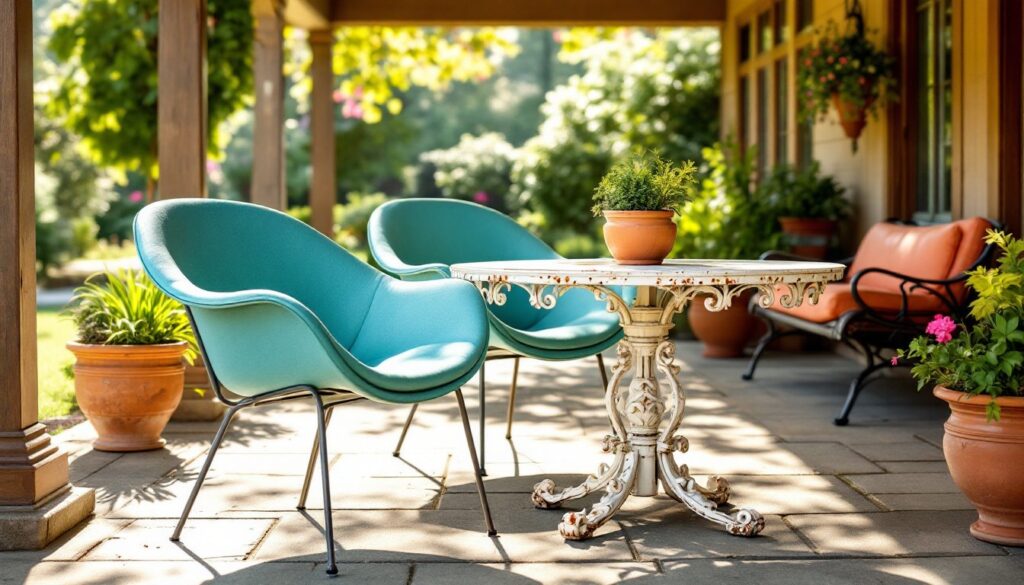
The “clamshell” or “scoop” chair became iconic: a single-piece aluminum frame with vinyl lacing in vibrant colors (turquoise, coral, chartreuse, yellow). Manufacturers like Tropitone, Brown Jordan, and Samsonite produced thousands of variations. These chairs stack, fold, and bounce slightly when you sit, the lacing flexes like a hammock. Restoration involves replacing dried-out lacing (available from specialty suppliers in original colors) and buffing or repainting frames. Replacement lacing kits run $30–60 per chair: the work requires patience and needle-nose pliers but no special tools.
Wrought aluminum gliders and spring chairs also define the era. Single-seat spring chairs use a coiled base that rocks with body weight, comfortable but prone to squeaking if pivot points aren’t lubricated. Gliders seat two or three and literally glide on concealed mechanisms. Check spring condition and moving parts: replacement springs and hardware are still available through vintage furniture suppliers.
Original cushions rarely survive outdoor storage, but many furniture makeover techniques can help recreate era-appropriate upholstery using indoor-outdoor fabrics.
Wrought Iron and Victorian Garden Pieces
Earlier wrought iron furniture (1860s–1950s) offered durability and ornate detailing that suited formal gardens and Victorian sensibilities. True wrought iron is forged (hammered into shape while hot) rather than cast, resulting in visible hammer marks, scrollwork, and a slightly irregular hand-crafted look.
Victorian-era garden furniture featured naturalistic motifs: grapevines, ferns, branches, and flowers cast or forged into chair backs and table aprons. Pieces weigh substantially more than modern patio furniture, a small café table can exceed 50 pounds. This heft provides stability in wind but makes rearranging a two-person job.
Mesh or “spring” seats appear on many wrought iron chairs from the 1920s–1950s. Flexible steel mesh provides bounce and drains water but rusts through if not maintained. Replacement mesh is available, though installation requires metalworking tools and rivets. Alternatively, add cushions over compromised mesh for a cosmetic fix.
Authentic wrought iron shows layers of paint from decades of recoating, scraping down to bare metal reveals a dark gray surface, not the silvery finish of aluminum. Rust forms in rough, flaky patches rather than the smooth oxidation of aluminum. Structural integrity matters more than cosmetic rust: tap joints with a hammer and listen for solid contact, not hollow rattling that indicates cracked welds or corroded-through sections.
How to Restore and Maintain Vintage Outdoor Furniture
Restoration difficulty varies by material and condition. Be honest about your skill level, cosmetic cleanup is DIY-friendly, but structural welding or extensive wood rot require professional help.
Metal furniture restoration starts with cleaning and rust removal. Scrub frames with a wire brush and TSP (trisodium phosphate) solution to strip grime, mildew, and loose paint. For surface rust, use naval jelly or a rust converter following label directions, both require rubber gloves and eye protection. Rinse thoroughly and dry completely before priming.
Apply a rust-inhibiting primer (oil-based products like Rust-Oleum or Corroseal work well for outdoor conditions) before topcoat. Use spray paint designed for metal in thin, even coats, three light coats beat one heavy coat that drips and sags. Allow each coat to dry per manufacturer specs (usually 1–2 hours between coats, 24 hours before handling).
For aluminum frames, buffing with fine steel wool (0000 grade) and aluminum polish restores shine without removing metal. Some collectors prefer the natural patina: polish only if you want a bright finish.
Wooden furniture (teak, redwood, cedar) needs moisture content evaluation before refinishing. Let pieces dry in a covered, ventilated area for at least two weeks after rescue from outdoor storage. Check joints for looseness, reglueing requires exterior wood glue (Titebond III is waterproof and meets ANSI/HPVA Type I standards) and clamps. Replace rotted members rather than trying to stabilize them: compromised structure won’t improve with finish coats.
Sand wooden surfaces with 120-grit followed by 220-grit sandpaper, always working with the grain. Remove all dust with a tack cloth before applying finish. Use an exterior-grade spar urethane or teak oil depending on desired look, urethane provides a protective film, oil penetrates and weathers naturally. Reapply annually for outdoor pieces.
Safety gear for restoration includes dust masks (N95 minimum) when sanding, chemical respirators with organic vapor cartridges for paint stripping, nitrile gloves for any chemical work, and safety glasses during wire brushing or grinding. Work in well-ventilated areas: outdoors is ideal for paint and stripper fumes.
Maintenance extends furniture life. Store cushions indoors during winter. Apply car wax to painted metal frames twice per season to shed water. Tighten bolts and lubricate moving parts annually with silicone spray (not WD-40, which attracts dirt). Cover furniture during extended non-use, but remove covers periodically to prevent trapped moisture and mildew.
Styling Your Outdoor Space with Vintage Furniture
Vintage patio furniture works in both dedicated vintage settings and mixed-era designs. The key is intentional placement and respecting scale.
Scale matters more outdoors than in enclosed rooms. A delicate Victorian iron café set disappears on a large deck but suits a small courtyard or porch nook perfectly. Conversely, chunky mid-century gliders overpower tiny balconies but anchor spacious patios. Measure your space before buying, vintage proportions don’t always match modern furniture dimensions.
Color coordination depends on your home’s style. Authentic vintage metal furniture came in bold hues, but you’re not locked into original colors. Soft blues and greens suit Southern porches and gardens, while bright coral and turquoise pop against stucco or brick. Neutral whites and blacks provide backdrop for colorful cushions and plantings. Whatever palette you choose, use exterior-grade paints formulated for metal or wood.
The resurgence of rattan and wicker furniture from the ’70s shows vintage outdoor styles adapting to modern interiors, but these materials need protection from weather, reserve natural fibers for covered porches or bring them inside during wet seasons.
Mixing vintage with new works when materials and scale balance. Pair vintage iron chairs with a new teak table, or surround a vintage aluminum dining set with modern planters. Avoid matchy-matchy, curated variety looks intentional, while forcing a single era feels contrived.
Functional layout trumps aesthetics. Position seating to capture views, breezes, and shade patterns throughout the day. Heavy wrought iron stays put: lightweight aluminum moves easily for flexible arrangements. Add side tables within arm’s reach of seating, vintage plant stands and telephone tables work well.
Weathering expectations differ by material. Aluminum and quality wrought iron handle rain and sun with minimal care. Wood weathers to silver-gray without finish, which suits some aesthetics but requires sealing if you want to maintain original color. Budget time and money for annual maintenance, vintage furniture’s durability comes from care, not neglect.