






Table of Contents
ToggleIn a world where tangled cords are the bane of every tech lover’s existence, the question arises: can iPhones join the wireless charging revolution? Imagine a life where you can plop your phone down on a charging pad and watch it power up without the hassle of plugging in. It’s like magic, but with less rabbits and more battery life.
Apple’s sleek designs and cutting-edge technology have made wireless charging not just a dream but a reality for many iPhone users. From the iPhone 8 to the latest models, they’ve embraced this convenient feature. So, if you’re tired of wrestling with cables and looking for a more elegant solution, it’s time to dive into the world of wireless charging and discover how it can simplify your life while keeping your iPhone juiced up and ready to go.
Can iPhone Wireless Charge?
iPhones support wireless charging, providing users with a seamless way to power their devices. Starting from the iPhone 8, Apple integrated this feature, allowing compatible iPhones to charge using Qi-standard wireless chargers. It is crucial to use certified chargers to ensure optimal charging speed and efficiency.
Various models, including the iPhone SE (2nd generation) and iPhone 12 series, also support wireless charging. Users can expect charging rates of up to 7.5 watts with standard Qi chargers. Fast wireless charging is available for newer models, allowing for quicker top-ups.
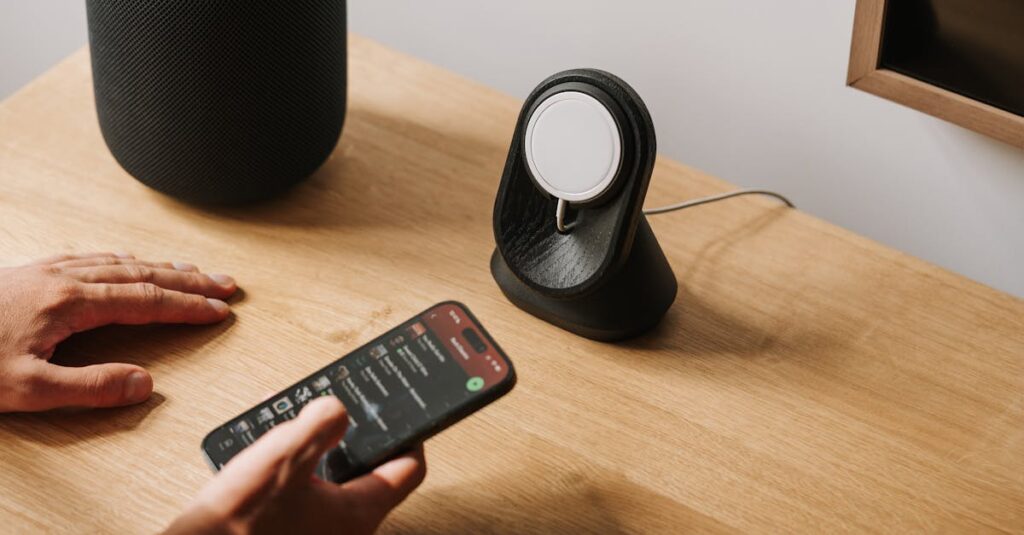
Furthermore, features like MagSafe enhance the wireless charging experience. MagSafe accessories align perfectly with compatible iPhones, ensuring proper connection and efficient charging. The magnetic alignment simplifies the charging process, eliminating the guesswork often associated with traditional wireless chargers.
Wireless charging enables users to maintain a tidy environment. It reduces cable clutter and allows for easy phone placement on charging pads. An increasing number of public spaces and cafes now offer wireless charging stations, promoting convenience for on-the-go charging needs.
While wireless charging provides convenience, it is essential to note variations in charging speed and efficiency. Users might experience slower charging compared to wired options, particularly with cases that include magnets or thick materials. Despite these differences, the practicality of wireless charging continues to appeal to many iPhone users.
Understanding Wireless Charging Technology
Wireless charging technology represents a modern solution for charging iPhones without the need for physical connectors. This method appeals to users seeking convenience in their daily routines.
How It Works
Wireless charging operates using electromagnetic fields to transfer energy from the charger to the device. A transmitter coil in the charging pad generates an electromagnetic field, which activates a receiver coil in the iPhone. This process effectively converts electromagnetic energy into electrical energy, allowing the phone’s battery to charge without direct contact. Users experience seamless charging simply by placing their devices on compatible charging pads. Efficiency remains high, especially with chargers adhering to the Qi standard, which optimizes energy transfer.
Key Components
Critical components facilitate wireless charging. A charging pad contains the transmitter coil, responsible for creating the electromagnetic field. The receiver coil in the iPhone captures this energy and converts it to power the battery. Compatibility with the Qi standard ensures a wide range of chargers work with multiple devices. Additionally, MagSafe technology enhances alignment, resulting in improved energy transfer. Together, these components work to deliver a reliable charging experience, reducing the reliance on traditional charging cables.
iPhone Models That Support Wireless Charging
Various iPhone models incorporate wireless charging features, enhancing user convenience. The following list details compatible devices.
List of Compatible Models
- iPhone 8
- iPhone 8 Plus
- iPhone X
- iPhone XR
- iPhone XS
- iPhone XS Max
- iPhone 11
- iPhone 11 Pro
- iPhone 11 Pro Max
- iPhone SE (2nd generation)
- iPhone 12
- iPhone 12 mini
- iPhone 12 Pro
- iPhone 12 Pro Max
- iPhone 13
- iPhone 13 mini
- iPhone 13 Pro
- iPhone 13 Pro Max
- iPhone 14
- iPhone 14 Plus
- iPhone 14 Pro
- iPhone 14 Pro Max
Features of Wireless Charging on iPhones
Wireless charging simplifies powering up devices without dealing with cords. iPhones support charging speeds of up to 7.5 watts with standard Qi chargers; newer models enable higher wattage for faster charging. The integration of MagSafe technology enhances alignment, ensuring reliable connectivity while charging. Users can also experience reduced wear on charging ports, maintaining their devices’ longevity. Wireless charging stations are increasingly available in various public spaces, allowing users to recharge their devices conveniently. Additionally, charging through compatible cases is feasible, although optimum speed may vary.
Benefits of Wireless Charging for iPhone Users
Convenience tops the list of benefits for iPhone users embracing wireless charging. Users eliminate the hassle of tangled cords, allowing for a more organized space. Efficient energy transfer occurs through electromagnetic fields, making charging seamless. iPhone models supporting this feature, from iPhone 8 to the latest devices, cater to a broad range of users.
Flexibility is another key advantage. Wireless charging options are available in various public locations, including cafes and airports, offering users the ability to recharge on the go. Coupled with the MagSafe technology, proper alignment ensures fast and reliable charging experiences.
The ease of use cannot be overstated. Users simply place their iPhones on a compatible charging pad, and the device begins to charge automatically. Standard Qi chargers provide charging speeds of up to 7.5 watts, while newer models deliver enhanced wattage for quicker recharging.
Reduced wear on charging ports is a notable benefit as well. Frequent plugging and unplugging of cables can cause damage over time; however, wireless charging mitigates this issue, potentially extending the lifespan of the devices. Users can even charge their iPhones through compatible cases, promoting versatility without sacrificing performance.
Lastly, maintaining a tidy environment becomes effortless. Without cables cluttering desks or nightstands, the aesthetic improves significantly. This simple yet elegant solution appeals to users seeking both functionality and style in their everyday charging needs.
Common Misconceptions About Wireless Charging
Many believe wireless charging is significantly slower than wired charging. While it’s true that wireless charging may take longer, it depends on the charger used. For instance, standard Qi chargers typically provide up to 7.5 watts, while newer models with fast wireless charging capabilities exceed this.
Some users think every iPhone supports wireless charging without issues. Compatibility varies; devices like the iPhone 8 and later support it, but earlier models do not. Those relying on an iPhone SE (2nd generation) or newer can also utilize this feature.
Another misconception involves charging through cases. Many assume that using cases prevents effective charging. It’s essential to note that some cases may hinder charging speeds, but most compatible cases allow efficient charging without removing the phone.
Many people worry about the safety of wireless charging. In reality, Qi-standard chargers are designed with safety features. These include over-temperature protection and foreign object detection, ensuring safe energy transfer.
Users often think wireless charging is less efficient. Efficiency can vary based on the charger used and alignment with the device. For example, MagSafe technology significantly improves alignment, enhancing the charging experience.
Some also believe wireless charging reduces battery lifespan. Studies indicate this isn’t the case when using appropriate chargers. Batteries generally benefit from reduced wear and tear due to limited physical connections.
Another myth is that only specific charging pads work with iPhones. In actuality, numerous Qi-certified chargers are available, making various options accessible. This widespread compatibility simplifies the charging experience for users.
Tips for Effective Wireless Charging
Positioning the iPhone correctly on the wireless charger significantly impacts charging efficiency. Aligning it to the center optimizes energy transfer.
Using a compatible Qi-certified charger ensures the charging pad meets the necessary standards, supporting quicker charging rates.
Removing any bulky cases can improve the charging experience. Thin cases typically allow for better energy transfer compared to thicker models.
Maintaining a clean charging pad and phone surface should not be overlooked. Dust and debris can interfere with the connection, leading to slower charging speeds.
Opting for a charger with a higher output can provide a noticeable difference. Models with up to 15 watts deliver faster charging for compatible devices.
Avoiding metal objects between the phone and the charging pad can enhance performance. Metal interferes with the electromagnetic field, hindering effective charging.
Positioning the charger in a cool, ventilated area also benefits the charging process. Excess heat can limit charging speeds and impact long-term battery health.
Choosing chargers that offer features like over-temperature protection is wise. Additional safety measures prevent overheating and protect both the device and the charger.
Regularly checking for software updates on the iPhone aids in maintaining optimal charging performance. Updates can improve compatibility and efficiency.
With these tips, users can ensure a smooth and efficient wireless charging experience for their iPhones.
Wireless charging has revolutionized how iPhone users power their devices. With seamless integration across various models it’s become a go-to solution for those seeking convenience and elegance. The technology not only simplifies the charging process but also enhances device longevity by reducing wear on charging ports.
As more public spaces adopt wireless charging stations the accessibility of this feature continues to grow. While users may encounter slower charging speeds compared to wired options the benefits of reduced clutter and effortless charging make it an attractive choice. Embracing wireless charging not only modernizes the user experience but also aligns with the evolving landscape of mobile technology.