
Table of Contents
ToggleShopping for patio furniture cushions doesn’t mean choosing between comfort and budget. The outdoor cushion market has evolved dramatically, with retailers offering high-quality options at accessible price points, especially if buyers know when and where to look. The challenge isn’t finding cheap cushions: it’s finding discount cushions that won’t fade, flatten, or mildew after one season. Understanding material specs, shopping strategically, and maintaining them properly can stretch a modest investment into years of outdoor comfort.
Key Takeaways
- Discount patio furniture cushions can offer excellent value when you prioritize solution-dyed acrylic fabrics, high-density polyurethane foam, and solid stitching over brand names alone.
- End-of-summer clearances (late August–September) and holiday sales offer the deepest discounts at 50–70% off, while online retailers like Wayfair and Amazon provide frequent flash sales on outdoor cushions.
- Focus on key quality indicators including UV resistance, water resistance, fill density, proper tie systems, and double-stitched seams to ensure your discount cushions last multiple seasons rather than one.
- Maximize cushion lifespan by storing during off-seasons, rotating every 2–3 weeks, vacuuming monthly, and reapplying water-resistance treatments annually—simple maintenance that costs nothing but adds years of life.
- Measure your furniture exactly before purchasing, as outdoor cushion sizes aren’t standardized, and verify return policies online since color and firmness differ significantly in real sunlight versus product photos.
Why Investing in Quality Patio Cushions Matters (Even on a Budget)
Discount doesn’t have to mean disposable. The difference between a cushion that lasts one season and one that endures five often comes down to fabric grade and fill density, not the price tag.
UV resistance is the first casualty in truly cheap cushions. Fabrics without UV inhibitors fade within weeks of sun exposure, turning deep navy into washed-out gray by mid-summer. Look for solution-dyed acrylic fabrics, even in budget lines. The dye is added during fiber production, not applied to the surface, which means color stays stable for years.
Fill type separates uncomfortable slabs from cushions that actually support. Cheap polyester fill compresses into pancake-flat pads after a few months. Mid-grade options use high-density polyurethane foam wrapped in polyester batting, a construction that maintains loft and rebounds after sitting. Some budget brands now offer this layered approach without premium pricing.
Water resistance matters more than most DIYers realize. Outdoor cushions labeled “water-resistant” shed light rain and morning dew, but they’re not waterproof. Cushions should dry within 4-6 hours of wetting to prevent mold growth. Budget cushions with minimal drainage or breathability stay damp for days, creating musty odors and shortening fabric life.
A $40 cushion that lasts three seasons costs less per year than a $20 cushion replaced annually. The math favors spending slightly more upfront for better materials, but the sweet spot exists in the discount market if shoppers know what specs to prioritize.
Where to Find the Best Deals on Patio Furniture Cushions
Online Retailers and Seasonal Sales
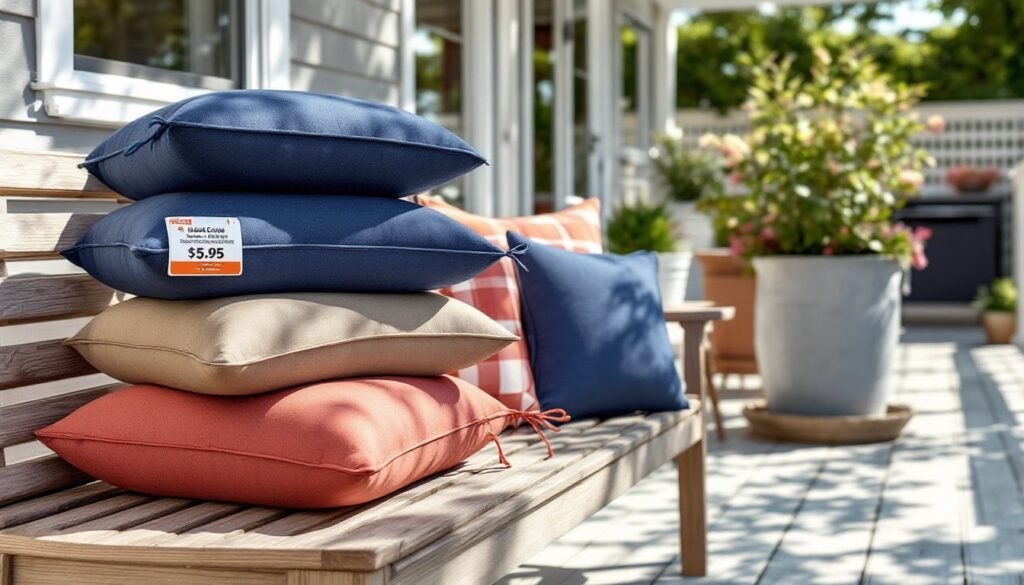
The best cushion deals follow predictable seasonal patterns. End-of-summer clearances (late August through September) offer the deepest discounts, often 50-70% off, as retailers make room for fall inventory. Memorial Day and Fourth of July sales also bring significant markdowns, though selection peaks in May before inventory thins out.
Major online retailers run flash sales on outdoor goods throughout the season. Wayfair’s daily deals frequently feature cushion sets at 40% off, while Amazon’s Prime Day (typically mid-July) includes outdoor furniture and accessories. Overstock rotates patio cushions through its clearance section year-round, with pricing that drops further as items age in inventory.
Direct-to-consumer outdoor brands eliminate retail markup by selling exclusively online. These companies often offer cushions in standard sizes (16″×16″ for dining chairs, 24″×24″ for deep seating) at prices 30-40% below big-box stores. The tradeoff: fewer custom size options and longer shipping times.
Manufacturer websites occasionally beat third-party retailers during promotional periods. Signing up for email lists from cushion manufacturers provides early access to sales and exclusive discount codes. Some brands offer “imperfect” or “second-quality” cushions with minor cosmetic flaws at steep discounts, the stitching might be slightly crooked, but performance remains identical.
Local Stores and Clearance Opportunities
Big-box home improvement stores like Home Depot and Lowe’s markdown outdoor cushions aggressively in late summer. Floor models and returned items often sit in clearance sections at 60-75% off. Inspect these carefully for sun fading, stains, or compressed fill before buying, but structurally sound cushions represent serious value.
Garden centers and local furniture stores clear seasonal inventory with less fanfare than national chains. Calling ahead in late August to ask about upcoming clearances can uncover deals before official markdowns. Some independent retailers negotiate on floor models or discontinued patterns, especially near season’s end.
Warehouse clubs (Costco, Sam’s Club) stock outdoor cushions seasonally with pricing typically 20-30% below department stores. Selection is limited to a few colors and sizes, but quality often exceeds the price point. These appear in stores March through June, then vanish until the following spring.
Estate sales and online marketplaces (Facebook Marketplace, Craigslist) occasionally feature high-end cushions at bargain prices. Brands like those featured on Gardenista’s outdoor bench cushion selection turn up secondhand when homeowners redecorate. Sunbrella and Outdura fabrics hold value and durability even after a season of use, making quality used cushions a viable option for budget-conscious buyers.
What to Look for When Buying Discount Outdoor Cushions
Start with fabric composition. Solution-dyed acrylic (marketed under names like Sunbrella, Outdura, or similar generic versions) resists fading, mildew, and staining better than printed polyester. The fabric should feel substantial, lightweight, thin fabric indicates lower thread count and shorter lifespan. Check the fabric weight specification if listed: 6-9 oz per square yard is standard for outdoor use.
Fill material and density determine comfort and longevity. High-quality discount cushions use a foam core (typically polyurethane foam at 1.5-1.8 lb density) wrapped in polyester fiber. This combination provides support from the foam while the fiber batting allows faster drying. Avoid cushions with fiber-only fill in high-use seating areas, they compress too quickly. Foam-only fill without wrapping can trap moisture and develop mold.
Cushion thickness affects comfort but also practicality. Dining chair cushions should be 2-3 inches thick to provide padding without raising seat height awkwardly. Deep-seating lounge cushions work best at 4-5 inches for adequate back support. Thicker isn’t always better, oversized cushions on smaller frames slide around and look disproportionate.
Tie systems and closures keep cushions in place during wind and use. Look for ties at all four corners or along the back edge, depending on furniture style. Fabric ties work fine if double-stitched: cheap single-stitch ties rip out within weeks. Cushions without any attachment system require constant repositioning and blow off furniture in moderate wind.
Check seam construction and zipper quality. Seams should feature double or triple stitching, particularly at stress points like corners. Many budget outdoor projects demonstrate that quality stitching matters more than brand names. Zippers should be corrosion-resistant (plastic or coated metal) and include a zipper guard, a fabric flap covering the zipper to prevent water infiltration.
Piping or welting along cushion edges isn’t just decorative, it reinforces seams and maintains cushion shape over time. Contrasting piping also hides the dirt and wear that shows first along edges. Budget cushions sometimes skip this detail to cut costs, but its presence signals better construction.
Measure furniture before shopping. Outdoor cushion sizes aren’t standardized, and a “standard seat cushion” from one brand may be 18″×18″ while another is 20″×20″. Bring exact measurements for seat depth, width, and any curves or angles. Custom-cut foam costs significantly more than standard sizes, so matching furniture to available cushion dimensions saves money.
Verify the return policy, especially for online purchases. Colors appear different on screens than in sunlight, and cushion firmness is impossible to judge from photos. A flexible return window allows testing cushions on actual furniture in real outdoor conditions before committing.
How to Maximize the Lifespan of Your Budget-Friendly Cushions
Store cushions when not in use. Even quality outdoor fabrics degrade faster when exposed to sun, moisture, and temperature swings 24/7. Bringing cushions inside or into a covered storage bin during rain and overnight extends their lifespan by years. A simple deck box with ventilation prevents mildew while protecting from weather.
Flip and rotate cushions every 2-3 weeks during active use. This distributes wear and sun exposure evenly, preventing one side from fading or compressing faster than the other. Most DIYers forget this simple step, which costs nothing but adds months to cushion life.
Clean cushions before stains set. Outdoor fabric repels water-based spills for a short window, usually 15-30 minutes, before liquids soak through to fill material. Blot spills immediately with a dry cloth, then clean with mild soap and water. For tougher stains, a solution of 1 cup bleach to 1 gallon water works on most solution-dyed acrylics without color damage. Always test in an inconspicuous area first.
Vacuum cushions monthly during use season to remove pollen, dust, and organic debris that accelerate fabric breakdown. A shop vac with a brush attachment pulls particles from fabric weave without damaging fibers. This also prevents debris from holding moisture against fabric, which leads to mildew.
Refresh water resistance annually. Most outdoor fabrics come with factory water repellent treatments that wear off over time. Fabric protector sprays designed for outdoor use (available at home improvement stores for $8-15 per can) restore water-shedding ability. Apply in well-ventilated areas, following manufacturer directions. One application per season maintains protection.
Repair small tears and seam failures immediately. Outdoor fabric repair tape or patches prevent minor damage from expanding. A separated seam can be hand-stitched with UV-resistant outdoor thread in 10 minutes, a repair that adds another season to cushion life. Ignoring small problems leads to fill exposure and rapid deterioration.
Consider adding foam padding upgrades to compressed cushions rather than replacing them entirely. If fabric and stitching remain sound but fill has flattened, cutting new foam inserts costs a fraction of new cushions. This works particularly well for standard-sized cushions where replacement foam is readily available.
Use furniture covers or cushion storage bags during extended non-use periods (winter in most climates). Even stored cushions benefit from breathable covers that block dust and pests while allowing air circulation. Plastic bags trap moisture and guarantee mildew: stick with fabric storage solutions.
Position furniture strategically to minimize sun exposure. Rotating furniture placement throughout the season or placing cushioned pieces in partial shade during peak sun hours (10 a.m. to 3 p.m.) reduces UV damage. This approach works especially well on covered porches or patios with natural shade patterns, much like the outdoor living spaces featured on Southern Living.
Conclusion
Discount patio cushions deliver genuine value when shoppers prioritize material quality over brand names and time purchases to coincide with seasonal sales. Focus on solution-dyed fabrics, adequate fill density, and solid construction details. With proper maintenance and strategic storage, even budget-friendly outdoor cushions provide years of comfortable use, proving that comfort and affordability aren’t mutually exclusive.