
Table of Contents
ToggleThe entryway is the first impression your home makes, and the last thing guests see on their way out. Yet most homeowners treat it like an afterthought, letting it become a dumping ground for shoes, coats, and mail. Smart entryway and accent furniture changes that. It carves out organized, welcoming space in the chaos while adding visual interest to rooms that often feel unfinished. Whether you’re working with a grand foyer or a narrow hallway, the right pieces turn functional needs, storage, seating, display, into design opportunities that set the tone for the rest of your home.
Key Takeaways
- Entryway and accent furniture transforms cluttered drop zones into organized, welcoming spaces while preventing floor damage and establishing visual flow throughout your home.
- Console tables, hall trees, storage benches, and shoe cabinets are essential entryway furniture pieces that solve daily bottleneck problems and provide functional storage for keys, bags, and outerwear.
- For small entryways, prioritize vertical storage with tall narrow cabinets and wall-mounted solutions, and use floating shelves and mirrors to visually expand cramped spaces.
- Multi-function accent furniture like nesting tables, plant stands, and credenzas add visual interest to underfurnished rooms while filling functional gaps without bulk.
- Styling entryway and accent pieces successfully relies on intentional editing with height variation, asymmetrical arrangements, and proper spacing—avoid cluttering surfaces and use task lighting strategically.
- Practical details like cable management, seasonal styling swaps, and proper rug placement under accent furniture complete the design while supporting daily routines and transitions between outdoor and private spaces.
What Makes Entryway Furniture Essential for Your Home
Entryway furniture solves the daily bottleneck problem. Without designated spots for keys, bags, and outerwear, clutter migrates into living spaces. A well-planned entryway keeps everyday essentials contained and accessible.
From a practical standpoint, entryway pieces prevent floor damage. Wet shoes and boots tracked through the house wreak havoc on hardwood and carpet. A shoe cabinet or storage bench with a removable tray catches moisture and dirt before it spreads. Pair that with a coat rack or hall tree, and you’ve eliminated the chair-as-coat-hanger habit.
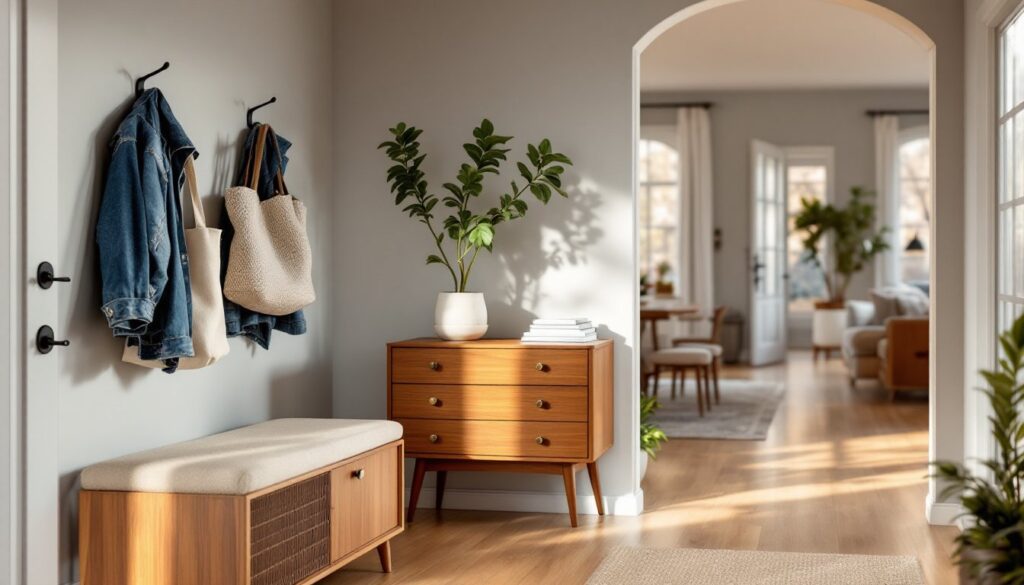
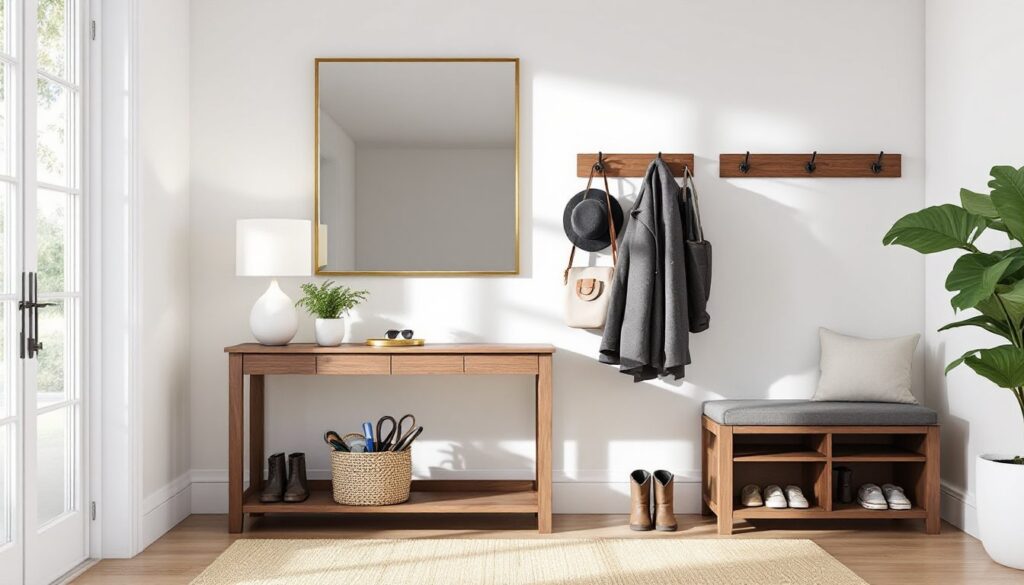
Beyond function, these pieces establish visual flow. A console table with a mirror above it reflects light and makes narrow entries feel larger. The styling on that surface, a tray for keys, a small lamp, seasonal greenery, signals that the home is thoughtfully maintained. It’s the difference between walking into a house and walking into a home.
Entryways also serve as transition zones. Psychologically, they help residents shift from the outside world to private space. A dedicated drop zone for work bags and a spot to sit while removing shoes creates a ritual that separates the workday from home life. That’s not lifestyle fluff, it’s spatial planning that supports daily routines.
Must-Have Entryway Furniture Pieces That Welcome Guests
Console Tables and Hall Trees
Console tables are the workhorses of entryway furniture. Standard dimensions run 48 to 60 inches wide, 12 to 18 inches deep, and 30 to 32 inches tall, slim enough for tight spaces but substantial enough to anchor a wall. Look for models with at least one drawer for concealed storage (sunglasses, dog leashes, charging cables) and a lower shelf for baskets or decorative boxes.
Material choice matters. Solid wood consoles hold up to daily abuse better than particleboard with veneer, especially in high-traffic entries. If the entryway sees exposure to moisture from rain or snow, avoid unfinished wood, go with sealed hardwood, metal, or composite materials designed for durability.
Hall trees combine a coat rack, bench, and often storage cubbies in one vertical footprint. They’re ideal for homes with kids or multiple residents who need individualized storage. Most units are 72 to 78 inches tall and 36 to 48 inches wide. Ensure the bench height is 18 to 20 inches, standard seating height, so it’s actually comfortable for pulling on boots. Wall-mounted hall trees save floor space but require installation into wall studs to support the weight of heavy coats and bags.
Storage Benches and Shoe Cabinets
Storage benches kill two birds with one piece: seating and concealed storage. Flip-top designs are common, but front-drawer or cubby styles make it easier to grab what you need without lifting the lid. If you’re building a custom bench, use ¾-inch plywood for the frame and add a 2-inch foam cushion wrapped in durable fabric like canvas or faux leather. Avoid delicate upholstery in entryways, it won’t survive the daily wear.
For load-bearing capacity, the bench frame should support at least 250 pounds if it’ll be used for sitting while changing shoes. Reinforce the underside with 2×4 cross braces spaced no more than 16 inches apart. If incorporating cubbies, size them 12 inches wide by 14 inches deep to accommodate adult shoes.
Shoe cabinets with tilt-out drawers or sliding doors keep footwear hidden while maintaining ventilation. Solid-door cabinets trap moisture and odor, leading to mildew. Look for models with slatted shelves or perforated metal backs. A standard shoe cabinet holds 12 to 24 pairs depending on configuration. Wall-mount options free up floor space for easier cleaning underneath.
Accent Furniture That Elevates Every Room
Accent furniture works harder than most people realize. These pieces, side tables, occasional chairs, plant stands, decorative cabinets, fill functional gaps while adding visual weight to underfurnished rooms.
An accent chair in the living room provides extra seating without the bulk of a sofa. Choose one with a different silhouette than existing furniture. If the main seating is boxy and modern, a wingback or curved barrel chair adds contrast. Recent trends in contemporary furniture design emphasize mixed materials like wood frames with leather or velvet upholstery.
Nesting tables are underrated for flexibility. Three tables stored as one take up minimal floor space but expand when needed for drinks, laptops, or display. The largest table typically measures 24 inches in diameter or square, with the two smaller sizes nesting underneath. Look for welded steel bases over bolted ones, they’re sturdier and won’t loosen over time.
Plant stands and decorative ladders fill vertical space in rooms with high ceilings. A five-tier ladder shelf, roughly 72 inches tall and 18 inches wide, leans against the wall and displays everything from potted plants to books to baskets. No installation required, but the angle should be 10 to 15 degrees from vertical for stability. If kids or pets are present, anchor the top to the wall with a furniture strap.
In living rooms that lack built-in storage, a low credenza or sideboard (typically 60 to 72 inches wide, 18 inches deep, 30 inches tall) stores media equipment, board games, or barware. Homeowners often use these pieces to showcase coordinated design elements that tie the space together. Unlike bulky entertainment centers, credenzas maintain an open feel.
How to Choose the Right Furniture for Small Entryways
Small entryways demand ruthless editing. Measure the space first, width, depth, and ceiling height, then subtract 36 inches from the width to maintain a clear walkway. That’s your usable furniture footprint.
For narrow entries (less than 48 inches wide), skip the console table and mount a floating shelf instead. A single shelf 10 to 12 inches deep provides a drop zone for keys and mail without obstructing traffic. Pair it with wall hooks 6 inches apart for coats and bags. Use heavy-duty drywall anchors rated for at least 20 pounds per hook, or install into studs if alignment allows.
Vertical storage is non-negotiable. A tall, narrow cabinet (12 to 15 inches deep, 24 inches wide, 72+ inches tall) stores shoes, umbrellas, and seasonal accessories without eating floor space. Many modern designs by leading furniture makers incorporate slide-out shelves or pull-down shoe racks to maximize every inch.
Multi-function pieces earn their keep. A storage ottoman (around 18 inches cubed) can serve as seating, a footrest, and hidden storage. Choose one upholstered in a dark, patterned fabric that won’t show dirt, remember, this is the landing zone for everything coming in from outside.
Mirrors visually expand cramped entryways. A full-length mirror (18 to 24 inches wide, 60+ inches tall) reflects light and provides a last-minute outfit check. Mount it on the wall opposite the entry door if possible, or lean a floor mirror against the wall. Secure leaning mirrors with adhesive furniture pads or a wall strap to prevent tipping.
Styling Tips to Maximize Your Entryway and Accent Pieces
Styling entryway furniture isn’t about filling every surface, it’s about intentional editing. Start with the functional layer: a catchall tray or bowl for keys and pocket items, and a small lamp or sconce for task lighting. If the console has a drawer, line it with felt to prevent scratching when tossing in sunglasses or hardware.
Add height variation with decor. A table lamp (24 to 28 inches tall) balanced by a shorter plant or stack of books (8 to 12 inches) creates visual interest. Avoid matching pairs of everything, it reads as stiff. Asymmetry feels more collected and lived-in.
Seasonal swaps keep the entryway fresh. A simple change, summer’s potted fern swapped for autumn’s dried grasses, or a winter lantern replacing spring blooms, signals attention to detail. Many homeowners find seasonal styling ideas helpful for rotating decor without major overhauls.
For accent furniture in other rooms, the same rules apply. A side table next to an accent chair should hold a lamp and one or two personal items, not a cluttered collection. The space underneath can accommodate a basket for throws or magazines.
Wall space above console tables and accent pieces shouldn’t go to waste. A framed mirror or artwork hung 6 to 8 inches above the furniture grounds the piece visually. For groupings of smaller frames, keep the total width two-thirds to three-quarters the width of the furniture below it.
Rugs define zones in open-plan homes. An entryway runner (2.5 to 3 feet wide) should extend 12 inches beyond the console table on each end. In living rooms, an area rug under an accent chair should be large enough that the front legs sit on it, usually a 5×7-foot or 6×9-foot rug, depending on the space. Resources like interior design platforms show countless examples of rug placement that balances furniture and floor space.
Cable management is unglamorous but necessary. If a console table holds a lamp or charges devices, use adhesive cable clips on the back legs or underside to route cords out of sight. Nothing kills a styled vignette faster than tangled charging cables.