

Table of Contents
ToggleSetting up an outdoor space where the whole family actually wants to spend time takes more than tossing a few chairs on the deck. Family leisure patio furniture needs to survive spilled lemonade, withstand sun and storms, and stay comfortable for everyone from toddlers to grandparents. The right setup turns a plain patio into a year-round extension of the home, a place for Saturday morning pancakes, assignments sessions under the sun, and evening card games. This guide walks through the essential choices, from material durability to layout strategies, so homeowners can build an outdoor retreat that works hard and looks great.
Key Takeaways
- Family leisure patio furniture must meet three core criteria: durability under heavy use, safety for all ages, and easy maintenance to handle daily wear, kids climbing, and constant UV exposure.
- Select durable materials like aluminum, resin wicker, or composite lumber that resist rust, rot, and weathering while requiring minimal upkeep compared to untreated wood or natural wicker.
- Dining sets with extendable tables, cushioned chairs, and center umbrella holes create flexible spaces for meals and games, while conversation sets and modular seating allow families to reconfigure layouts for different activities.
- Zone your patio by activity (dining, lounging, play) and maintain at least 36 inches of clearance around furniture for comfortable movement and safe family use.
- Invest in fade-resistant cushion fabrics like solution-dyed acrylic, incorporate strategic shade and lighting for year-round comfort, and use storage benches or deck boxes to keep outdoor toys and maintenance items organized.
What Makes Patio Furniture Ideal for Family Leisure?
Family-friendly outdoor furniture needs to meet three core criteria: durability under heavy use, safety for all ages, and easy maintenance. Unlike decorator pieces meant for occasional cocktail hours, family leisure furniture gets daily wear, kids climbing on armrests, pets tracking mud, and constant exposure to UV rays and moisture.
Look for frames with weight capacities of at least 250 pounds per seat to handle active use without wobbling. Rounded edges and stable, low centers of gravity reduce tip-over risks when children are playing nearby. Cushions should feature fade-resistant, quick-dry fabrics like solution-dyed acrylic or polyester blends, these materials resist mildew and can be hosed off after sticky spills.
Avoid glass tabletops in high-traffic family zones: tempered glass is safer than standard, but aluminum, composite wood, or tile-top tables eliminate breakage risks entirely. Storage is another family-specific need: benches with hidden compartments keep outdoor toys, sunscreen, and lawn games close at hand without cluttering the space. The best family patio setups balance comfort with practicality, so cleanup takes minutes instead of hours.
Top Types of Family-Friendly Patio Furniture
Dining Sets for Outdoor Family Meals
Outdoor dining sets anchor a family patio, providing a dedicated spot for meals, crafts, and board games. Standard sizes range from 48-inch round tables (seats 4–5) to 72-inch rectangular tables (seats 6–8). For growing families, extendable tables with drop-in leaves offer flexibility without permanently occupying floor space.
Chair selection matters. Stackable resin or metal chairs save space during winter storage, while cushioned dining chairs with armrests add comfort for longer meals. Look for UV-resistant finishes and rust-proof hardware, powder-coated aluminum or stainless steel fasteners hold up better than plain steel, which corrodes in humid climates.
Umbrellas or pergola coverage keep the dining area usable during midday sun. A table with a center umbrella hole (typically 1.5 to 2 inches in diameter) and a compatible base weighing at least 50 pounds prevents tip-overs on windy days. For inspiration on integrating outdoor dining into broader design schemes, many homeowners reference modern outdoor furniture trends when planning layouts.
Conversation Sets and Lounge Seating
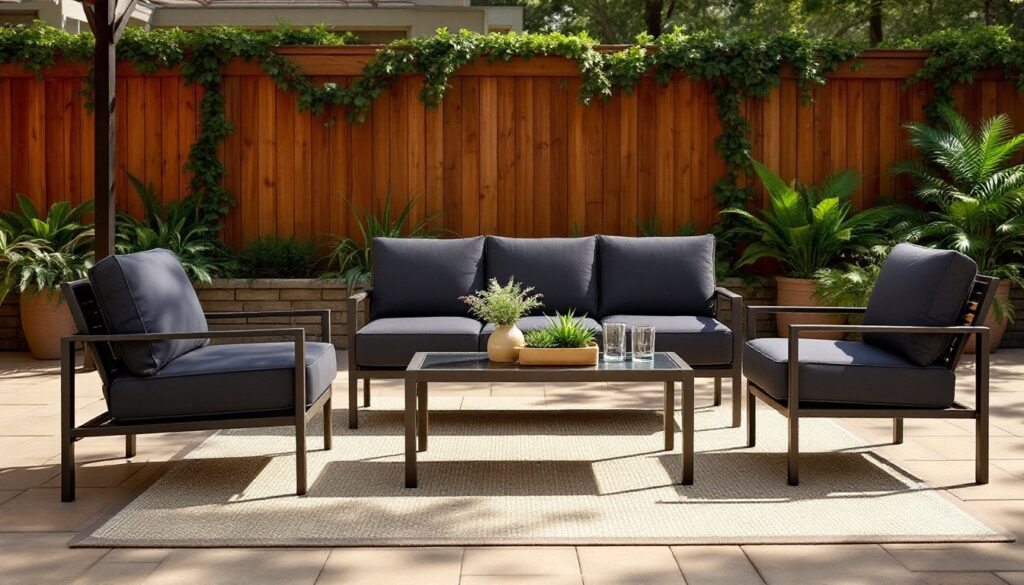
Conversation sets, typically a loveseat, two chairs, and a coffee table, create a casual zone for reading, chatting, or supervising playtime. Deep seating with cushions at least 5 inches thick provides comfort for extended lounging. Modular sectionals let families reconfigure the layout for movie nights, party seating, or opening up play space.
Adirondack chairs remain a family favorite for their sturdy construction and classic look, though their low seat height (around 14 inches) makes them harder for elderly family members to exit. Rocking chairs or gliders add soothing motion for parents with infants.
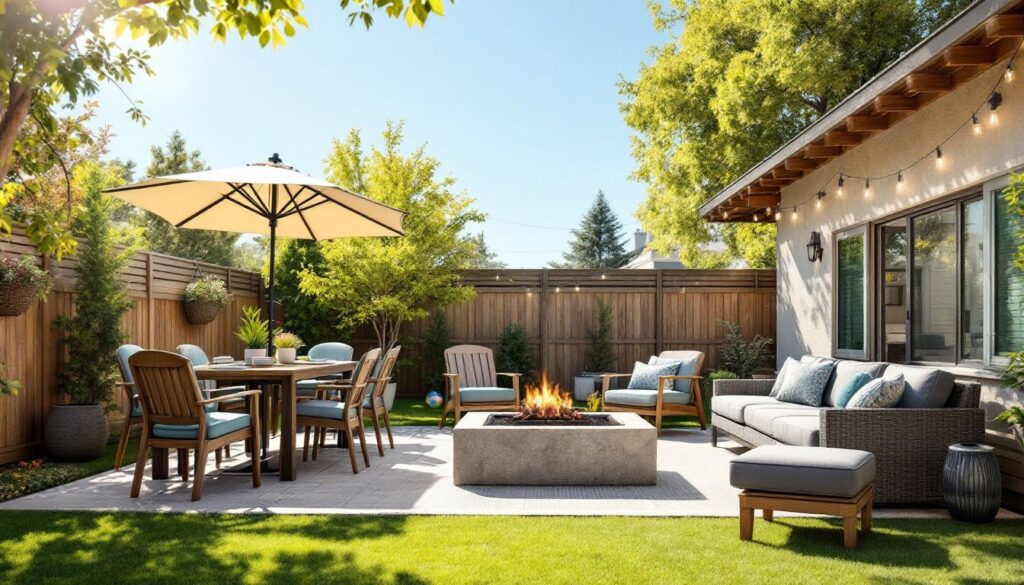
Fire pit seating has grown popular, arrange chairs in a circle around a 36-inch diameter fire pit to maintain safe clearance (typically 7 feet from seat backs to flame, per manufacturer specs). Use non-combustible materials like metal or treated wood for furniture near open flames, and always supervise children around fire features. Hammocks and porch swings appeal to kids but require secure overhead attachment to structural beams or posts, never hang from drywall or trim.
Choosing Durable Materials That Withstand Family Use
Material choice directly impacts longevity, maintenance, and budget. Each option trades off differently for family use.
Aluminum frames resist rust, weigh less than steel (easier to move for cleaning), and require minimal upkeep. Powder-coated finishes in darker colors hide scratches better than lighter tones. Aluminum won’t rot or splinter, making it safe for barefoot kids.
Wrought iron or steel furniture offers heft and stability, harder for children to tip, but needs regular inspection for rust, especially in coastal or humid regions. Touch up chipped paint promptly with rust-inhibiting primer to prevent corrosion from spreading.
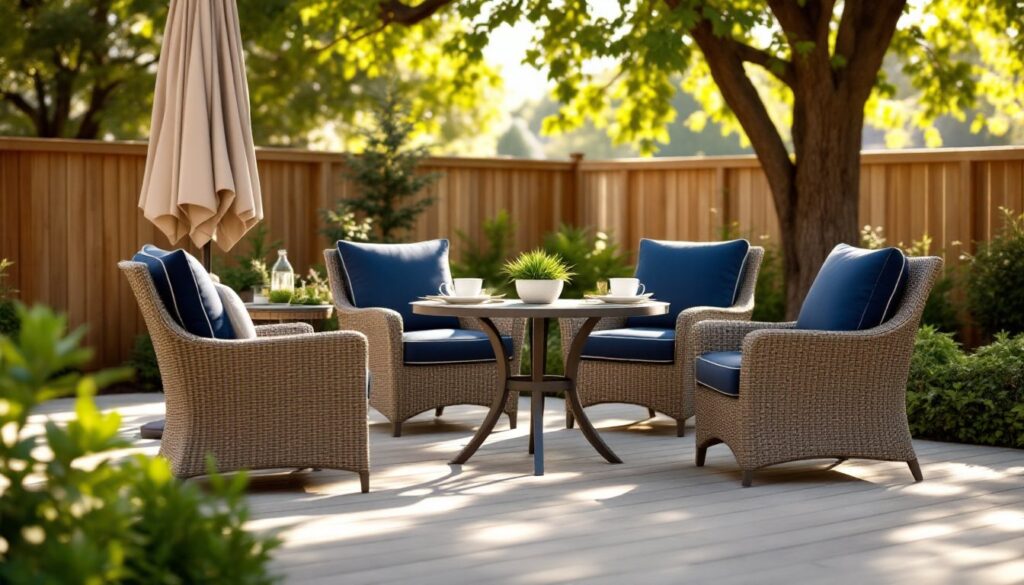
Resin wicker (synthetic polyethylene woven over metal frames) mimics natural wicker but handles moisture and sun without cracking. It’s lightweight, stackable, and available in multiple colors. Avoid natural rattan or wicker outdoors: it deteriorates quickly in weather.
Wood brings warmth and a classic look. Teak, cedar, and acacia contain natural oils that resist rot and insects, though they weather to silver-gray unless treated annually with teak oil or sealant. Pressure-treated pine costs less but requires more frequent sealing (every 1–2 years) to prevent warping and splintering. Untreated wood furniture should be stored indoors during wet seasons.
Polywood and composite lumber (recycled HDPE plastic) require zero sealing, won’t splinter, and come in fade-resistant colors. They’re heavier than natural wood, which adds stability. Some homeowners draw on outdoor space design principles to match material palettes with surrounding landscaping.
Cushion fabric matters as much as frames. Solution-dyed acrylic (Sunbrella is a common brand) resists fading and mildew better than standard polyester. Quick-dry foam cores prevent the soggy-cushion problem after rainstorms. Store cushions in a deck box or covered bin during off-seasons to extend lifespan.
Design Tips for a Functional Family Leisure Space
Zone your patio by activity. Dedicate one area for dining, another for lounging, and a third for active play if space allows. Use outdoor rugs (look for polypropylene or PET materials that resist mold and can be hosed off) to visually define zones without permanent structures.
Plan for traffic flow. Leave at least 36 inches of clearance around tables and seating so family members can move comfortably without squeezing past chairs. If the patio connects to a grill or kitchen door, keep that pathway at least 48 inches wide to avoid bottlenecks during cookouts.
Incorporate storage early. Deck boxes, storage benches, or wall-mounted cabinets keep outdoor toys, cushions, and yard games organized. Waterproof boxes with lockable lids prevent unsupervised access to grilling tools or chemicals.
Add shade strategically. Fixed structures like pergolas or shade sails provide permanent coverage, while cantilever umbrellas (offset pole design) offer adjustable shade without a center post obstructing the table. For porches and covered patios, many families adopt Southern-style outdoor living layouts, which emphasize ceiling fans, porch swings, and generous overhangs for year-round comfort.
Lighting extends usability. String lights add ambiance, but task lighting matters for evening meals and games. Battery-powered LED lanterns or solar path lights require no wiring. If installing permanent fixtures, use weather-rated junction boxes and GFCI outlets per NEC code (consult a licensed electrician for wiring).
Anchor lightweight furniture. Wind can toss aluminum chairs and tables. Use furniture weights, tie-downs, or store lightweight pieces during storms. Consider heavier materials for exposed, windy sites.
Plan for seasonal changes. Furniture covers protect against UV and moisture when the patio isn’t in use. Measure pieces before buying covers, oversized covers flap and tear in wind, while undersized ones won’t seal properly. If space allows, a small shed or garage corner for winter storage dramatically extends furniture life.
Conclusion
Building a family leisure patio isn’t about filling a catalog wish list, it’s about creating a space that works as hard as it looks good. Prioritize durable materials, plan for the way the family actually uses the space, and don’t skip the unglamorous details like proper anchoring and storage. With the right furniture choices and layout planning, a backyard patio becomes the go-to spot for everything from pancake breakfasts to firelit evenings.