

Table of Contents
ToggleFrench Provincial bedroom furniture brings a refined European aesthetic to modern homes, blending ornate craftsmanship with livable comfort. Originating from the French countryside in the 17th and 18th centuries, this style balances aristocratic elegance with rustic warmth, think carved headboards, cabriole legs, and soft, weathered finishes. Unlike stark minimalist trends or industrial-heavy looks, French Provincial creates a bedroom that feels both sophisticated and inviting. For homeowners looking to refresh their primary suite or guest room without chasing fleeting design fads, this style offers staying power. It pairs well with both vintage finds and new construction, making it accessible whether you’re refinishing estate sale pieces or shopping retail.
Key Takeaways
- French Provincial bedroom furniture combines curved silhouettes, hand-carved motifs, and quality joinery (dovetail and mortise-and-tenon construction) to create an elegant yet livable aesthetic that transcends design trends.
- Authentic French Provincial pieces feature cabriole legs, shaped drawer panels, and natural wood tones or soft painted finishes in creams, grays, and blues—hallmarks that distinguish them from colonial or industrial styles.
- Essential furniture pieces include an upholstered or carved bed frame, an armoire for storage, a dresser with bombe front, nightstands, and a bench or settee, all selected in coordinating wood tones and hardware finishes.
- French Provincial styling relies on restraint: layer neutral linens, install soft-light chandeliers or sconces, use floor-length drapes, and limit accessories to avoid clutter and emphasize the furniture’s craftsmanship.
- Quality French Provincial bedroom furniture can be sourced through antique malls and estate sales, retail stores ($800–$2,000 for key pieces), online marketplaces, or DIY refinishing projects that cost $50–$150 per piece in materials.
What Is French Provincial Bedroom Furniture?
French Provincial furniture refers to pieces crafted in the rural provinces of France during the reign of Louis XV and Louis XVI. Unlike the gilded extravagance of Versailles, provincial artisans adapted courtly designs using local materials, oak, walnut, cherry, and fruitwoods, resulting in furniture that was elegant but practical.
Key construction features include mortise-and-tenon joinery, hand-carved details, and curved lines rather than rigid angles. Cabriole legs (those gracefully curved supports) appear on dressers, nightstands, and benches. Drawer fronts often feature shaped panels or subtle reliefs, not flat slabs.
Authentic antiques command premium prices, but modern reproductions capture the aesthetic at accessible price points. When evaluating pieces, check for dovetail drawer construction and solid wood frames, hallmarks of quality, whether vintage or new. Veneered particleboard with applied moldings won’t age gracefully and limits refinishing options down the road.
This style works in both traditional homes and updated spaces. A French Provincial bed frame can anchor a room with plaster walls and crown molding, or it can soften a modern bedroom with stark white drywall and recessed lighting. The key is balancing ornate furniture with simpler surroundings so the pieces breathe.
Key Characteristics of French Provincial Style
Recognizing authentic French Provincial details helps when shopping or DIYing your own updates. Look for these defining features:
Curved silhouettes: Straight lines are rare. Headboards arc gently, armoires have bowed fronts, and mirror frames follow serpentine curves. This softness distinguishes French Provincial from English or American Colonial styles, which favor geometric precision.
Carved motifs: Common decorative elements include acanthus leaves, shells (coquille), ribbons, and floral sprays. Carvings are usually low-relief, not deeply undercut like Rococo. They add visual interest without overwhelming the piece.
Cabriole and turned legs: Cabriole legs curve outward at the knee and taper inward at the ankle, often ending in a scroll or pad foot. Turned legs (shaped on a lathe) appear on simpler pieces, with baluster or bobbin profiles.
Natural wood tones and painted finishes: While many associate French Provincial with white or cream paint, authentic pieces often showcased natural cherry, oak, or walnut. Painted finishes came later, especially in bedrooms, using soft grays, blues, and creams. Distressing and aging techniques (dry brushing, glazing) mimic centuries of use.
Upholstery and textiles: Beds feature padded or caned headboards. Benches and chairs use linen, toile, ticking stripe, or damask in muted tones. Avoid bright, saturated colors, they clash with the style’s inherent restraint.
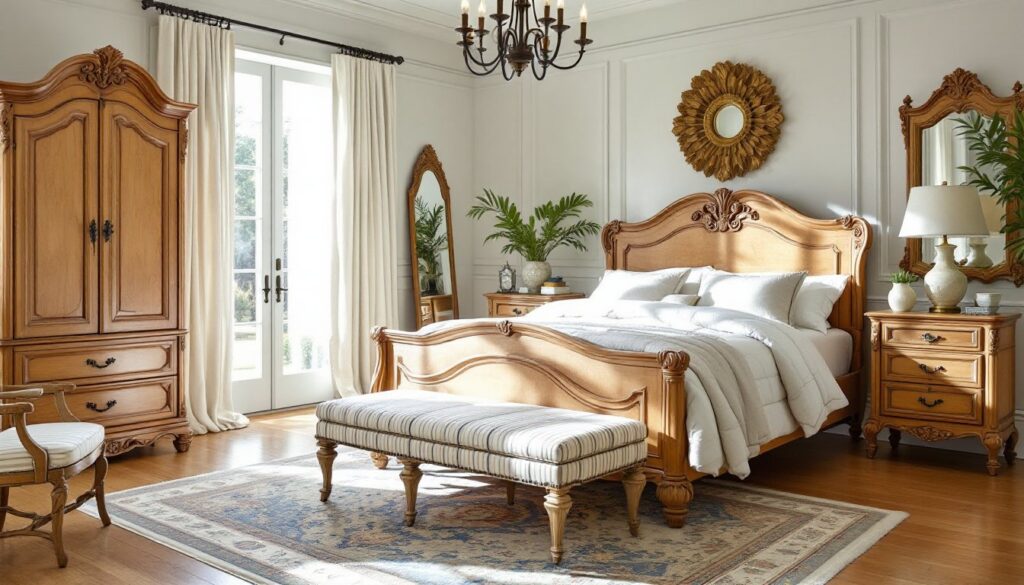
When sourcing or refinishing pieces, these details guide authenticity. A bedroom featuring toile fabrics and carved wood reflects traditional French Provincial sensibility.
Essential French Provincial Bedroom Furniture Pieces
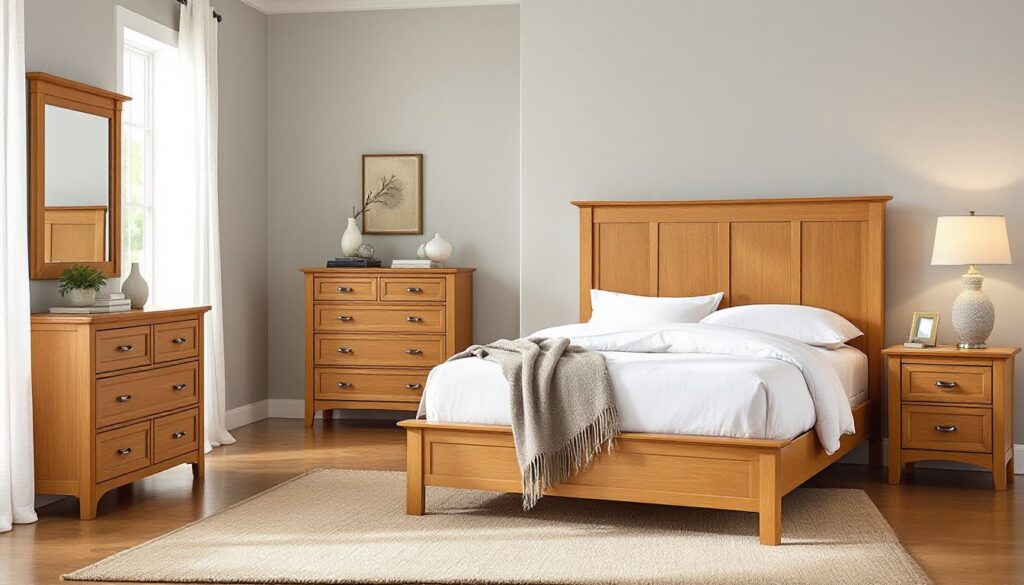
Building a cohesive French Provincial bedroom starts with selecting core furniture pieces. Each serves a function while contributing to the overall aesthetic.
Bed frame: The centerpiece. Look for upholstered headboards with nailhead trim, carved wood headboards with curved top rails, or canopy frames (lit à la polonaise). Standard sizes apply, queen frames measure roughly 60″ W × 80″ L, king frames 76″ W × 80″ L. Ensure the footboard height doesn’t block sight lines if placing the bed opposite a window or focal wall.
Armoire or wardrobe: Historically, French bedrooms lacked built-in closets. Armoires provided hanging and folded storage. Modern versions range from 48″ to 72″ wide and typically stand 72″ to 84″ tall. Measure ceiling height and door width before purchasing, these are substantial pieces that won’t navigate tight corners easily. Some disassemble, which simplifies delivery.
Dresser and nightstands: Dressers often feature bombe fronts (convex curves) and ornate hardware, cast bronze or brass pulls shaped like drops, scrolls, or backplates. Nightstands should be 24″ to 28″ tall to align with standard mattress heights (mattress top typically sits 24″ to 26″ off the floor with box spring and frame). Match wood tones and hardware styles across pieces for cohesion.
Vanity or writing desk: A smaller desk or vanity with a tri-fold mirror adds a dressing area. These usually measure 42″ to 50″ wide and 30″ tall (standard desk height). Pair with an upholstered bench or bergère chair.
Bench or settee: Placed at the foot of the bed or under a window, an upholstered bench in linen or velvet provides seating and softens the room. A 48″ to 60″ bench suits most queen or king beds without overwhelming the space.
When mixing pieces, matching wood species isn’t mandatory, but keep finishes in the same tonal family, warm (cherry, walnut) or cool (gray-washed oak).
Choosing the Right Color Palette and Finishes
French Provincial thrives on restraint. Color palettes lean soft and neutral, letting architectural details and textures take center stage.
Painted finishes: Chalk paint and milk paint offer that matte, aged look synonymous with the style. Popular shades include French Linen (warm gray), Old White (cream with yellow undertones), and Duck Egg Blue (soft teal-gray). These finishes absorb light rather than reflect it, creating a calm atmosphere.
Application tips: Sand furniture lightly with 120-grit sandpaper to promote adhesion. Apply two coats of chalk paint, letting each dry 1–2 hours. For a distressed look, lightly sand edges and high points with 220-grit paper after the final coat dries. Seal with clear wax (buffed to a low sheen) or water-based polyurethane in satin finish for higher durability in high-touch areas like drawer fronts.
Natural wood finishes: If keeping wood visible, use stains that enhance grain without going too dark. Golden oak, fruitwood, or natural walnut stains preserve the Provincial feel. Avoid ebony or red mahogany, they skew too formal or colonial.
Finish with satin or semi-gloss polyurethane for protection. Apply three coats, sanding lightly between with 320-grit paper. Oil-based poly adds an amber tint that warms cooler woods: water-based stays clear but requires more coats for durability.
Wall colors: Complement furniture with soft whites (Alabaster, Swiss Coffee), warm grays (Repose Gray, Agreeable Gray), or muted pastels (dusty rose, sage green). High-gloss or bright accent walls fight the style’s softness. Use eggshell or satin sheen on walls, flat absorbs too much light in bedrooms, and semi-gloss feels too commercial.
Hardware: Replace plastic or chrome pulls with antique brass, oil-rubbed bronze, or brushed nickel in traditional shapes, cup pulls, bin pulls, or ornate backplates. Hardware stores and online retailers offer reproductions at reasonable cost. Drill holes carefully if replacing: use a brad-point bit to prevent splintering veneer.
How to Style Your French Provincial Bedroom
Styling French Provincial furniture requires layering textures and restraint with accessories. The goal: lived-in elegance, not a museum.
Bedding: Layer linen or cotton duvet covers in ivory, taupe, or soft gray. Add a quilted coverlet or matelassé for texture. European shams (26″ × 26″) stand upright behind standard pillows, creating height. Avoid busy patterns, stick with solid linens, subtle florals, or classic ticking stripe. Many design-focused interiors emphasize this layered, neutral approach.
Lighting: Swap builder-grade fixtures for chandeliers or sconces with curved arms and candelabra bulbs. A wrought iron or painted wood chandelier suits the style. Install a dimmer switch (if not present) to control ambiance, Lutron Diva or Caseta dimmers are reliable and code-compliant in most jurisdictions. For bedside lighting, use table lamps with ceramic or turned wood bases and linen shades.
Window treatments: Linen or cotton drapes in floor-length panels soften windows without blocking light. Hang rods 4″ to 6″ above the window casing and extend them 6″ to 12″ beyond each side so panels stack off the glass when open. Use inside-mount Roman shades in linen or bamboo for privacy and layering.
Rugs: An 8′ × 10′ or 9′ × 12′ area rug anchors the bed and nightstands. Traditional patterns, Persian, Aubusson, or subtle geometrics, work if colors stay muted. Sisal or jute rugs add texture in more casual settings. Leave at least 18″ to 24″ of floor exposed around the rug perimeter to avoid a crowded look.
Accessories: Limit decorative items. A carved wood mirror above the dresser, a ceramic pitcher on the nightstand, or a framed botanical print maintains simplicity. Avoid clutter, French Provincial relies on negative space and craftsmanship, not tchotchkes.
Flooring: If renovating, wide-plank hardwood (5″ to 7″ boards) in oak or hickory suits the style. Finish with a satin polyurethane or oil-based stain in medium tones. Engineered hardwood offers stability in climates with humidity swings. Laminate can work budget-wise but lacks refinishing potential.
Where to Find Quality French Provincial Bedroom Furniture
Sourcing French Provincial furniture spans antique shops, online retailers, and DIY refinishing projects.
Antique and vintage sources: Estate sales, auctions, and antique malls offer authentic pieces, often at lower prices than reproductions if you’re willing to refinish. Inspect joinery, dovetails, mortise-and-tenon, and doweled construction indicate quality. Surface damage (veneer chips, water rings) is repairable, but structural issues (cracked frames, loose joints) require woodworking skills or professional repair.
Retail furniture stores: Chains and specialty retailers carry French Provincial-inspired collections. Look for solid wood construction rather than veneered MDF. Check drawer glides, ball-bearing or soft-close undermount glides outlast cheap center-mounted options. Expect to pay $800 to $1,500 for a queen bed frame, $1,200 to $2,000 for a dresser, and $300 to $500 per nightstand in mid-range lines. Prices vary by region and retailer.
Online marketplaces: Sites like Chairish, 1stDibs, and Etsy specialize in vintage and artisan pieces. Filter by dimensions, material, and price. Read return policies carefully, shipping large furniture can cost $200 to $500, and returns often aren’t free. Request additional photos of joinery and finish condition before purchasing.
DIY refinishing: Buying unfinished or dated pieces and refinishing them offers customization and savings. Sand existing finishes with an orbital sander and 80-, 120-, and 220-grit sandpaper. Wear a dust mask (N95 or better) and eye protection. Prime with a bonding primer if painting over glossy finishes, then apply chalk paint or latex in your chosen color. Distress edges lightly, seal with wax or poly, and replace hardware. Total material cost: $50 to $150 per piece, plus labor.
Custom builds: If you have woodworking skills or access to a maker space, building custom pieces using plans from home styling guides allows exact sizing and finish control. A simple nightstand requires 1×6 and 1×8 pine or poplar boards, wood glue, pocket screws, and finish materials. More ornate pieces (curved headboards, bombe dressers) demand intermediate to advanced skills and tools like a jigsaw, router, and belt sander.
Conclusion
French Provincial bedroom furniture offers a durable, elegant style that transcends passing trends. Whether sourcing antiques, purchasing new reproductions, or refinishing thrift store finds, the key lies in recognizing authentic details, curved lines, quality joinery, and restrained ornamentation. Pair these pieces with soft color palettes, layered textiles, and thoughtful lighting to create a bedroom that feels both refined and livable. With proper care and finishing techniques, these furnishings can anchor a space for decades, adapting to evolving tastes without requiring a full overhaul.