

Table of Contents
ToggleChoosing the right flooring for a living room can feel like selecting a partner for a dance-off—style matters, but durability is key. After all, it’s where families gather, pets zoom, and the occasional snack attack occurs. One wrong move, and you could end up with a floor that’s more “oops” than “wow.”
Overview of Living Room Flooring Options
Living room flooring options vary widely, catering to different styles and preferences. Hardwood stands out as a classic choice, offering warmth and beauty. Engineered wood provides similar aesthetics with enhanced durability and resistance to moisture. Laminate flooring mimics the look of wood or stone while providing a budget-friendly option.
Tile flooring remains a popular selection due to its versatility and ease of maintenance. It’s available in various styles, sizes, and colors, allowing for personalized designs. Vinyl flooring, on the other hand, is known for its resilience and comfort underfoot. This material is often water-resistant, making it suitable for homes with pets or children.
Carpet adds a cozy feel to living rooms, offering comfort and warmth. It absorbs sound, which helps create a quieter environment. Additionally, area rugs can offer flexibility to change styles without extensive renovation. Natural stone provides a unique aesthetic but usually requires more maintenance and can be more expensive.
For those focusing on eco-friendliness, bamboo flooring serves as a sustainable option. This material is durable, lightweight, and adds a modern touch. Cork, though less common, offers a unique texture and complements a contemporary style while being soft underfoot.
Analyzing these flooring options helps homeowners select materials aligning with their needs and lifestyle. Prioritizing durability alongside visual appeal supports achieving an inviting and functional living space. Each flooring type has its pros and cons, making informed decisions crucial for enduring satisfaction.
Popular Flooring Materials
Various flooring materials serve different styles and functional needs in living rooms. Selecting the right one requires understanding each option’s unique features and benefits.
Hardwood
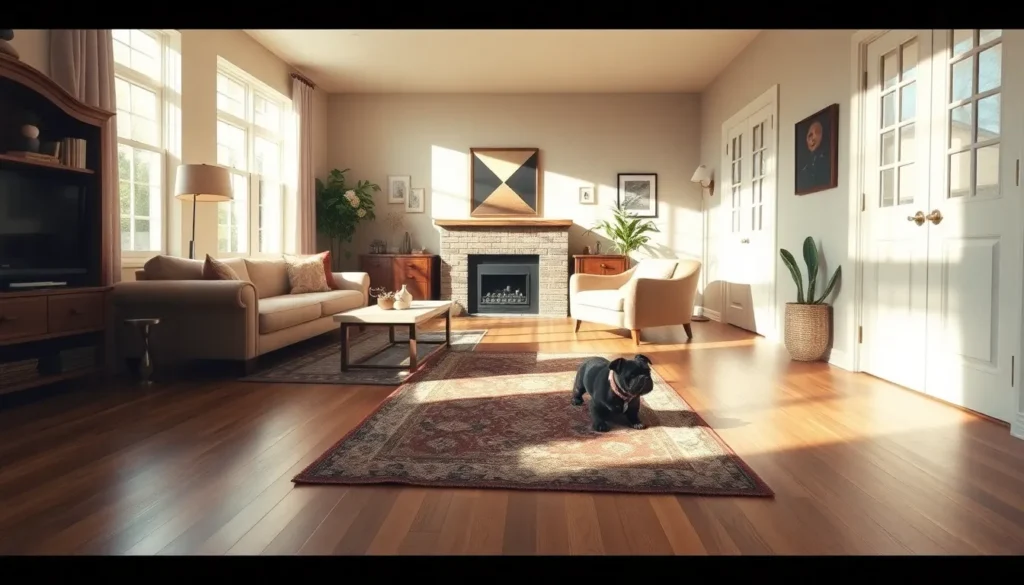
Hardwood flooring exudes timeless elegance and offers unmatched durability. Available in various species like oak, maple, and cherry, hardwood complements any décor. Its ability to withstand heavy foot traffic makes it suitable for active households. Refinishing hardwood allows for added longevity; periodic maintenance retains its beauty. Natural variations in grain and color provide a unique aesthetic that enhances the charm of a living room.
Laminate
Laminate flooring presents an affordable alternative that mimics the look of real wood or stone. Composed of multiple layers, laminate resists scratching and fading while providing durability. Installation remains straightforward with snap-together planks, making it a practical choice for DIY enthusiasts. The wide variety of designs allows homeowners to achieve the desired aesthetic without breaking the bank. Generally, laminate requires minimal maintenance, appealing to busy families.
Tile
Tile flooring stands out for its versatility and ease of maintenance. Available in a vast array of colors, patterns, and textures, tile can suit any design preference. Its resistance to moisture makes it ideal for homes with pets and children, ensuring durability in high-traffic areas. Additionally, radiant heating can be installed under tile for enhanced comfort during colder months. Regular cleaning ensures tile maintains its fresh appearance over time.
Carpet
Carpet adds warmth and a cozy atmosphere to any living space. Available in countless colors and textures, it invites comfort while absorbing sound, reducing noise levels. Families with children or pets appreciate its soft surface, offering safety during playtime. Carpet comes in various styles, including plush, berber, and frieze, allowing personalization. Routine vacuuming and professional cleaning can extend carpet life, ensuring longevity and cleanliness.
Vinyl
Vinyl flooring combines style and functionality, making it an ideal option for many households. Engineered to mimic wood or stone, vinyl offers a soft underfoot feel, promoting comfort. Its resistance to moisture makes it suitable for families with pets or kids. Installing vinyl planks or sheets is an easy process, encouraging DIY projects. Regular maintenance involves simple cleaning, allowing for a vibrant look throughout the years.
Factors to Consider When Choosing Flooring
Choosing the right flooring involves several important factors that impact both appearance and functionality.
Style and Aesthetic
Style influences the overall look of a living room. Hardwood flooring exudes elegance, while laminate offers versatility with patterns that imitate wood and stone. Tile provides a sleek, modern appeal, and carpet adds a touch of warmth and comfort. Color choices vary significantly, allowing homeowners to create a cohesive design. Personal preferences determine what resonates, but the flooring should complement existing furniture and decor.
Durability and Maintenance
Durability is key for high-traffic areas like living rooms. Hardwood’s longevity stands out, yet it requires periodic refinishing. Engineered wood enhances this durability, resisting scratches and dents. Laminate, designed for easy care, withstands wear but may chip. Tile is exceptionally resilient against moisture, making maintenance effortless. Vinyl floors excel with their peel-and-stick installation, minimizing upkeep for busy households. Opting for floors that require less maintenance helps maintain an inviting space effortlessly.
Comfort and Insulation
Comfort affects the atmosphere of a living room. Carpet provides cushioning that softens footsteps and absorbs sound. Hardwood, though less forgiving, can feel warm underfoot, especially with area rugs incorporated. Tile remains cool, but radiant heating systems can enhance comfort during colder months. Vinyl flooring offers a softer feel, making it ideal for homes with children. Considering insulation properties ensures warmth during winter and enhances the space’s overall coziness.
Cost and Budget
Budget constraints shape flooring decisions significantly. Hardwood can be a higher upfront investment but adds long-term value. Engineered wood typically costs less while delivering a similar aesthetic. Laminate provides an economical option, appealing to those on tight budgets. Tile varies in price based on type and design, while vinyl often offers substantial savings. Establishing a budget upfront ensures homeowners select the most suitable option without overspending.
Pros and Cons of Each Flooring Type
Hardwood Flooring
Hardwood flooring offers timeless elegance and natural beauty. It stands up well to heavy foot traffic, making it a durable choice. However, its susceptibility to scratches and moisture can be a drawback. Maintenance requires regular refinishing, which adds to long-term costs.
Engineered Wood Flooring
Engineered wood provides a similar aesthetic to hardwood with enhanced stability. This type resists warping and is more adaptable to varying moisture levels. While it shares the warmth of solid wood, some find it less appealing when comparing the two.
Laminate Flooring
Laminate stands out as a budget-friendly option that mimics wood or stone. Easy installation and minimal maintenance make it appealing for busy households. On the downside, it may lack the authentic feel of natural materials, and its surface can be prone to wear over time.
Tile Flooring
Tile offers versatility and moisture resistance, suitable for high-traffic areas. It has a wide range of styles and colors, allowing customization. However, its hardness can be uncomfortable to stand on for extended periods, and grout maintenance often becomes a chore.
Vinyl Flooring
Vinyl flooring provides comfort underfoot and excellent resilience. It’s ideal for homes with children or pets due to its scratch resistance. Limited style options compared to natural materials can be a concern, but advancements in design have broadened choices significantly.
Carpet
Carpet introduces warmth and sound absorption, adding coziness to living spaces. Available in various styles, it offers a personalized touch. Cleaning and maintenance can be more demanding, especially in high-traffic areas where stains may occur.
Natural Stone Flooring
Natural stone delivers a unique, high-end aesthetic that many homeowners appreciate. Its durability is notable, but installation and maintenance costs can be substantial. Regular sealing is necessary to maintain its appearance, making it a more labor-intensive option.
Bamboo Flooring
Bamboo flooring presents an eco-friendly choice, ideal for sustainable living. Its hardness rivals that of traditional hardwood, offering a durable surface. However, availability and some environmental concerns regarding production processes may affect its popularity.
Cork Flooring
Cork complements contemporary styles with its soft texture and insulation properties. It naturally resists mold and mildew, enhancing indoor air quality. Limited color options and susceptibility to moisture can present challenges for some homeowners.