

Table of Contents
ToggleUpgrading a bedroom with luxury contemporary furniture isn’t just about buying expensive pieces, it’s about selecting cohesive, quality items that balance form and function. Contemporary design emphasizes clean lines, minimal ornamentation, and carefully chosen materials that create a calm, sophisticated environment. Unlike traditional or rustic styles, luxury contemporary furniture often features low profiles, geometric shapes, and a neutral palette with strategic pops of texture or color. This guide walks through what makes furniture truly contemporary, which pieces anchor the room, and how to select and style them for a polished, livable result.
Key Takeaways
- Luxury contemporary bedroom furniture prioritizes material quality, craftsmanship, and design integrity through solid hardwoods, soft-close drawer glides, and intentional proportions that avoid trendy embellishments.
- Platform beds with hardwood frames (typically 20–24 inches tall) and upholstered or architectural headboards form the foundation of contemporary bedroom design, creating a grounded, horizontal silhouette.
- Select complementary pieces like floating nightstands and proportional dressers with soft-close mechanisms and quality joinery, ensuring each item earns its place through both function and aesthetics.
- Premium finishes such as matte lacquer, brushed brass accents, and top-grain leather elevate the look while quality veneer with solid wood edge banding prevents warping and mirrors solid wood durability.
- Maximize contemporary elegance by maintaining a neutral color palette, layering minimal lighting and window treatments, and keeping surfaces clear to emphasize the clean lines and visual space that define luxury contemporary style.
- Scale your luxury contemporary furniture to room dimensions—measure clearances and choose appropriately sized pieces—then preserve the investment through weekly dusting and monthly maintenance.
What Defines Luxury Contemporary Bedroom Furniture?
Luxury contemporary furniture differs from generic modern pieces in three key areas: material quality, craftsmanship, and design integrity.
Material quality means solid hardwoods (walnut, oak, ash) or engineered materials with high-grade veneers, not particleboard with laminate wrapping. Luxury pieces often incorporate metal accents, brushed brass, matte black steel, or polished chrome, and premium upholstery like genuine leather, linen, or performance velvet. Check joinery: dovetail drawer construction and mortise-and-tenon frames outlast stapled or glued joints.
Craftsmanship shows in the details. Drawer glides should be soft-close and full-extension. Edges are clean and uniform. Finishes are hand-applied or multi-coat lacquers that resist scratches and moisture. Luxury manufacturers often list finishing processes and wood sources: mass-market brands skip these specs.
Design integrity means the piece looks intentional, not like it’s chasing trends. Contemporary furniture borrows from mid-century modern, Scandinavian minimalism, and Japanese simplicity. It avoids unnecessary curves, carvings, or embellishments. Proportions matter, luxury pieces have balanced ratios and thoughtful negative space. If a nightstand looks too tall, too skinny, or visually cluttered, it’s likely not well-designed.
According to design experts featured in design showcases on modern interiors, contemporary bedrooms thrive on restraint, where every piece earns its place through function and aesthetic contribution.
Essential Pieces for a Contemporary Luxury Bedroom
Platform Beds and Statement Headboards
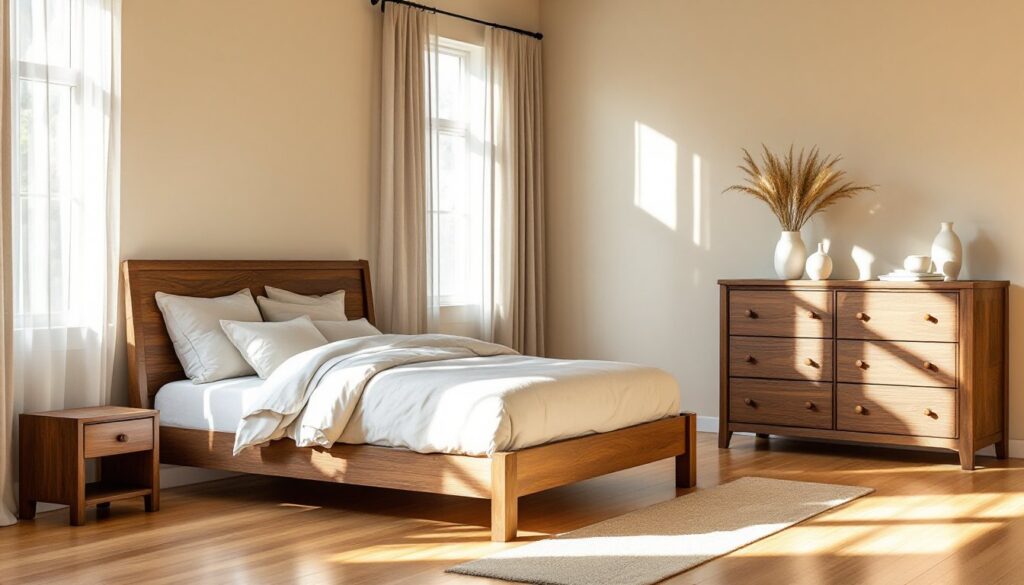
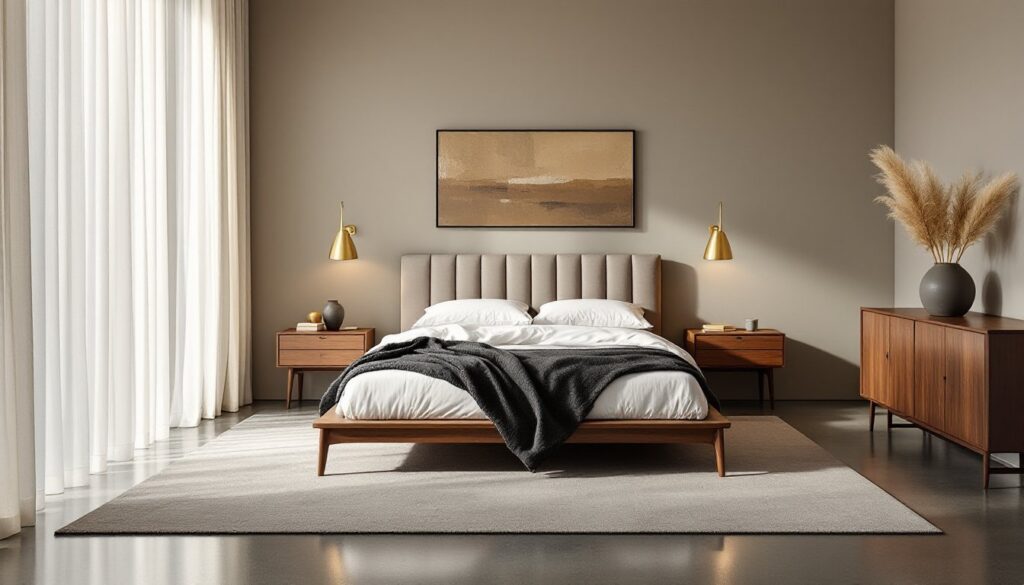
A platform bed is the foundation of contemporary bedroom design. Unlike traditional box spring setups, platform beds feature a solid or slatted base that supports the mattress directly. Luxury versions use hardwood frames (not pine or fir), with slats spaced 3 to 4 inches apart for proper airflow and mattress longevity. Check that slats are at least 0.75 inches thick to prevent sagging with memory foam or hybrid mattresses.
Headboards in luxury contemporary furniture lean toward two styles: upholstered panels or architectural wood/metal frames. Upholstered headboards use high-density foam (minimum 1.8 lb density) covered in leather, linen, or bouclé. Channel tufting and vertical paneling add texture without busy patterns. Architectural headboards might be live-edge walnut slabs, slatted wood, or cantilevered metal, anything with clean geometry and visual weight.
Bed height matters. Contemporary beds sit lower than traditional styles, mattress height typically 20 to 24 inches from the floor, including the frame. This creates a grounded, horizontal silhouette. If mobility is a concern, opt for the higher end of that range or choose a bed with integrated side rails for support.
Many contemporary beds integrate storage drawers or hydraulic lift mechanisms. These work well in smaller bedrooms but add mechanical complexity. Check weight ratings (quality lifts handle 100+ pounds) and drawer materials (solid wood boxes, not stapled MDF).
Sleek Nightstands and Dressers
Nightstands in luxury contemporary design are minimal but functional. Look for pieces with one or two drawers, open shelving, or a combination. Floating nightstands (wall-mounted) save floor space and enhance the horizontal aesthetic, but require installation into studs or blocking, drywall anchors alone won’t support 15 to 30 pounds of books, lamps, and devices.
Standard nightstand dimensions: 20 to 28 inches tall, 18 to 24 inches wide, and 16 to 20 inches deep. Match height to your mattress top (plus or minus 2 inches) so you can reach items comfortably while lying down. Luxury pieces often include built-in USB ports, wireless charging pads, or cord management cutouts, practical features that don’t compromise aesthetics.
Dressers should be proportional to the room. A standard six-drawer dresser runs 30 to 40 inches tall, 50 to 70 inches wide, and 18 to 20 inches deep. Luxury versions feature soft-close drawer glides (look for brands like Blum or Hettich), dust-proof drawer bottoms, and interlocking corner joints. Avoid dressers with flimsy backs: quality pieces use 1/4-inch plywood or solid wood backs, screwed and glued in place.
Contemporary dressers often emphasize horizontal lines, long, low silhouettes with recessed handles or push-to-open mechanisms. If the room allows, a credenza-style dresser (wider, shallower) can double as a media console or display surface.
For those looking to extend contemporary styling to other areas, custom furniture solutions offer tailored dimensions and finishes that match bedroom pieces seamlessly.
Materials and Finishes That Elevate the Look
Wood species and grain define luxury. Walnut is the gold standard for contemporary furniture, rich, dark, and fine-grained. White oak offers a lighter, Scandinavian feel with prominent grain patterns. Ash and maple sit in the middle, taking stains well while maintaining clean lines. Avoid woods marketed as “espresso” or “weathered oak” without species disclosure, those are often stained softwoods.
Finishes on luxury furniture are typically matte or satin lacquer, not high-gloss polyurethane. Lacquer provides a thin, hard finish that resists scratches and moisture while showcasing the wood grain. Oil-rubbed finishes (Danish oil, tung oil) penetrate the wood and age gracefully but require periodic reapplication, about once a year in dry climates.
Metal accents add contrast and durability. Powder-coated steel resists chipping and comes in matte black, white, or custom colors. Brushed brass or unlacquered brass develops a patina over time, which some homeowners love and others loathe, decide before buying. Stainless steel and chrome stay bright indefinitely but show fingerprints. Metal legs should be welded, not bolted, check the underside for smooth joints.
Upholstery materials vary by use. Top-grain leather (not bonded or split leather) ages well on headboards and benches. Performance fabrics (like Crypton or Sunbrella) resist stains and fading, ideal for light-colored pieces in homes with pets or kids. Linen and cotton blends offer texture but stain easily, reserve these for low-touch areas.
Veneers aren’t a dirty word in luxury furniture. High-quality veneer uses thin slices of premium hardwood over a stable substrate (plywood or MDF), preventing warping and allowing book-matched grain patterns impossible with solid wood. Cheap veneer peels or bubbles: quality veneer is indistinguishable from solid wood in appearance and lifespan. Check edge banding, luxury pieces use solid wood edge banding, not plastic tape.
Publication sources like Architectural Digest frequently highlight how material choice impacts both aesthetics and durability in high-end bedroom design.
How to Choose the Right Furniture for Your Space
Start with room dimensions and traffic flow. Measure the room length, width, and ceiling height. Note door swings, window locations, and any architectural features (radiators, built-ins, angled walls). Allow at least 24 inches of clearance around the bed for making it and walking. If the room is under 120 square feet, skip the dresser and use a tall wardrobe or closet system instead.
Scale matters more than size. A king bed (76 × 80 inches) in a 10 × 10-foot room leaves little space for nightstands. A queen (60 × 80 inches) or even a full (54 × 75 inches) may be more proportional. Luxury contemporary furniture works in small spaces if you choose low-profile pieces, an 18-inch-tall platform bed feels less imposing than a traditional 30-inch bed with a box spring.
Color and finish coordination should stay within three tones. Mixing warm walnut with cool gray upholstery and matte black metal creates visual interest without chaos. Avoid matching every piece exactly, a bedroom set where all furniture is identical wood and finish reads as generic, not curated.
Functional needs dictate piece selection. If you need clothing storage, prioritize a dresser. If you read or work in bed, invest in quality nightstands with task lighting. If the bedroom doubles as a sitting area, add a low-profile bench or a pair of accent chairs, but keep them simple and in line with contemporary aesthetics.
Test before buying, if possible. Sit on upholstered pieces to check firmness. Open and close drawers to feel the glide quality. Run your hand along edges to check for sharp corners or rough finishes. Luxury furniture should feel solid and substantial, no wobbling, squeaking, or flexing.
Delivery and assembly often get overlooked. Many luxury pieces arrive fully assembled, but some require professional setup. Confirm dimensions through doorways and staircases: a 70-inch dresser won’t navigate a 32-inch door. If ordering living room furniture or bedroom pieces online, verify return policies, restocking fees on large items can hit 20% or more.
Styling Tips to Maximize Contemporary Elegance
Stick to a neutral base palette. Whites, grays, beiges, and soft taupes let furniture shapes and materials stand out. Contemporary design relies on texture, linen duvet covers, wool throws, leather benches, to add warmth without pattern overload. Save bold color for one or two accent pillows or a single piece of artwork.
Lighting is critical. Overhead fixtures should be minimal, recessed LEDs or a single pendant with a sculptural silhouette. Table lamps on nightstands need proportional scale: 18 to 24 inches tall for most bedside tables, with shades that direct light down and sideways, not up. Wall-mounted swing-arm lamps free up nightstand space and suit reading.
Layer window treatments for function and softness. Start with blackout roller shades or cellular shades for light control, then add linen or cotton drapes on simple rods (no ornate finials or tiebacks). Hang drapes at ceiling height and extend rods 6 to 12 inches beyond the window frame to make windows appear larger and let in maximum light when open.
Minimize accessories. One or two sculptural objects, a ceramic vase, a wood tray, a small plant, suffice. Avoid tchotchkes, photo cluster walls, or busy tabletop collections. Contemporary style values negative space: every item should serve a purpose or be genuinely meaningful.
Rugs anchor the space. A large area rug (at least 8 × 10 feet for a queen bed, 9 × 12 feet for a king) should extend 18 to 24 inches beyond the sides and foot of the bed. Stick to low-pile materials, wool, cotton, or synthetic blends, in solid colors or subtle geometric patterns. High-pile shag rugs trap dust and clash with sleek furniture lines.
Art and mirrors should be large-scale and minimal. One oversized piece above the headboard or a leaning floor mirror (at least 60 inches tall) creates impact without clutter. Avoid gallery walls or small framed prints, they fragment the visual field. Publications like Design Milk regularly feature contemporary interiors where art acts as a single focal point rather than scattered decoration.
Keep surfaces clear. Nightstands should hold a lamp, a book or device, and maybe a small dish, nothing more. Dressers are for storage, not display: a single tray for jewelry or a small plant is enough. Clutter kills contemporary elegance faster than any design choice.
Maintenance preserves the investment. Dust wood furniture weekly with a microfiber cloth, no sprays or polishes unless specified by the manufacturer. Vacuum upholstered pieces monthly using a soft brush attachment. Wipe metal accents with a damp cloth and dry immediately to prevent water spots. Rotate mattresses every three months and flip if double-sided. Quality furniture lasts decades with basic care but deteriorates fast when neglected.