



Table of Contents
ToggleMatching bedroom sets have dominated furniture showrooms for decades, but they’re not the only path to a polished space. In fact, mixing furniture pieces from different eras, styles, or finishes can create a bedroom with more character and visual interest than any factory-matched suite. The trick isn’t avoiding mismatched furniture, it’s understanding how to pair pieces intentionally so the room feels curated rather than chaotic. Whether you inherited a dresser from family, snagged a nightstand at an estate sale, or simply want to repurpose what you already own, a few design principles will help you pull disparate pieces into a cohesive whole.
Key Takeaways
- Mismatched bedroom furniture creates more character and visual interest than factory-matched sets when pieces are paired intentionally using design principles.
- Choose a unifying element—such as a shared wood tone, color, repeated shapes, or consistent hardware—to make disparate furniture pieces feel cohesive rather than chaotic.
- Balance visual weight and scale by distributing substantial pieces evenly around the room so that no single furniture item dominates or creates proportional imbalance.
- Use textiles, hardware swaps, consistent materials, and a restrained color palette to visually link mismatched furniture and create a curated, professional appearance.
- Avoid common mistakes like mixing warm and cool wood undertones without a bridge, combining too many distinct styles at once, or neglecting furniture function for aesthetics.
Why Mismatched Bedroom Furniture Works
Furniture manufacturers push matching sets because they simplify purchasing decisions, not because they’re superior design. Real homes accumulate pieces over time, a hand-me-down headboard here, a thrifted dresser there, and that’s exactly what gives a space personality.
Mismatched furniture works because it reflects how people actually live. It shows evolution and taste rather than a single shopping trip. From a practical standpoint, mixing pieces also opens up budget flexibility. Instead of waiting to afford an entire bedroom suite, homeowners can invest in one quality piece and fill in around it with secondary market finds or existing furniture.
Designers have embraced eclectic bedrooms for years, pairing mid-century modern nightstands with traditional four-poster beds or industrial metal frames with farmhouse dressers. The contrast creates visual tension in the best way, it keeps the eye moving and makes the room feel layered rather than flat. When done with intention, mismatched furniture doesn’t look accidental. It looks deliberate.
Key Principles for Mixing Bedroom Furniture Successfully
Pulling off a mismatched bedroom requires more than throwing random pieces together and hoping for the best. A few foundational principles will guide the process and prevent the room from tipping into visual chaos.
Choose a Unifying Element
Every successful mismatched bedroom has at least one thread tying the furniture together. This unifying element acts as the glue that makes disparate pieces feel intentional. It could be a shared wood tone, say, all warm walnut finishes even if the styles differ. Or it might be a repeated shape: rounded edges on the dresser, nightstand, and bed frame create visual harmony even when the pieces come from different decades.
Color is another powerful unifier. Painting an old oak dresser and a pine nightstand the same soft gray instantly creates cohesion, even if their hardware and proportions differ. Some homeowners unify through hardware alone, swapping out mismatched drawer pulls for a consistent style in brass or matte black. Interior design experts at Elle Decor frequently showcase rooms where a single repeated finish, like black metal legs on different furniture pieces, pulls together an otherwise eclectic mix.
The unifying element doesn’t have to be obvious. It just needs to be present. Without it, the room risks looking like a furniture showroom floor rather than a intentional design.
Balance Visual Weight and Scale
Visual weight refers to how heavy or substantial a piece feels in a space, and it’s one of the most overlooked factors when mixing furniture. A chunky, dark wood dresser has significant visual weight. Pairing it with a spindly metal nightstand creates imbalance, not because the styles clash, but because the proportions feel off.
When mixing furniture, aim to distribute visual weight evenly around the room. If one side of the bed has a tall, solid dresser, the other side needs a nightstand with enough presence to hold its own, or the bed itself should be substantial enough to anchor the asymmetry. This doesn’t mean everything must match in size, but the overall balance should feel stable.
Scale matters too. A king-size upholstered headboard demands larger nightstands than a low-profile platform bed. Furniture pieces should relate to each other proportionally. A good rule: if a piece looks like it belongs in a different room entirely (a delicate vanity next to a rustic barn-door dresser), the scale is probably off. Adjust by adding or removing pieces, or by choosing items that bridge the gap in weight and size.
Styling Tips to Pull Your Mismatched Bedroom Together
Once the furniture is in place, styling choices seal the deal. These finishing touches make the difference between a room that looks accidentally mismatched and one that looks professionally curated.
Use textiles to create unity. Bedding, rugs, and curtains are design workhorses. A duvet cover that pulls colors from both the headboard and the dresser visually links the two pieces. An area rug with a pattern that incorporates multiple wood tones helps disparate finishes feel purposeful. If the furniture itself is a mix of metals, brass drawer pulls on one piece, brushed nickel on another, choose lighting or decor that repeats both finishes to tie them together.
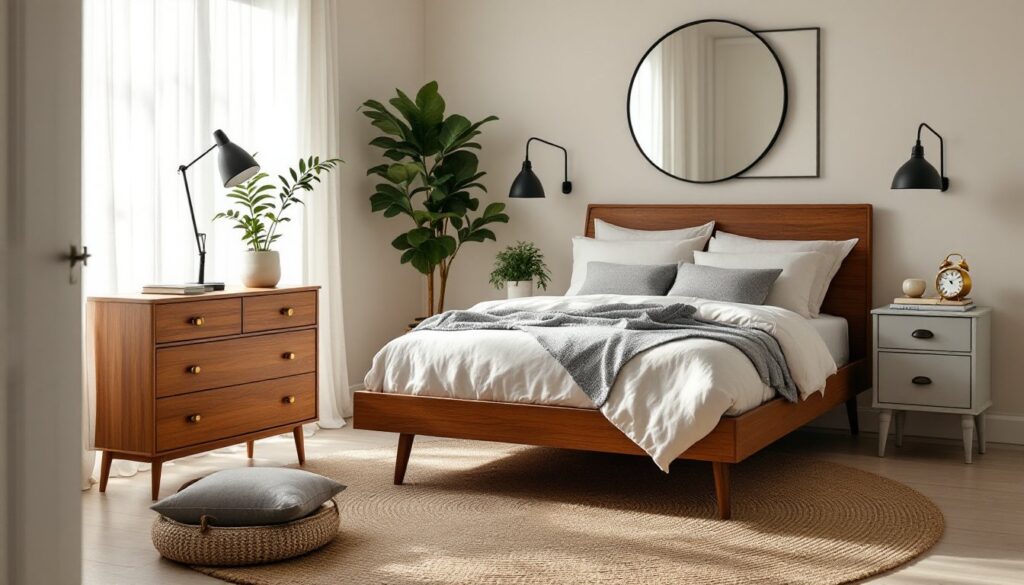
Repeat finishes in decor and hardware. If the bed frame is black metal and the dresser is wood, add black-framed artwork or a black-painted mirror above the dresser. This repetition creates intentional visual connections. Swapping out hardware is one of the fastest ways to unify mismatched furniture, replacing varied drawer pulls with matching ones in the same finish costs under $50 and takes an hour with a screwdriver.
Limit your color palette. Even if furniture styles vary wildly, keeping wall color, bedding, and decor within a tight color range prevents visual overload. A neutral palette, whites, grays, tans, lets the furniture mix shine without competing. Alternatively, a bold accent color repeated in throw pillows, artwork, and a single painted furniture piece can pull everything together. Many decorating guides on MyDomaine emphasize that a restrained color scheme gives you more freedom to mix furniture styles.
Layer in consistent materials. If the bedroom has both wood and metal furniture, echo those materials in lighting, picture frames, or decor. A brass lamp on a wood nightstand picks up the warm metal hardware on a nearby dresser. A woven basket on a metal shelf softens the industrial edge and ties into a wood bed frame. These small repetitions add up.
Edit ruthlessly. More isn’t better when mixing furniture. If a piece doesn’t serve a function or contribute to the room’s balance, it’s clutter. Before you’re ready to replace what doesn’t work, consider the most effective methods for getting rid of unwanted furniture to free up space and improve flow. A bedroom with three mismatched pieces that relate well looks infinitely better than one crammed with five pieces that don’t.
Common Mistakes to Avoid When Mixing Bedroom Furniture
Even with good intentions, it’s easy to trip up when mixing furniture. Recognizing these pitfalls upfront saves time, money, and frustration.
Ignoring finish undertones. Not all “brown wood” is the same. Some have warm red or orange undertones, others lean cool and gray. Mixing warm and cool wood tones without a unifying element creates discord. If you’re combining different wood finishes, make sure they share a similar undertone or introduce a painted piece to bridge the gap.
Mixing too many styles at once. A mid-century dresser, a shabby-chic nightstand, and an industrial metal bed frame can work, but it requires careful balancing. Mixing more than two or three distinct styles in one room often tips into chaos. Pick a dominant style and let other pieces play supporting roles. Designers featured in House Beautiful often recommend a 70-30 split: 70% of the furniture in one style, 30% accent pieces in complementary styles.
Neglecting scale and proportion. A tiny nightstand next to a massive bed looks like an afterthought, no matter how well the finishes coordinate. Measure furniture heights and widths before committing. Nightstands should generally be within a few inches of mattress height, and their width should relate to the bed’s scale. Dressers and chests need enough visual weight to balance the bed, not disappear beside it.
Forgetting about function. Aesthetic cohesion matters, but so does usability. A beautiful but wobbly vintage nightstand that can’t hold a lamp and a water glass isn’t doing its job. Make sure each piece functions well in its role before worrying about how it looks next to the others. Reinforce loose joints, replace missing hardware, or refinish damaged surfaces so the furniture performs as well as it appears.
Overcomplicating the unifying element. Trying to tie together too many variables, matching three different wood tones and coordinating four different hardware styles and balancing multiple paint colors, creates decision fatigue and visual confusion. Choose one or two unifying strategies and commit. Simplicity is often more effective than complexity.
Conclusion
Mismatched bedroom furniture isn’t a compromise, it’s an opportunity to build a space with more personality and flexibility than any matching set. The key lies in intentionality: choosing a unifying element, balancing visual weight, and styling with purpose. When those principles guide the process, a bedroom can mix eras, finishes, and styles while still feeling cohesive and thoughtfully designed. The result is a room that reflects real life, not a furniture showroom, and that’s always more interesting.