

Table of Contents
ToggleWalmart isn’t just convenient for groceries, it’s become a legitimate contender for outfitting your patio without draining your renovation budget. With hundreds of outdoor furniture options ranging from basic bistro sets to modular sectionals, the big-box retailer offers surprisingly solid choices for DIYers who want function and style at reasonable price points. This guide walks through what Walmart actually delivers in 2026, which collections are worth your time, and how to pick pieces that’ll hold up to real use, whether you’re staging a 10×12 deck or a full backyard entertaining zone.
Key Takeaways
- Walmart patio furniture offers budget-friendly options ranging from $150–$800, with immediate in-store availability and a 90-day return window, making it ideal for time-sensitive projects.
- Better Homes & Gardens collections provide mid-tier quality with modular sectional options ($300–$700), while Mainstays budget lines ($120–$350) work well for seasonal use but have a shorter 3–4 year lifespan.
- Proper space planning and material selection are critical—measure your patio allowing 30 inches clearance, choose all-weather wicker or powder-coated steel based on climate, and verify cushion fabric has water-resistant backing.
- Shop for patio furniture deals during late August through Labor Day for 30–50% markdowns, use free store pickup to avoid shipping fees, and buy replacement cushions during off-season at lower prices.
- Extend your patio furniture lifespan to 5–10 years through monthly cleaning, annual hardware inspections, covered storage during winter, and proper maintenance—neglect is the primary cause of furniture failure, not material quality.
Why Choose Walmart for Your Patio Furniture Needs
Walmart’s patio furniture lineup hits three practical advantages: price accessibility, immediate availability, and straightforward return policies. Most sets range from $150 to $800, putting complete conversation sets within reach for budget-conscious homeowners who’d rather spend on hardscape than seating.
Unlike specialty outdoor retailers, Walmart stocks inventory in physical stores and distribution centers nationwide, meaning you can load a five-piece dining set into your truck the same day instead of waiting weeks for freight delivery. For time-sensitive projects, like furnishing a deck before a Memorial Day gathering, that availability matters.
The return window is typically 90 days for outdoor furniture purchased in-store or online, giving you a full season to test durability and comfort before you’re locked in. Compare that to smaller e-commerce sellers with restocking fees and complex freight returns.
Selection spans material types common to outdoor use: powder-coated steel frames, all-weather wicker (resin-wrapped aluminum or steel), treated acacia and eucalyptus wood, and molded resin. You won’t find high-end teak or marine-grade stainless here, but for patios under standard residential use, not commercial poolside service, the materials perform adequately when maintained.
One honest limitation: Walmart’s supply chain prioritizes volume over boutique design. If you’re after custom cushion fabrics or hand-welded artisan metalwork, you’ll need a specialty retailer. But for homeowners who want a functional four-chair set that doesn’t look like it came from a hospital waiting room, the selection is workable.
Top Patio Furniture Collections Available at Walmart in 2026
Walmart groups its outdoor furniture under several house brands and exclusive lines, each targeting different price tiers and aesthetic preferences.
Better Homes & Gardens Outdoor Line
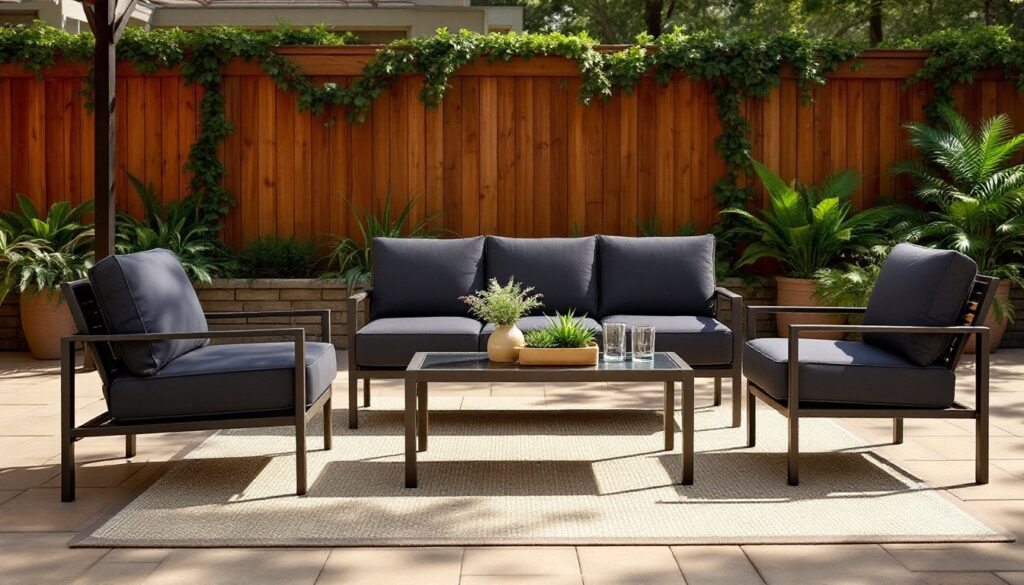
The Better Homes & Gardens collection occupies the mid-tier slot, with conversation sets running $300–$600 and dining sets reaching $700. Materials lean toward powder-coated steel frames with all-weather wicker and Sunbrella-grade polyester cushions (though actual Sunbrella fabric appears only in select premium pieces, check labels).
Construction quality is a step up from entry-level: thicker-gauge tubing, reinforced corner joints, and cushions with zipper covers for easy cleaning. The Brookbury and Colebrook collections feature modular sectional pieces, letting you configure an L-shape or U-shape depending on your deck footprint. Seat depth averages 24 inches, which is comfortable for most adults without feeling like you’re climbing out of a lounge pit.
One design note: BH&G leans neutral, grays, tans, navy. If you want jewel tones or bold patterns, you’ll customize with aftermarket cushions. The advantage is that neutral palettes pair easily with existing outdoor decor trends and don’t visually date as fast.
Mainstays Budget-Friendly Options
Mainstays is Walmart’s value workhorse, with three-piece bistro sets starting around $120 and five-piece dining sets at $250–$350. Materials skew toward lighter-duty: thinner steel tubing, basic resin wicker, and polyester cushions without water-resistant backing.
Don’t mistake budget for disposable. A Mainstays set will handle typical seasonal use, spring through fall in temperate climates, but expect shorter lifespan under harsh UV or coastal salt exposure. Frames hold up for 3–4 years with routine care: cushions fade faster and may need replacement after two seasons if left uncovered.
The Mainstays Alexandra Square and Camden collections offer decent proportions for compact spaces: bistro tables at 28–30 inches diameter fit 6×8 balconies, and folding sling chairs store flat during winter. If you’re furnishing a rental property or a secondary patio that sees occasional use, Mainstays delivers functional seating without the investment anxiety of pricier pieces.
How to Select the Perfect Patio Furniture for Your Space
Start with measurements, actual, not estimated. Measure your patio or deck footprint, then subtract 30 inches on all sides for walkable clearance. A 12×12 deck leaves roughly 9×9 feet for furniture, which accommodates a four-seat conversation set but not a full dining table.
Material selection should align with your climate and storage situation. All-weather wicker handles humidity and rain but can crack under prolonged UV in desert climates unless treated. Powder-coated steel resists rust better than bare aluminum but needs touch-up if the coating chips, check welds and joints where moisture collects. Acacia and eucalyptus wood (common in Walmart’s mid-range sets) are naturally water-resistant but require annual oiling to prevent graying and splitting. If you lack covered storage, skip untreated wood and opt for resin or coated metal.
Cushion fabric matters more than most DIYers realize. Look for solution-dyed polyester or acrylic with a water-resistant backing. Walmart’s budget lines often use standard polyester that soaks through in rain, fine if you bring cushions inside, problematic if you forget. Check if covers are zippered and machine-washable: you’ll clean them.
Seat dimensions affect long-term comfort. Dining chairs should offer seat heights of 17–19 inches to pair with standard 28–30 inch table heights. Lounge and conversation seating runs deeper, 22–26 inches, but verify before buying if you’re over six feet tall or have mobility concerns. Walmart’s product pages list dimensions: use them.
Weight capacity is listed per chair, typically 250–300 pounds for budget lines and up to 350 pounds for Better Homes & Gardens. If you’re buying for a household with larger adults or expect kids to climb on furniture, confirm ratings.
Finally, avoid common outdoor furniture mistakes like overbuying for your space or choosing style over durability. A six-piece sectional looks great in photos but turns a 10×10 deck into an obstacle course.
Maximizing Your Savings: Walmart Patio Furniture Deals and Shopping Tips
Walmart’s clearance cycle for patio furniture runs predictably: new inventory arrives February through April, peak pricing holds May through July, and markdowns start in late August. If your timeline allows, shop Labor Day weekend or later, discounts hit 30–50% as stores clear floor space for holiday inventory.
Online exclusives often beat in-store pricing by $20–$50 on identical sets, but factor in shipping. Items marked “Ships to Home” incur delivery fees unless your order tops $35. “Free Store Pickup” sidesteps that cost if you’ve got a truck or SUV, most boxed patio sets fit in a midsize SUV with seats folded.
Walmart+ membership ($98/year as of 2026) unlocks free shipping with no minimum and early access to seasonal sales, which can pay for itself if you’re furnishing multiple outdoor spaces or bundling with other home projects.
Price-match policy applies to Walmart.com and select major competitors (Amazon, Home Depot, Lowe’s) if you find an identical model cheaper. Bring proof via smartphone at checkout or submit online within seven days of purchase, though patio furniture model numbers often vary slightly between retailers, limiting exact matches.
Check for damaged box discounts in-store. Patio furniture ships flat-pack, and boxes take a beating in warehouses. A corner-crushed carton with intact contents inside can net you an extra 10–15% off if you ask a manager. Inspect frame pieces and hardware before leaving the lot.
Buy cushions and covers separately during off-season. Walmart stocks replacement cushions and fitted furniture covers year-round online at lower markups than during spring rush. A $40 cover in October costs $60 in April.
Caring for Your Walmart Patio Furniture to Extend Its Lifespan
Most patio furniture failure stems from neglect, not material quality. A $300 set maintained properly outlasts a $600 set left to weather unchecked.
Routine cleaning prevents buildup that degrades finishes. Wash frames monthly during active use with mild dish soap and water, skip power washers, which force moisture into joints and strip coatings. For wicker, use a soft brush to clear debris from weave gaps where mildew starts. Cushions should be spot-cleaned immediately after spills: once mildew sets into foam cores, it’s nearly impossible to eliminate.
Inspect hardware and welds every spring. Walmart’s budget lines use zinc-plated or stainless steel fasteners, but they can corrode in humid climates. Tighten loose bolts with a 5/16-inch or 3/8-inch socket wrench (most common sizes for outdoor furniture). If you spot rust on frame welds, sand lightly with 220-grit sandpaper, treat with a rust converter, and touch up with exterior-grade spray paint matched to the original powder coat color.
Covered storage during off-season is the single biggest lifespan extender. If you lack a shed or garage, invest in fitted furniture covers, not tarps, which trap condensation. Covers should be UV-resistant polyester with vented panels and tie-downs: Walmart’s house-brand covers run $15–$40 and fit their furniture lines well.
For wood furniture, apply teak oil or exterior wood sealer annually before the season starts. Sand lightly with 120-grit paper if the surface feels rough, wipe clean, and brush on sealer in thin coats. Two coats give better protection than one thick application.
Cushions last longer stored indoors during winter. If space is tight, stack them in a weatherproof deck box, Walmart’s Rubbermaid and Keter boxes hold cushions for a four-piece set and double as extra seating. Remove cushions during heavy rain even in-season: no fabric is truly waterproof, and wet foam takes days to dry, inviting mold.
Sun exposure fades fabrics and weakens plastics over time. If your patio gets full southwestern sun, consider a cantilever umbrella or shade sail to reduce direct UV on seating. Even budget furniture benefits from partial shade.
Expect to replace cushions every 2–3 years under normal use, that’s typical across most price points. Frames should last 5–7 years for Mainstays-level products and 7–10 years for Better Homes & Gardens with proper care. When frames start showing structural flex or cracked welds, it’s time to replace for safety, outdoor furniture isn’t like interior furniture design choices where cosmetic wear is acceptable. Structural compromise outdoors means injury risk.