

Table of Contents
ToggleAdding a firepit to your patio furniture setup transforms a basic outdoor space into a year-round gathering spot. It’s not just about aesthetics, fire features extend the usability of your patio well into fall and early spring, making them a practical investment for homeowners who want to maximize their outdoor living areas. Whether you’re considering a complete furniture set with a built-in firepit or planning to add a standalone unit to your existing setup, understanding the options, materials, and arrangement strategies will help you create a space that’s both functional and inviting.
Key Takeaways
- Patio furniture with firepit sets extends your outdoor season by months and creates a safe, comfortable gathering space with proper 24-36 inch clearances between seating and flames.
- Purpose-built firepit furniture eliminates spacing guesswork and can add $1,500-$4,000 to your home’s perceived value, making it a practical investment for outdoor living.
- Aluminum and cast aluminum are the best materials for firepit patio furniture—they resist rust, don’t conduct heat dangerously, and require less maintenance than steel or wrought iron.
- Check local fire codes and HOA regulations before purchasing; gas firepits typically have fewer restrictions than wood-burning units, though propane models require tank storage and periodic refills.
- Arrange seating in a circle or U-shape around the firepit with layered rings (inner seating 30-36 inches from flames, outer seating 5-6 feet out) to maximize both heat exposure and capacity for groups.
- Integrate side tables every 2-3 seats, use an outdoor-rated rug at least 24 inches from the firepit, and always keep a fire extinguisher nearby for safe outdoor entertaining.
Why Patio Furniture With Firepit Sets Are Worth the Investment
A firepit extends your outdoor season by several months in most climates. When temperatures drop into the 50s or low 60s°F, a gas or wood-burning firepit creates a comfortable heat radius of about 6-8 feet, allowing you to use your patio when you’d otherwise be indoors.
The integrated approach, furniture designed around a firepit, solves the spacing problem that homeowners often face when adding fire features to existing setups. Standard patio chairs placed too close to a firepit create safety hazards and discomfort: too far away and you lose the warmth benefit. Purpose-built sets maintain the safe distance of 24-36 inches from flame to seating while keeping everyone within the heat zone.
Resale value matters, too. Outdoor living spaces with fire features consistently rank high on buyer wish lists. While you won’t recoup 100% of your investment like you might with a kitchen remodel, a well-executed firepit area can add $1,500-$4,000 to perceived home value, depending on your market and the quality of materials used.
From a practical standpoint, firepit furniture sets eliminate guesswork. The pieces are sized and positioned to work together, which saves you from trial-and-error furniture placement or discovering mid-project that your chairs don’t fit the layout you envisioned.
Types of Patio Furniture Firepit Combinations
Choosing between integrated and separate configurations depends on your space, budget, and how you plan to use the area.
Built-In Firepit Tables With Seating
Firepit dining tables are the most common built-in option. These feature a gas burner (typically 40,000-60,000 BTU) set into the center of a table, surrounded by a heat-resistant tabletop surface, usually tempered glass, tile, or stone composite. The table doubles as both dining surface and fire feature.
Most firepit tables measure 48-60 inches in diameter or width and come with 4-6 matching chairs. They work well on smaller patios (10’x12′ or larger) where space is at a premium. The firepit itself sits 12-18 inches above ground level, making it visible from a seated position.
Firepit coffee tables sit lower (16-20 inches high) and are designed for lounge seating rather than dining. These pair with deep-seat sofas or Adirondack-style chairs. The burner is smaller, usually 30,000-50,000 BTU, but adequate for a conversation area.
One limitation: built-in tables lock you into a specific layout. You can’t easily rearrange furniture for large gatherings or different seasons.
Separate Firepit and Furniture Arrangements
Standalone firepits offer more flexibility. A separate fire bowl, fire table, or traditional fire ring allows you to adjust seating based on group size and weather conditions.
Wood-burning firepits (fire bowls or rings) require more clearance, at least 10 feet from structures per most local fire codes, and shouldn’t be placed on composite decking or wood surfaces without a non-combustible pad underneath. Cast iron, steel, and copper are common materials, ranging from simple $100 bowls to $800+ sculptural pieces.
Gas firepits, whether propane or natural gas, give you instant on/off control and no ash cleanup. They require a fuel source (a 20-lb propane tank lasts roughly 8-10 hours on medium flame), and natural gas models need a gas line run by a licensed plumber.
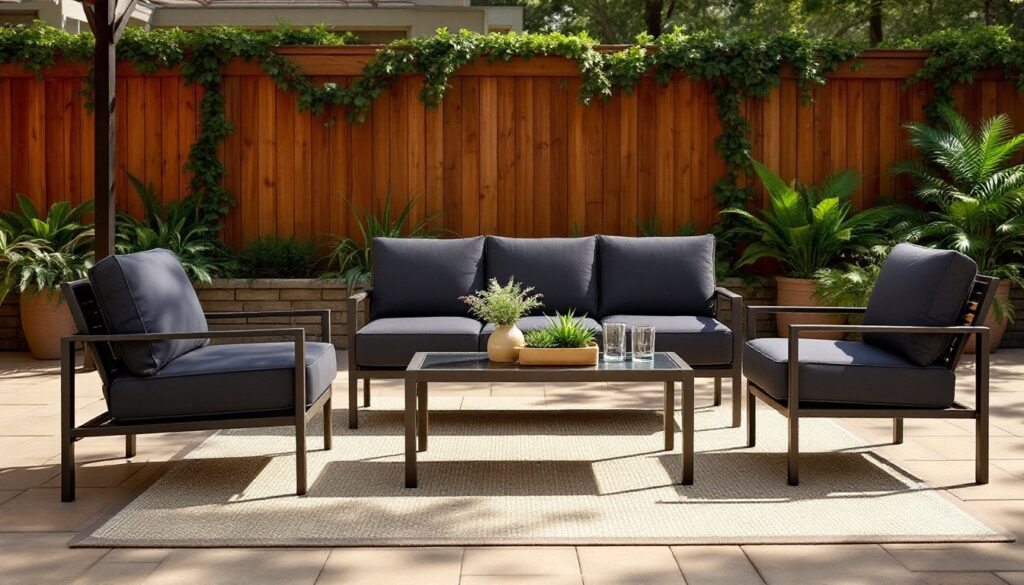
With separate setups, you can mix and match seating styles. Combine deep-seat sectionals with fire pit areas for a lounge vibe, or arrange individual rockers and gliders around a central fire feature for easier conversation flow.
How to Choose the Right Firepit Furniture for Your Space
Start by measuring your usable patio area, accounting for door swings, grill placement, and traffic paths. A functional firepit setup needs a minimum footprint of about 10’x10′ for a small conversation group (4 seats), scaling up to 14’x14′ or larger for dining-height tables with 6+ chairs.
Check local regulations before you buy. Many municipalities restrict open flames within a certain distance of property lines or structures. Gas firepits typically have fewer restrictions than wood-burning units, but zoning rules vary. If you’re in a planned community or have an HOA, verify their fire feature policies, some ban wood-burning firepits entirely.
Consider how you’ll actually use the space. If you want to roast marshmallows or enjoy the crackle of burning wood, a wood-burning firepit is your only option. For low-maintenance ambiance during weeknight dinners, gas is more practical. If cooking over the fire is a priority, look for firepits with grill grates or swing-arm cooking attachments.
Seating height must match your firepit style. Standard dining chairs (18-inch seat height) pair with firepit dining tables. Deep-seat lounge furniture (14-16 inch seat height) works with fire bowls and low-profile fire tables. Mixing heights looks awkward and creates uneven heat distribution.
Fuel source availability matters. If you don’t have an existing natural gas line, factor in $500-$1,500 for a licensed plumber to run one (depending on distance from your meter). Propane is more flexible but requires tank storage and periodic refills.
Best Materials for Firepit Patio Furniture
Materials need to withstand both weather exposure and radiant heat from the firepit.
Aluminum is the go-to for firepit furniture. It won’t rust, weighs less than steel (easier to move for cleaning), and doesn’t conduct heat the way iron does, important when your furniture is 30 inches from an active flame. Powder-coated aluminum resists fading and can mimic higher-end finishes. Expect to pay $800-$2,000 for a quality 5-piece aluminum firepit set.
Cast aluminum offers more ornate designs with better durability than extruded aluminum, though it costs 20-30% more. It’s heavy enough to stay put in wind but light enough to reposition seasonally.
Steel and wrought iron bring a traditional look and serious weight (which prevents tipping). These materials require consistent maintenance, touch up any chips in the powder coating immediately, or rust will spread. Not ideal in coastal or high-humidity areas unless you’re committed to annual refinishing.
Wicker and resin wicker work if kept outside the immediate heat zone. High-quality HDPE (high-density polyethylene) wicker resists UV damage and doesn’t become brittle like cheaper PVC wicker. Keep resin wicker seating at least 36 inches from active flames. Many fire pit patio furniture arrangements use resin wicker for outer seating tiers, with metal chairs closer to the fire.
Teak and treated wood furniture can work in firepit areas but require the same clearances as resin wicker. Wood seating looks great but needs yearly sealing to prevent weather damage.
For tabletops on firepit tables, tempered glass is common but can crack from thermal shock if the burner is too close. Look for tables with at least a 6-inch buffer between burner edge and glass. Porcelain tile, slate, and stone composite tops handle heat better and provide a more stable surface for drinks and plates.
Design Ideas for Arranging Your Firepit Furniture
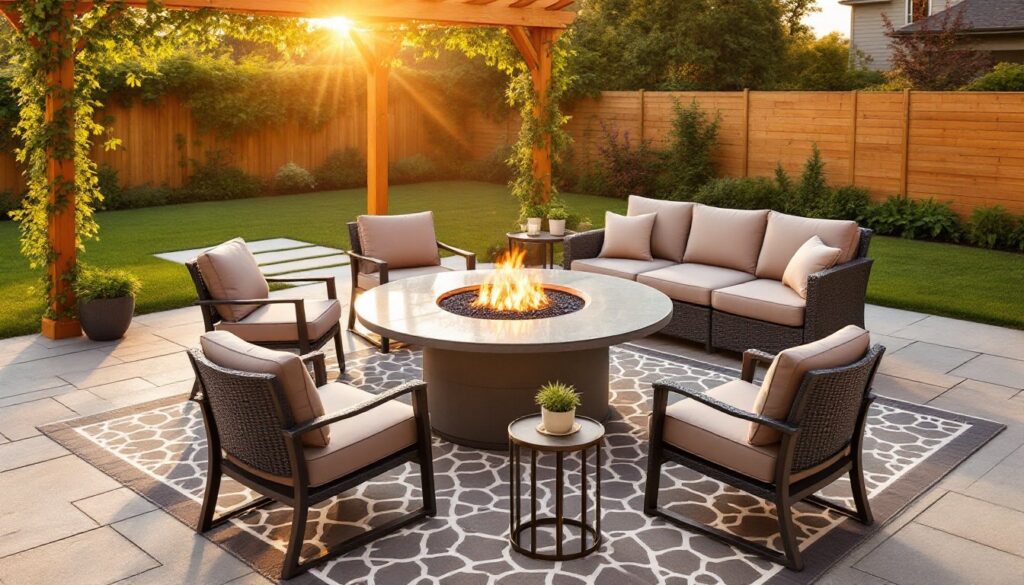
Symmetrical arrangements work best for conversation. Position seating in a circle or U-shape around the firepit, with each seat facing the center. This layout encourages interaction and ensures everyone gets equal heat exposure.
For dining-height firepit tables, allow 24 inches of clearance between chair backs. This gives people room to push back from the table without bumping into planters or railings. If your patio is narrow, consider a rectangular firepit table instead of round, it fits tighter spaces better.
Layered seating adds capacity for larger groups. Place primary seating (4-6 chairs) in the inner ring, 30-36 inches from the firepit. Add a second tier of benches, loveseats, or Adirondack chairs 5-6 feet out. The outer ring won’t get direct heat but still benefits from the ambiance.
Use an outdoor rug to define the firepit zone and tie the furniture together visually. Choose a polypropylene or polyester rug rated for outdoor use, natural fibers like jute will mildew. Keep the rug edge at least 24 inches away from the firepit to prevent ember damage.
Angle furniture slightly away from prevailing winds. If smoke consistently blows toward seating, your firepit nights will be short. Observe wind patterns during different times of day before finalizing your layout.
Integrate side tables between every 2-3 seats. Firepit gatherings involve drinks, s’mores supplies, and bug spray, people need surfaces within arm’s reach. Small 15-18 inch diameter side tables tuck between chairs without crowding walkways.
Consider adding a partial privacy screen or pergola on one side of the firepit area. This creates a sense of enclosure (which makes spaces feel cozier) and can block wind or provide shade earlier in the day. Just maintain code-required clearances between overhead structures and open flames.
Many homeowners find that well-designed patio furniture with fire pits becomes the most-used area of their property once the layout is dialed in. Invest time in the arrangement phase, and you’ll create a space that works for both casual weeknights and weekend entertaining.
Safety reminder: Always keep a fire extinguisher or garden hose within 20 feet of any firepit. Clear leaves and debris from the area before lighting. Never leave a fire unattended, and fully extinguish flames before going indoors for the night.