
Table of Contents
ToggleAmish living room furniture stands apart in a market flooded with particle board and quick assembly. Built using traditional joinery methods, mortise and tenon, dovetails, hand-planed surfaces, these pieces are designed to last generations, not just a few years. Each table, chair, and cabinet comes from small workshops where craftsmen still work without electricity, relying on hand tools and time-tested techniques passed down through centuries. For homeowners serious about quality and longevity, Amish furniture offers an alternative to disposable home goods.
Key Takeaways
- Amish living room furniture is built using traditional joinery methods like mortise and tenon and dovetails, creating pieces designed to last generations rather than years.
- Each piece of Amish furniture is customized to order with your choice of solid hardwood species, stain color, and dimensions, with lead times typically between 8-16 weeks.
- High-quality Amish sofas feature kiln-dried hardwood frames and eight-way hand-tied springs, offering superior durability and support comparable to premium furniture manufacturers.
- Wood selection matters—oak and maple work well in Scandinavian spaces, while walnut and cherry suit mid-century modern interiors with warm wood tones.
- Authentic Amish living room furniture comes from workshops in Ohio, Pennsylvania, and Indiana and is priced based on labor and materials, with solid oak coffee tables ranging $600-1,200.
- Avoid “Amish-style” warehouse furniture; true Amish pieces are built to order with solid hardwood construction, visible joinery, and catalyzed varnish finishes that distinguish them from mass-produced alternatives.
What Makes Amish Living Room Furniture Unique?
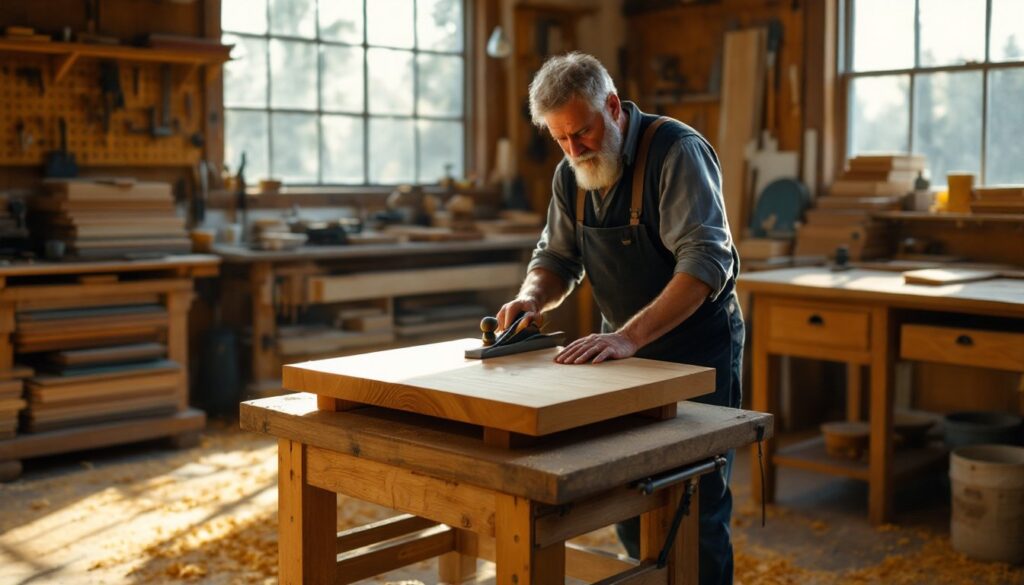
Amish furniture isn’t mass-produced on assembly lines. Craftsmen work in small shops, often family-run, using solid hardwood, no veneers, no engineered wood, no shortcuts. The construction relies on mortise and tenon joinery, dovetail joints, and wooden dowels rather than screws or staples. This method creates stronger connections that tighten over time as wood naturally expands and contracts.
The wood itself is air-dried or kiln-dried to precise moisture content, typically 6-8%, which prevents warping and cracking in climate-controlled homes. Most pieces use domestic hardwoods like oak, cherry, maple, and walnut, sourced from sustainable forestry operations. The absence of power tools means each piece takes longer to build, a coffee table might require 15-20 hours of labor, but the result is furniture with clean lines, tight tolerances, and hand-applied finishes.
Many Amish workshops still follow traditional Ordnung rules, which prohibit grid electricity. This limits production speed but ensures attention to detail that automated processes can’t match. The finish work involves multiple coats of catalyzed conversion varnish or hand-rubbed oil, applied and sanded between coats for a durable, low-VOC surface that ages gracefully.
Because each piece is built to order, buyers can specify dimensions, wood species, stain color, and hardware. This level of customization rivals what custom furniture shops offer, but with the added benefit of centuries-old construction methods. The trade-off? Lead times typically run 8-16 weeks, depending on the workshop’s backlog and project complexity.
Popular Amish Living Room Furniture Pieces
Coffee Tables and End Tables
Amish coffee tables are built like workbenches. Most feature solid 1-inch thick tops (actual dimension, not nominal), often book-matched for symmetrical grain patterns. The apron, the frame beneath the tabletop, is joined with mortise and tenon connections and typically measures 3/4 to 1 inch thick. Lower shelves use tongue and groove panels or solid planks, not flimsy particleboard.
Common styles include Mission (or Craftsman), Shaker, and Queen Anne. Mission tables showcase visible joinery, straight lines, and often feature through-tenons (where the tenon extends through the leg, secured with a wedge). Shaker designs strip everything down to essential geometry, tapered legs, minimal ornamentation, and clean proportions. Queen Anne styles incorporate cabriole legs and subtle curves but maintain structural integrity.
End tables follow the same construction principles, scaled down. Expect 18-24 inches in height to align with standard sofa arm height (24-26 inches). Drawers use dovetail joints, typically half-blind dovetails on the front and through-dovetails on the back, with solid wood drawer bottoms that float in grooves to allow for wood movement. Drawer slides are either wooden center guides or full-extension ball-bearing slides, depending on the workshop and customer preference.
Sofas and Seating Options
Amish upholstered furniture uses kiln-dried hardwood frames, usually oak or maple, joined with corner blocks, glue, and dowels. The frame construction mirrors what high-end furniture manufacturers use, but with heavier lumber. Seat frames often incorporate eight-way hand-tied springs, where coil springs are individually tied together with twine in eight directions, creating a stable, long-lasting seat platform. This method costs more and takes longer than sinuous (zigzag) springs but provides superior support and durability.
Cushions typically use high-density foam (1.8-2.0 density rating) wrapped in Dacron batting, though some workshops offer down-blend options. The upholstery fabric is buyer-specified, ranging from performance fabrics (treated for stain resistance) to natural linen or leather. For living room sofas, expect seat depths of 20-24 inches and overall lengths from 72 inches (loveseat) to 96+ inches (full sofa).
Many Amish craftsmen also build solid wood benches, rocking chairs, and glider rockers. These pieces skip upholstery entirely, showcasing the wood grain and joinery. Rocking chairs use steam-bent slats for the backrest, shaped while green and allowed to cure in the desired curve. Glider mechanisms are typically ball-bearing systems mounted to hardwood rails, providing smooth motion without the floor wear of traditional rockers.
Choosing the Right Wood and Finish for Your Space
Wood selection affects both appearance and durability. Oak (red or white) offers prominent grain patterns and high hardness (Janka rating: 1,290-1,360). It takes stain well but can appear rustic due to visible grain. Maple is harder (Janka: 1,450) with a tighter, more uniform grain. It’s ideal for painted finishes but can look blotchy with dark stains unless a wood conditioner is applied first.
Cherry darkens naturally over time, shifting from pale pinkish-tan to deep reddish-brown with UV exposure. It’s moderately hard (Janka: 995) and accepts stain evenly, though many craftsmen prefer clear finishes to showcase the natural color development. Walnut delivers rich chocolate tones straight from the mill, with minimal color shift over time. It’s softer than oak (Janka: 1,010) but machines beautifully and rarely needs stain.
Hickory and elm are less common but worth considering. Hickory is extremely hard (Janka: 1,820) with dramatic color variation, sapwood runs cream to white, heartwood is tan to brown. Elm offers interlocking grain that resists splitting, making it ideal for chair spindles and bent components.
Finish options break down into three categories. Catalyzed conversion varnish is the workhorse, durable, resistant to water and alcohol, with a satin or semi-gloss sheen. It’s sprayed in multiple thin coats and cures through chemical reaction, not just evaporation. Hand-rubbed oil finishes (typically tung oil or Danish oil) penetrate the wood, leaving a matte surface that’s easy to repair but requires periodic reapplication. Water-based polyurethane offers low odor and fast drying but doesn’t build the same depth as solvent-based finishes.
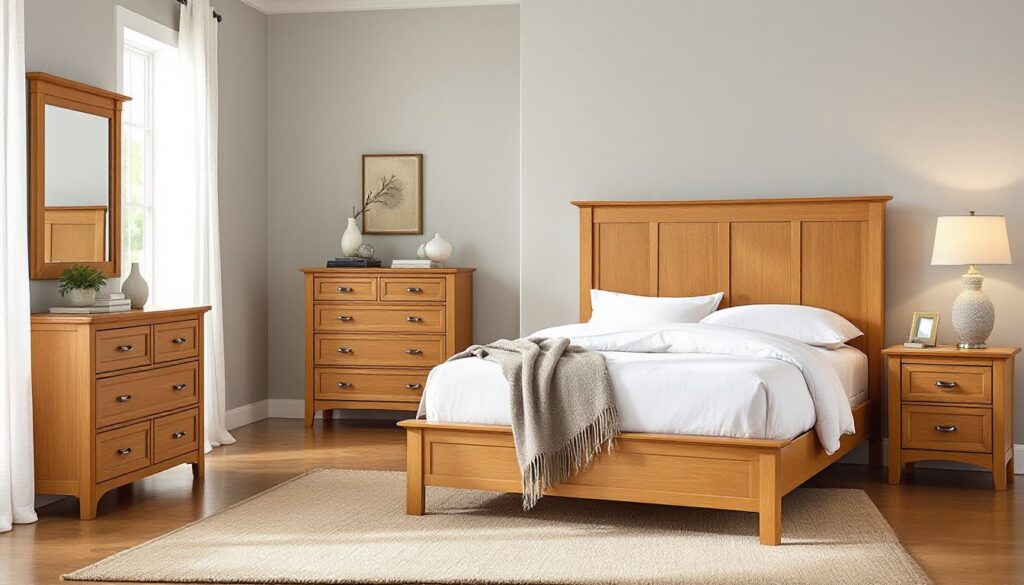
Stain color should complement existing flooring and trim. In homes with oak strip flooring (common in pre-1980s construction), matching stain tones creates visual continuity. For rustic living rooms with reclaimed wood accents, darker stains (Jacobean, espresso) add contrast. In modern spaces with light walls and minimal trim, natural or clear finishes let the wood grain be the focal point.
How to Style Amish Furniture in Modern Living Rooms
Mixing Amish furniture with contemporary decor requires balancing solid mass with negative space. Amish pieces are visually heavy, thick tops, substantial legs, so avoid overcrowding. A Mission-style coffee table pairs well with a streamlined sectional in neutral upholstery. The contrast between the table’s visible joinery and the sofa’s clean lines creates tension without clashing.
Color palette matters. Amish furniture in natural oak or maple works in Scandinavian-inspired spaces with white walls, gray textiles, and minimal accessories. Walnut or cherry pieces suit mid-century modern rooms, where warm wood tones and organic shapes are expected. For industrial aesthetics, Amish furniture provides the warm counterpoint to metal shelving and exposed ductwork.
Lighting plays a role. Amish furniture shows grain and finish details best under warm white LED bulbs (2700-3000K). Avoid cool white (4000K+), which can make wood tones appear muddy. Position floor or table lamps to highlight joinery details, side lighting will emphasize the depth of mortise and tenon connections or the shadow lines of through-tenons.
Accessorizing requires restraint. Amish furniture doesn’t need much help. A single living room accessory like a ceramic vase or a stack of hardcover books is enough. Avoid tchotchkes, faux florals, or busy patterns that compete with the wood grain. The Country Living approach, where natural materials and simple forms take center stage, aligns well with Amish aesthetics.
Area rugs define zones without overwhelming furniture. Choose rugs with low pile height (1/4 to 1/2 inch) in solid colors or subtle geometric patterns. Jute, sisal, and wool work better than synthetic fibers. The rug should extend 12-18 inches beyond the furniture footprint on all sides, anchoring the seating area visually.
Where to Buy Authentic Amish Living Room Furniture
Authentic Amish furniture comes from Amish-operated workshops or authorized retailers who work directly with craftsmen. The largest concentrations of Amish furniture makers are in Ohio (Holmes County, around Berlin and Millersburg), Pennsylvania (Lancaster County), and Indiana (Elkhart and LaGrange counties). Many workshops don’t maintain websites or online ordering systems due to Ordnung restrictions, so purchases often go through intermediary retailers.
When evaluating retailers, ask specific questions: Who builds the furniture? Where is the workshop located? Can they provide the craftsman’s name? Legitimate retailers will answer directly and may offer photos of the workshop. Request a copy of the build specifications, wood species, joinery methods, finish type, and hardware sources. This documentation also helps if you’re planning a living room renovation and need to coordinate with contractors or designers.
Pricing for Amish furniture reflects labor and material costs. A solid oak coffee table with a 1-inch top and Mission-style joinery typically runs $600-1,200, depending on size and finish complexity. A full sofa with eight-way hand-tied springs and hardwood frame costs $2,500-5,000+, comparable to high-end factory furniture but with superior construction. End tables range $300-600 each. Dining sets, entertainment centers, and bedroom suites scale up accordingly.
Some buyers visit workshops directly, which allows for face-to-face discussion with the craftsman and the ability to see work in progress. This isn’t always practical, especially for buyers outside the Midwest. In that case, find retailers who offer detailed customization forms, high-resolution photos of grain and finish samples, and clear lead time estimates. Many provide finish samples, small blocks of wood with different stains applied, mailed to buyers for approval before production starts.
Be wary of “Amish-style” furniture sold through big-box stores or online marketplaces. True Amish furniture is built to order, not stocked in warehouses. If the price seems too good, a “solid oak” coffee table for $200, it’s likely veneer over particleboard, not solid hardwood. Check for weight (solid wood is heavy), joint construction (look for dovetails and mortise-and-tenon), and finish quality (catalyzed varnish should be smooth and even, not tacky or streaky). For DIY enthusiasts interested in building their own pieces, resources like Ana White and The Handyman’s Daughter offer free plans that incorporate similar joinery techniques, though achieving Amish-level craftsmanship requires practice and proper tooling.