

Table of Contents
ToggleFarmhouse style isn’t just a trend, it’s a design philosophy rooted in function, durability, and unpretentious beauty. A farmhouse furniture living room combines the warmth of reclaimed wood, the practicality of sturdy seating, and the visual calm of neutral palettes. Whether you’re furnishing a century-old cottage or a suburban new build, this approach delivers comfort without fussiness. It’s about pieces that work hard, age well, and anchor a room without demanding attention. No shiplap required, though it doesn’t hurt. This guide walks through the essentials: what defines the style, which furniture pieces carry the look, how to select materials and colors, and styling tactics that tie it all together.
Key Takeaways
- Farmhouse furniture living room design prioritizes solid wood construction, natural materials, and functional forms that age well and require minimal ornamentation.
- Choose slipcovered sofas with hardwood frames and eight-way hand-tied springs, paired with accent chairs and chunky coffee tables featuring visible joinery for authentic farmhouse style.
- Neutral color palettes with warm undertones—whites, creams, greige, and soft taupes—allow reclaimed and distressed wood tones to become the visual focal point of the space.
- Layer your living room with warm lighting (2,700–3,000 Kelvin bulbs), natural fiber textiles, and collected décor in odd-numbered groupings to create depth without clutter.
- Prioritize solid wood joinery, kiln-dried hardwood, and practical upholstery fabrics that resist stains, ensuring your farmhouse furniture investment lasts 15+ years.
What Defines Farmhouse Furniture Style?
Farmhouse furniture is defined by simplicity, natural materials, and honest construction. Think solid wood frames with minimal ornamentation, exposed joinery, and finishes that show grain and texture rather than hiding it. The style borrows from American country vernacular, plank tables, Windsor chairs, apothecary cabinets, but avoids the delicate proportions of French provincial or the heavy carving of Old World styles.
Key characteristics include:
- Reclaimed or distressed wood: Pine, oak, and maple are common, often with a weathered or wire-brushed finish that mimics age.
- Neutral color palette: Whites, creams, grays, and natural wood tones dominate. Painted pieces usually lean toward chalky, matte finishes.
- Functional forms: Furniture serves a purpose first. Extra storage, wide armrests, and sturdy legs are typical.
- Mix of old and new: Authentic farmhouse spaces layer vintage finds with modern reproductions, creating depth without formality.
Avoid confusing this with rustic cabin style, which skews darker and more rugged, or modern farmhouse, which adds industrial metals and sleeker lines. Pure farmhouse furniture stays grounded in agricultural pragmatism, pieces that could’ve been built in a barn but look at home in a contemporary layout.
Materials matter. Solid wood construction beats veneer every time in this style. Look for mortise-and-tenon joinery or doweled frames rather than stapled corners. If you’re shopping new, check for kiln-dried hardwood to avoid warping. Reclaimed lumber adds character but requires inspection for nails, splits, or insect damage before use.
Essential Farmhouse Furniture Pieces for Your Living Room
Sofas and Seating Options
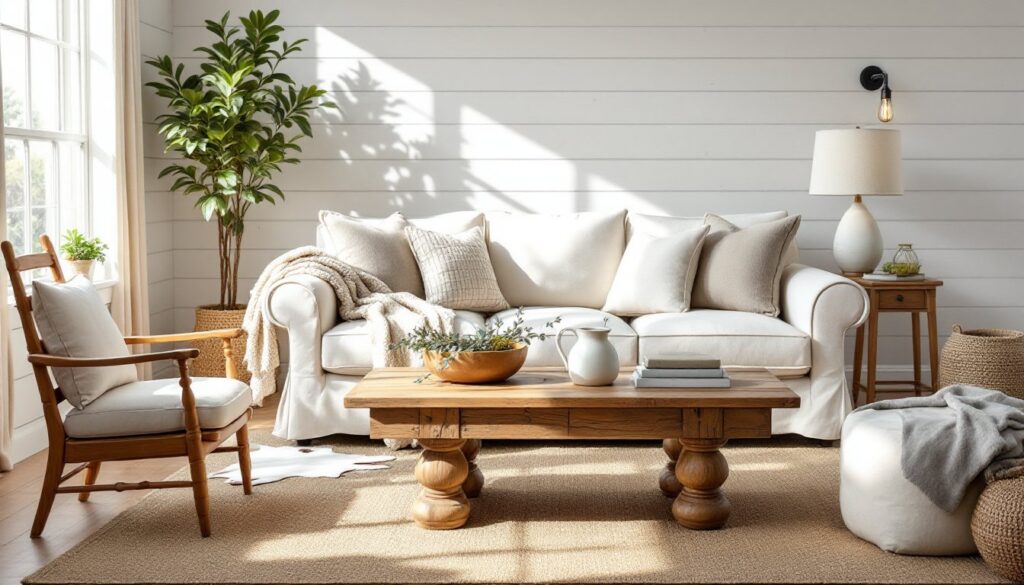
The sofa anchors the room, so choose one that balances comfort with farmhouse proportions. Slipcovered sofas in natural linen or cotton duck are classic, they’re washable, forgiving of wear, and layer well with throw pillows. Look for track arms or rolled arms rather than contemporary low profiles: they read more traditional without tipping into formal territory.
For frame construction, hardwood frames with eight-way hand-tied springs provide durability and better weight distribution than sinuous (S-spring) systems. Expect to pay more upfront, but a well-built sofa lasts 15+ years with occasional cushion rotation. Avoid particleboard frames and foam-only cushions, they sag fast.
Accent chairs add flexibility. Stick with ladder-back wooden chairs, wingbacks in ticking stripe or grain sack fabric, or upholstered benches that double as extra seating. Many farmhouse living rooms include rustic seating arrangements that mix matched and mismatched pieces for a collected-over-time feel. If you’re working with a tight budget, a single statement chair in a neutral fabric can elevate the space without requiring a full furniture overhaul.
Coffee Tables and Accent Tables
Coffee tables in farmhouse style tend toward chunky proportions and visible joinery. A plank-top table with turned legs or a trestle-base design works well. Reclaimed barn wood or new pine with a distressed finish both fit the aesthetic. Standard coffee table height is 16–18 inches, sitting about 1–2 inches lower than sofa seat height for comfortable reach.
If you’re building your own, resources like Ana White offer free plans for farmhouse-style tables using dimensional lumber. A basic design requires 2x4s or 2x6s for the top (actual dimensions: 1.5″ x 3.5″ and 1.5″ x 5.5″), 4×4 legs (actual 3.5″ x 3.5″), and wood glue plus pocket screws for assembly. Apply a penetrating oil finish or water-based poly to protect the surface without adding a plastic sheen.
Side tables and console tables provide landing spots for lamps, drinks, and décor. Look for narrow profiles (12–18 inches deep) if space is tight. Drawer storage in accent tables keeps remotes and coasters out of sight. A sofa table behind a sectional can define zones in an open floor plan, use it to display books, baskets, or a table lamp for task lighting.
When selecting living room furniture, measure your space first. Leave 30–36 inches of clearance around the coffee table for traffic flow, and ensure side tables are within arm’s reach of seating.
How to Choose the Right Color Palette and Materials
Farmhouse palettes revolve around neutrals with warm undertones. Think warm whites (like Benjamin Moore’s Swiss Coffee or Sherwin-Williams’ Alabaster), greige (gray-beige hybrids), and soft taupes. These colors provide a backdrop that lets wood tones and textures take center stage.
For painted furniture, matte or flat finishes mimic the look of old milk paint. Chalk-style paints (not true milk paint, which requires mixing) adhere well to wood without primer and distress easily for a worn look. If durability is a concern, especially on high-touch pieces like coffee tables, topcoat with a water-based polyurethane in satin or matte. Skip high-gloss finishes: they read too modern.
Wood tones should be varied but not chaotic. Mixing a light oak coffee table with darker walnut side tables adds depth, but keep undertones consistent, either all warm (golden, honey) or all cool (gray-washed). Avoid mixing cherry or mahogany with farmhouse pieces: those woods skew too formal.
Fabric choices lean toward natural fibers:
- Linen: Durable, breathes well, softens with washing. Expect some wrinkling, it’s part of the look.
- Cotton canvas or duck cloth: Heavier weave, ideal for slipcovers. Often treated for stain resistance.
- Ticking stripe and grain sack patterns: Classic farmhouse textiles. Use sparingly to avoid a costume-y effect.
- Leather: Distressed or aniline-dyed leather works, especially in cognac or tobacco shades. Avoid shiny, pigmented leathers.
Metal accents, drawer pulls, table legs, light fixtures, should be wrought iron, oil-rubbed bronze, or matte black. Brushed nickel and chrome feel too contemporary. If you’re replacing hardware, standard cup pulls (3″ or 4″ center-to-center) and bin pulls suit farmhouse cabinetry and furniture.
For upholstery, consider practicality. Homes with kids or pets benefit from performance fabrics that mimic linen or cotton but resist stains and moisture. Crypton and Sunbrella offer farmhouse-appropriate textures with added durability. Test fabric samples in your space under natural and artificial light, colors shift depending on window exposure and bulb temperature.
Styling Tips to Complete Your Farmhouse Living Room
Good styling in a farmhouse living room looks effortless but requires restraint. Start with layered lighting: overhead fixtures alone create harsh shadows. Add table lamps with linen or burlap shades, floor lamps with Edison-style bulbs, or wall sconces flanking a fireplace or built-in. Aim for 2,700–3,000 Kelvin bulbs (warm white) to avoid the cold, clinical feel of daylight LEDs.
Textiles add warmth without clutter. Layer a jute or sisal rug (8×10 or 9×12 for most living rooms) under the seating area, then add a cowhide or sheepskin throw over an accent chair. Toss linen or cotton pillows in varying sizes (22″, 20″, 18″) on the sofa, sticking to two or three coordinating patterns max. Solid textures, waffle weave, chunky knit, mix well with subtle stripes or checks.
Décor should feel collected, not purchased in a set. Group items in odd numbers (3 or 5) on coffee tables and shelves. Use:
- Wooden bowls or trays to corral remotes and candles.
- Galvanized metal buckets or pitchers as vase alternatives.
- Stacked books (covers facing up or spines out) topped with a small object.
- Greenery: Fresh eucalyptus, cotton stems, or faux olive branches in a stoneware crock.
Avoid tchotchkes. Every item should either serve a function or have visual weight. Incorporating ideas from Southern Living’s farmhouse guides can help refine your approach to balancing décor and practicality.
Wall treatments matter. Shiplap, board-and-batten, or simple flat-painted drywall all work, choose based on your home’s architecture. If adding millwork, 1×6 or 1×8 pine boards (actual 5.5″ or 7.25″ wide) installed horizontally with a nickel gap create authentic shiplap. Use a finish nailer and construction adhesive for secure attachment to studs. Prime and paint before installation to avoid gaps showing bare wood as boards expand and contract.
For art, go large and simple. A single oversized black-and-white photograph, vintage farm implements hung as sculpture, or a reclaimed window frame with mirror inserts all fit the aesthetic. Skip busy gallery walls unless every piece shares a cohesive theme.
If you’re planning a larger update, consider how these choices fit into a broader living room renovation strategy. Farmhouse style pairs well with open shelving, exposed beams, and brick or stone accents, but those modifications often require structural evaluation and permits if load-bearing walls are involved.
Finally, edit ruthlessly. Farmhouse style relies on negative space to feel calm and uncluttered. If a surface looks crowded, remove half the items. The goal is a room that feels lived-in, not staged.
Conclusion
A farmhouse furniture living room doesn’t demand a rural zip code or a gut renovation, just thoughtful choices in materials, proportions, and finishes. Prioritize solid construction over trends, neutral palettes over bold statements, and function over fussiness. The result is a space that wears well, adapts easily, and feels like home from day one.