




Table of Contents
ToggleShopping for living room furniture can empty a wallet faster than a leaky pipe, but bundled living room sets often deliver the best bang for the buck. Whether upgrading a tired space or furnishing a new home, understanding when and how to snag the right deal separates smart shoppers from overpayers. This guide breaks down the mechanics of furniture deals, timing strategies, quality checkpoints, and common pitfalls, so anyone can land a cohesive, durable living room without the buyer’s remorse.
Key Takeaways
- Bundled living room sets offer 15–30% per-piece savings compared to buying furniture separately, plus the advantage of pre-coordinated design and matched quality standards.
- Shop for furniture deals during predictable calendar windows: January, July, Presidents’ Day, Memorial Day, Labor Day, and Black Friday/Cyber Monday provide the steepest discounts (25–50% off select sets).
- Quality indicators matter more than discount percentages—inspect frame material (hardwood vs. softwood), joinery methods, cushion density, and warranty coverage to avoid cheap sets that sag within years.
- Test living room furniture in-person by sitting for at least five minutes, checking for wobbling frames and quick-rebounding cushions, and always measure doorways and room dimensions before committing to a purchase.
- Maximize savings by negotiating floor models and discontinued stock, stacking manufacturer rebates with promo codes, buying sets with removable covers, and shopping scratch-and-dent warehouses for 30–50% discounts on cosmetic-flaw pieces.
- Avoid common pitfalls including skipping measurements, overlooking delivery fees, falling for artificial urgency, ignoring return policies, and prioritizing trendy style over lasting comfort and durability.
Why Living Room Sets Offer Better Value Than Buying Pieces Separately
Retailers bundle sofas, loveseats, chairs, and tables into sets for a reason: it moves inventory faster and simplifies merchandising. For buyers, that translates to per-piece savings of 15 to 30 percent compared to purchasing items individually at full price.
Manufacturers produce set components in larger batches, cutting production costs. Those savings trickle down when retailers package them together. Sets also ensure consistent fabric grades, finish colors, and construction standards, no guesswork about whether the loveseat’s cushion density matches the sofa’s.
Another advantage: pre-coordinated design. Sets eliminate the risk of mismatched styles or scale issues. A three-piece sectional deal already accounts for corner dimensions and arm heights, so pieces fit together without awkward gaps. That’s especially useful for DIYers who lack design training or don’t want to spend hours cross-referencing SKUs.
Buying separately makes sense only when someone already owns part of a set or needs an unusual configuration. Otherwise, bundled deals streamline both budget and decision-making.
When to Find the Best Furniture Deals on Living Room Sets
Furniture retail follows a predictable calendar, and knowing the cycle is half the battle. January and July are clearance months, retailers purge old inventory to make room for new collections. Presidents’ Day (mid-February), Memorial Day, and Labor Day weekends also bring aggressive promotions as stores compete for holiday traffic.
Black Friday and Cyber Monday remain the heaviest discount periods, with some retailers offering 40 to 50 percent off select sets. But, availability can be spotty: popular configurations sell out fast, and restocks may not arrive until after the new year.
End-of-quarter sales (March, June, September, December) help stores hit revenue targets. Floor models and discontinued lines get marked down 25 to 35 percent during these windows. Floor models often show minor wear, check seams, zipper pulls, and leg joints, but they’re functional and can be negotiated further if blemishes exist.
Avoid shopping mid-season (April, August, October) when new lines launch and discounts are minimal. Patience pays: waiting six weeks can mean the difference between full price and a legitimate deal.
Many shoppers find wholesale furniture sources during off-peak months, where bulk purchasing power translates to year-round savings on complete sets.
What to Look for in a Living Room Set Deal
Not all discounts are created equal. A 50 percent markdown on a poorly constructed set still wastes money. Start by checking the frame material: kiln-dried hardwood (oak, maple, birch) lasts decades, while softwood or particleboard frames sag within five years. Lift one corner of the sofa, if it feels flimsy or creaks, walk away.
Inspect joinery methods. Screwed or glued butt joints fail under stress: look for corner blocks, dowels, or mortise-and-tenon construction. Upholstery should be double-stitched with reinforced seams, especially on armrests and seat edges where tension is highest.
Cushion fill matters for longevity. High-density foam (1.8 lb/ft³ or higher) holds shape better than low-density polyurethane, which compresses into permanent divots. Down-wrapped foam offers the best of both worlds, supportive core with a soft surface, but adds cost.
Verify fabric grade. Performance fabrics (treated polyester blends, microfiber, or solution-dyed acrylics) resist stains and wear better than untreated cotton or linen. Check the rub count if listed: upholstery rated for 15,000+ double rubs (Martindale or Wyzenbeek tests) handles daily use without pilling.
Confirm warranty terms before buying. Reputable manufacturers cover frame defects for five to ten years and cushions for two to three years. Warranties shorter than that signal low confidence in durability.
Quality Indicators That Make a Deal Worth It
Weight is a quick proxy for quality. Solid hardwood frames and eight-way hand-tied springs make sofas heavy, a standard three-seater should weigh 150 to 200 pounds. If two people can easily carry it, the frame is likely softwood or engineered lumber.
Check for sinuous (S-shaped) spring systems or eight-way hand-tied coil springs. Sinuous springs are acceptable in budget sets if spaced no more than four inches apart and clipped securely to the frame. Eight-way coils offer superior support but add cost: they’re worth it for high-traffic households.
Look under the set pieces. Quality manufacturers staple a cambric dust cover to the underside, hiding springs and framing. Exposed plywood or bare springs indicate cost-cutting.
Test the best living room sofas by sitting hard and shifting weight side to side. Frames shouldn’t wobble, and cushions should rebound quickly when stood up. Arms should feel solid, not hollow.
Finally, measure doorways, stairwells, and room dimensions before committing. A deal isn’t a deal if the sectional won’t fit through a 32-inch door frame. Most sets list packaged dimensions: add two inches to account for padding.
Top Living Room Set Styles Currently on Sale
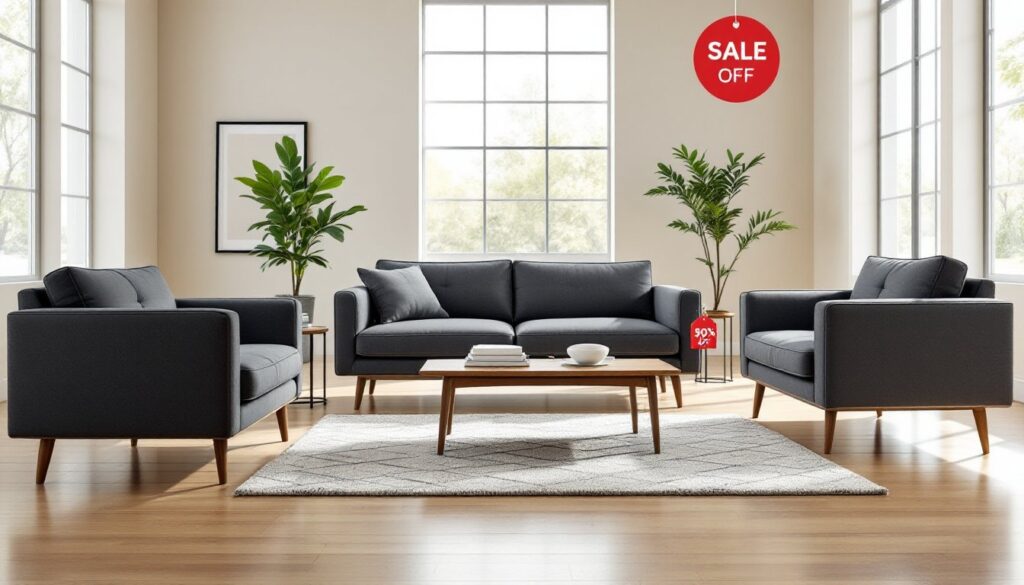
Mid-century modern sets dominate 2026 clearance racks as retailers pivot toward maximalist and organic styles. Tapered legs, tufted backs, and walnut finishes are marked down 20 to 40 percent. These sets work well in smaller spaces due to their low profiles and open bases, which create visual breathing room.
Sectionals remain popular, especially L-shaped and U-shaped configurations with modular components. Retailers are discounting oversized sectionals (110+ inches wide) to move inventory: these suit open-concept layouts but verify ceiling height and room scale. A sectional that overwhelms the space feels oppressive, not cozy.
Farmhouse and transitional sets blend traditional silhouettes with neutral palettes, rolled arms, nailhead trim, linen-look fabrics in beige, gray, or soft blue. These styles have staying power and pair easily with existing decor, making them safe bets for resale value.
The trend toward leather sectional furniture continues, with top-grain and corrected-grain leather sets seeing 15 to 25 percent discounts. Leather ages better than fabric and tolerates spills, pets, and kids with minimal maintenance, wipe with a damp cloth and condition twice a year.
Designers showcased on Elle Decor have pushed curved, sculptural sofas into the spotlight, but mass-market versions are just hitting clearance. Expect steeper discounts by late 2026 as the trend cycle turns over.
How to Maximize Your Savings on Living Room Furniture
Negotiate floor models and discontinued stock. Retailers often have latitude to cut an additional 10 to 15 percent off marked prices, especially near month’s end when sales quotas loom. Point out any visible wear, scratches, fading, loose threads, as leverage.
Stack discounts whenever possible. Many stores honor manufacturer rebates on top of sale prices. Sign up for store email lists to receive exclusive promo codes (typically 5 to 10 percent off) that combine with advertised deals.
Consider financing offers carefully. Zero-percent APR for 12 or 18 months can be useful if paying the balance before the promotional period ends. Miss that deadline, and deferred interest charges hit the original purchase amount, sometimes at 20+ percent APR.
Buy sets with removable covers when available. Machine-washable slipcovers extend lifespan and allow for affordable updates down the road. A $800 set with replaceable covers beats a $1,200 set that can’t be cleaned.
Shop local scratch-and-dent warehouses or outlet stores operated by major manufacturers. Sets with minor shipping damage (small tears, dings, or mismatched lot numbers) sell for 30 to 50 percent below retail. Inspect thoroughly, but don’t shy away from cosmetic flaws that won’t affect function.
For broader living room furniture options beyond sets, mixing a discounted set with individual accent pieces can balance budget and style without sacrificing cohesion.
Avoiding Common Mistakes When Shopping Furniture Deals
Skipping measurements is the most expensive mistake. Measure room dimensions, doorways, hallways, and stairwells with a tape measure, not an eyeball estimate. Map furniture placement on graph paper or use a digital room planner to visualize scale.
Ignoring delivery fees and timelines can erase savings. Some “deals” charge $200+ for white-glove delivery, which includes setup and packaging removal. Factor that into the total cost. Delivery windows often span six to twelve weeks for custom orders: if furnishing on a deadline, confirm stock availability.
Falling for fake urgency is another trap. “Limited time.” and “Only 3 left.” can be legitimate, but some retailers use artificial scarcity to pressure buyers. If a deal feels rushed, check competitor pricing or wait a week to see if the sale persists.
Overlooking return policies before buying is risky. Furniture often has restocking fees of 15 to 25 percent, and some sale items are final sale. Read the fine print, especially for online orders where color and texture can look different in person.
Don’t prioritize style over comfort. Trendy silhouettes lose appeal fast if the seat depth is too shallow or cushions are too firm. Sit on the set for at least five minutes in the showroom, longer if possible, to assess real-world comfort.
Resist upselling on unnecessary add-ons. Fabric protection sprays and extended warranties are high-margin profit centers. Most performance fabrics already resist stains, and manufacturer warranties cover legitimate defects. Save that money for living room accessories that personalize the space.
Finally, don’t buy a set just because it’s cheap. A poorly made sectional that sags in two years costs more, in replacement expense and frustration, than a quality set purchased at a modest discount. As resources like Homedit and Homify illustrate, well-chosen furniture forms the foundation of a functional, inviting home.
By timing purchases strategically, scrutinizing construction quality, and avoiding high-pressure tactics, anyone can land a living room set that delivers both style and value, without the regret.